The term “bring your own energy” – or BYO energy – as it has been applied in media about data centres is imprecise.
If it means data centres must operate as power islands, disconnected from the grid and replicating its firming functions all on their own, that would be bad policy.
Diversifying the grid’s portfolio is good. It provides insurance across geographies, technologies and load types. Requiring a single data centre to replicate all of that on its own is expensive and inefficient.
The joint statement, which our organisation The Carbon Zero Initiative convened, called for data centres to invest in additional renewable generation to match their electricity demand.
“Additional” is the operative word here.
Data centres must help bring new renewable generation online, to be a net contributor to power supply, rather than just adding more demand or taking up renewable projects that would have happened anyway.
We are also in adamant agreement that we don’t want to see a scenario where gas sits behind the meter to power data centres – as is unfortunately the case in approximately 55% of US data centres.
Still, statements and labels are useful. Perhaps a better acronym would be BYONCE (Bring Your Own New Clean Energy). Here, “New” and “Clean” are the operative words. And we’re lucky that the concept already exists – and we’re not just talking about the multi-Grammy award-winning singer.
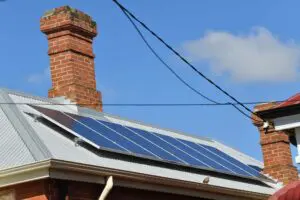
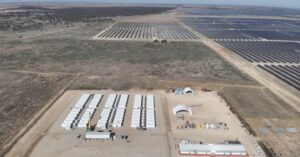
The concept is simple. Data centres should procure new solar, wind and storage equivalent to their demand. Not necessarily on-site, or isolated from the grid, but additive. What our alliance wants is new renewable supply entering the market alongside new demand from data centres.
The May 8th Energy and Climate Change Ministerial Council communique sounds a lot like BYONCE. Energy ministers from every jurisdiction except Queensland agreed that data centres “should invest in additional renewable generation and firming in their state of operation to fully offset their electricity demand and provide demand flexibility services to avoid additional costs being borne by other energy users.”
While we wait for the Australian Energy Market Commission (AEMC) to provide implementation options by July, the government seems to have landed in substantially the same place.
If data centre growth is to occur alongside the energy transition, it needs to come with supply. Not abstractly, not through offsets purchased on the secondary market, but through genuinely new generation and firming capacity entering the system.
The work now is getting the design right, and July is not far away. Additionality requirements need to be defined with precision: what counts as “new,” how matching works across different transmission and distribution geographies, how firming obligations interact with demand flexibility incentives.
These are hard questions. The AEMC process is the right place to answer them.
Our February statement was a signal. The government’s December expectations and the May ECMC are approaching a blueprint, pointing in the same direction.
Data centres should be good network participants: connected to the grid, providing demand flexibility, and bringing new clean supply to match their demand. Given our renewable ambitions, this seems like a reasonable ask. The task now is making sure the design that comes out in July reflects it.
Alexander Hoysted is the strategy and partnerships lead at The Carbon Zero Initiative