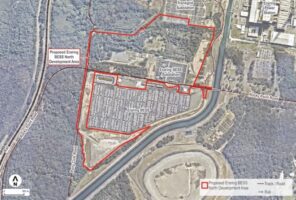
Ausgrid is adding another battery to its growing and unusual portfolio of owner-developer battery storage, flicking a two-hour battery system at its Berkeley Vale substation into the federal EPBC process.
Transmission and distribution companies have tended not to become developers of battery storage projects, leaving that to private developers and generation companies.
But Ausgrid, the largest distribution network service provider (DNSP) in the country, which owns the poles and wires in large parts of Sydney and north to Newcastle, is named as the owner-developer of 10 different batteries by data tracker Renewmap.
Of these, three have approved development applications and one is yet to be submitted to the New South Wales (NSW) planning department.
The 150 megawatt (MW), 300 megawatt-hour (MWh) Berkeley Vale battery is the first to be referred to the EPBC, however, and Ausgrid says while it’s getting the planning permits sorted and will be the ultimate owner, someone else will handle construction and the operation of the battery.
“The proposed BESS will store electricity from the grid, release electricity during periods of high demand and provide other ancillary services to the National Electricity Market,” the EPBC referral says.
“The capacity to store excess energy during low demand and supply additional energy during peak demand will improve grid efficiency, support more stable generation, and provide consumers with a more reliable and consistent energy supply.”
Ausgrid expects construction to start in 2027.
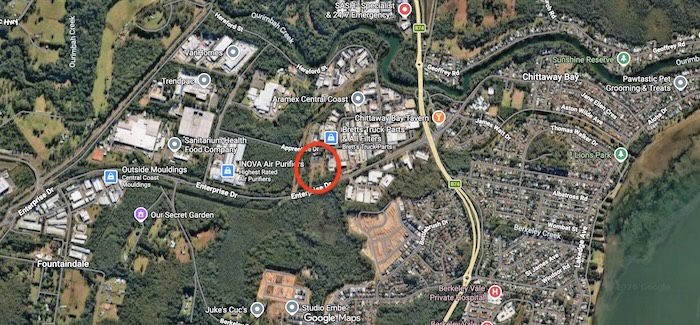
Although the site is in an industrial area, the 84 megapacks that Ausgrid expects to need will require a 3800 square metre patch of land to be cleared.
The site also backs onto what remains of scrub and bushland between Berkeley Vale town and neighbouring Fountaindale, causing nervousness for state fire authorities who want a full run down on fire safety initiatives.
Council authorities also want to see more detail around how Ausgrid will manage flooding from the nearby Ourimbah creek, which winds its way around the top end of the industrial estate about 500m to the north.
Or as Ausgrid puts it in the EPBC referral, the site is on the periphery of a habitat corridor that connects the creek to “extensive” bushland to the south.
But because it’s fragmented by housing developments and highways, the patch is unconnected to larger tracts of bush.
However, despite being in an industrial zone and surrounded by housing developments, the area does have some redeeming environmental features.
Ausgrid’s initial surveys found several important ecological communities on the site itself, such as coastal creekflat layered grass-sedge swamp forest, albeit in poor condition, and northern foothills blackbutt grassy forest which is doing slightly better.
While the DNSP had hoped to save some of the trees and vegetation on the site, the need for bushfire protection buffers and enough space to install the battery containers meant it couldn’t.
And while surveyors spotted nine bird species, four mammals including foraging grey-headed flying foxes, and three amphibians on the site, none are classed as vulnerable or worse.
If you would like to join more than 29,000 others and get the latest clean energy news delivered straight to your inbox, for free, please click here to subscribe to our free daily newsletter.