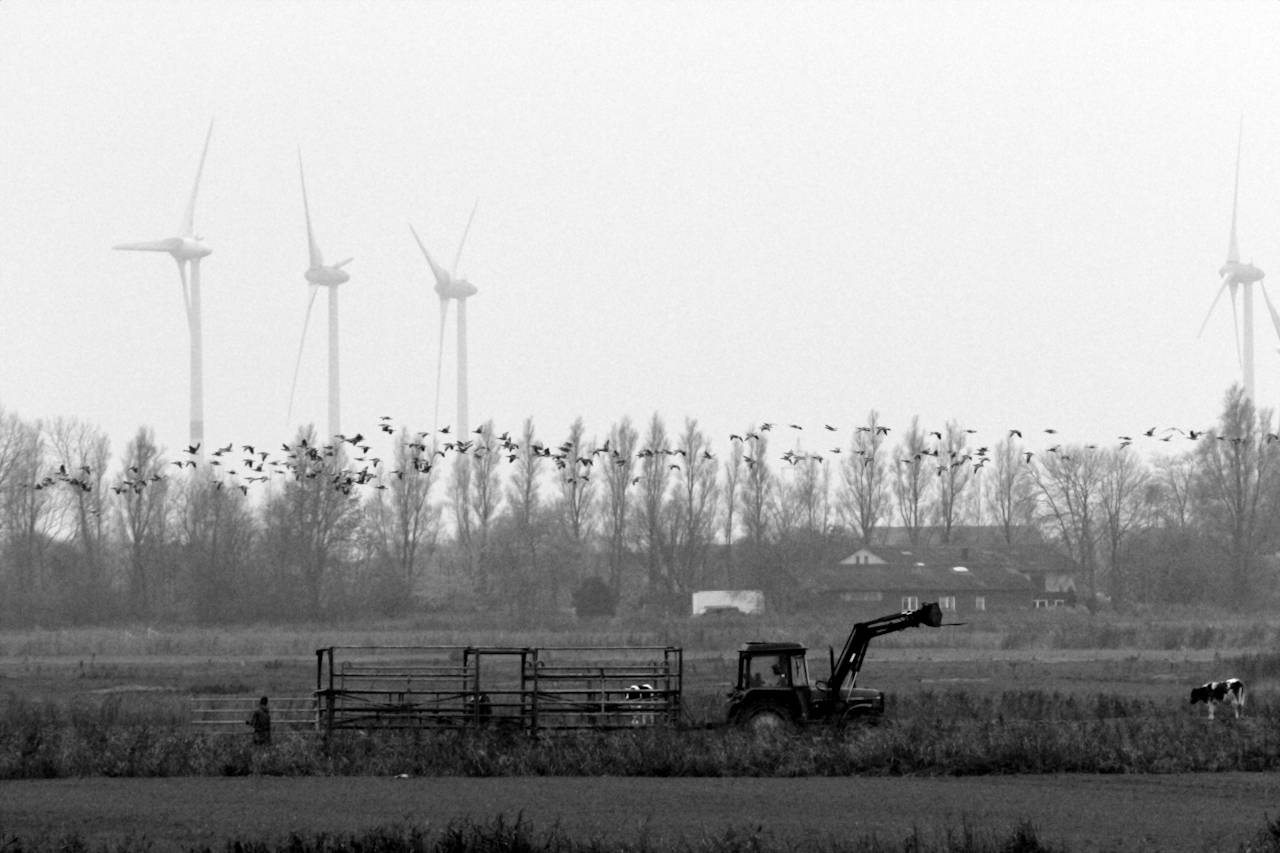
Two new studies on the impact of wind energy generation on avian populations have demonstrated that wind turbines might not be the “bird killing machines” they are sometimes accused of being – and that birds are better at adapting to turbines than we think.
The two studies separately demonstrated that bird mortality from wind turbine collision is “orders of magnitude lower” than existing data have previously suggested, but also that birds actively change their behaviour to avoid operational wind turbines.
As reported by EuroNews over the weekend, the first study was commissioned by the German Offshore Wind Energy Association (BWO) and conducted by research and consulting firm BioConsult SH, analysing more than 4 million bird movements over a period of more than 18 months.
The second study, carried out by Swedish power company Vattenfall and Norwegian software company Spoor with analysis and reporting carried out by The Biodiversity Consultancy, recorded more than 137,000 birds during a 19-month period.
The German study used an artificial intelligence (AI) controlled bird radar system at Windtestfeld Nord, a wind turbine test site on the coast of Germany which hosts five different prototype turbines. The specialised cameras recorded the number of rotor transits – defined as birds crossing the rotor plane of the turbine – during four migratory seasons.
All told, the researchers analysed over four million bird movements over 18 months, combining digital data with on-site searches for bird carcasses, and found that migratory birds reliably avoided wind turbines.
Specifically, 99.87 per cent of birds approaching the turbines during the night and 99.86 per cent during the day avoided the turbines, resulting in collision risks of 0.0016 per cent and 0.0020 per cent, respectively. These results correlated closely with actual bird carcasses found at the sites, confirming the validity of the researchers’ collision risk models.
“We used state-of-the-art methods,” said Dr Jorg Welcker, head of research and development at BioConsult SH GmbH & Co KG. “AI-controlled stereo cameras determined flight activity in the rotor area, while a specialised bird radar recorded migration patterns.
“By comparing both datasets, we were able to precisely calculate avoidance rates. In addition, we specifically searched for collision victims. This resulted in a comprehensive picture of the actual collision risk of migratory birds at wind turbines.”
The research also showed that there was no correlation between migration intensity and collisions, undermining the assumption that the collision rate would increase with the number of migrating birds.
In fact, even during periods of high nocturnal migration activity, very few birds even flew through the rotor area, having taken efforts to avoid the turbines mid-flight.
“The new study shows that migratory birds avoid wind turbines,” said Stefan Thimm, BWO managing director.
“This confirms that the environmentally sound expansion of offshore wind energy works in harmony with these birds and not against them. With this research, we want to depoliticise the discussion, improve the data basis, and make decisions based on facts.”
These conclusions were basically mirrored by the second and unrelated study undertaken by Vattenfall and Spoor at the former’s Aberdeen Bay offshore wind farm in Scotland.
The study detected more than 137,000 birds near an operating turbine over 19 months between June 2023 and December 2024 using high-resolution cameras. The camera system operated for approximately 95 per cent of daylight hours across the full 19 months, automatically detecting and tracking birds as they passed through the field of view, and recording the path, speed, distance, and height of each tracked flight.
Of the 137,000 birds tracked over the research period, 2,007 showed changes in flight behaviour near the turbine, with only five initially being flagged as potential collision events. However, on review by expert ornithologists, none of the five events were confirmed as actual collisions, and in each case the birds were found to be either well clear of the turbine structure or carrying out natural behaviours such as diving.
The findings from this study were dramatic.
Prior to construction, the environmental impact assessment estimated that each turbine could potentially cause an average of 8.54 bird collisions each year. The observations, however, tell a wildly different story, with actual bird activity demonstrating 0.002 expected collisions for the entire study period – “several orders of magnitude lower” than the estimates put forward prior to construction, suggesting that the collision risk model overestimated actual risk by a factor of nearly 7,000.
These findings also aligned with previous research at the Aberdeen Bay offshore wind which used radar, camera, and GPS tracking, and found that seabirds typically adjust their flight paths to avoid wind turbines at distance of between 100 to 200 metres – in other words, altering their course well before reaching the rotor zone of a turbine.
The two studies both demonstrate the need for continued study of wind farm sites, both onshore and offshore, to refine precautionary environmental impact assessments, so that mitigation efforts reflect reality and not overcautious assumptions. The studies also highlight the need for continuous monitoring rather than sporadic site surveys so as to generate datasets large enough from which to draw legitimate conclusions about collision frequency.
More information about the BWO-commissioned study can be found here, and here for the Vattenfall/Spoor-led study.
If you would like to join more than 29,000 others and get the latest clean energy news delivered straight to your inbox, for free, please click here to subscribe to our free daily newsletter.