Victoria’s shadow energy minister left an energy industry crowd confused and perplexed in Gippsland this week, with a speech that appeared to confuse the cost of state-owned Big Build infrastructure with private renewable energy projects.
David Davis made no mention of how much the Coalition’s promised return to gas – a pledge from a party that may well win power at November’s elections – would cost Victorians, nor where it would come from, bar a general reference to more exploration in the state.
And nor did he try to explain the Coalition’s latest policy promise to abandon the VNI West transmission project entirely, other than to suggest the cost hasn’t been “rigorously assessed and analysed.”
But after an analogy comparing government infrastructure to the cost of ordering a new kitchen from a builder, a revisit to a favourite topic about the auditor general’s energy transition report last year, and a detour through alleged Big Build corruption – a major political issue in the state, Davis made his way back to electricity.
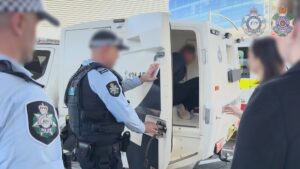
“Money has been siphoned off an unknown amount, somewhere north of $15 billion, into bikies, criminal groups, certain union groups, strippers,” Davis told the Gippsland New Energy Conference in Traralgon on Wednesday.
“That kind of frank corruption is something that needs to be dealt with on these major projects
“So I’m making a point here that there’s a broad problem of construction costs in Victoria. We need to be aware that the electricity sector, both renewables and traditional projects, are not immune from this, and we need to make sure that those costs are managed.
“We’re determined to inject competition where we can, and ensure that the costs are held at levels that our community can bear.”
Davis spoke at length about the price of energy for households and small businesses, and about gas as the way to energy security in the state.
But he didn’t talk about how much more that gas will cost them, given it’s now a very expensive fuel for homes and businesses, nor when the Coalition thinks it could be delivered.
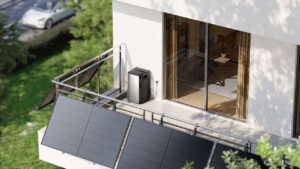
Victorians have discovered the savings that come with quitting gas, and are doing so at such a rate that network companies are playing catchup to ensure the grid can handle newly-electrified homes, and the market rule maker is eyeing extensive gas networks like Victoria’s as a liability.
“We say there does need to be gas exploration onshore, conventional gas, and there is gas available. We’re very confident about that, having talked to many in the sector, and we believe gas can be brought on relatively quickly,” Davis said.
“Finally, the gas is important in our view because of the role it has in firming, and that’s what I’ve referred to with the guarantee that it may well be a part of that.
“We need that firming, and we need a security supply, a security of gas being there for those three reasons.”
The state government says it issued a gas exploration licence tender in 2025, but did not receive any suitable offers.
Furthermore, given it takes between five and 10 years to find, prove up, develop and produce from a gas field, there are real questions over where the gas the Coalition wants now will come from, and at what cost.
In April, the Australian Competition and Consumer Commission (ACCC) said gas retail contracts this year averaged $13.93 per gigajoule.
This is lower than in 2022 when the Ukraine war sent fossil fuel prices spiralling, but higher than in 2025, as buyers locked in supplies in the face of potential shortages, the competition watchdog said.
More positively, Davis appeared to suggest a Coalition government would speed up the redevelopment of the Port of Hastings, the proposed hub of the offshore wind industry.
“When it comes to offshore wind, the government has been delayed in its results, in its approach, and that is in part due to the errors I think that were promulgated with the Port of Hastings, and we had no difficulty with the Port of Hastings as a location for assembly,” he said.
“But the government botched the application process, botched the process with the EPBC and the federal government, so that needs to be brought forward.”
However, there may not be many corners left for a Coalition government to cut.
Port of Hastings chief Matt Thorpe said on Tuesday that the approval process is on track and the three-year construction phase will start once those are in later next year.
To join more than 29,000 others and get the latest clean energy news delivered straight to your inbox, for free, click here to subscribe to our free daily newsletter.