The China-based home battery maker that at the height of Australia’s rebate-fuelled boom claimed to be installing two systems every five minutes has unveiled its latest residential offering – and this time it might not need a jacket to get through Melbourne winters.
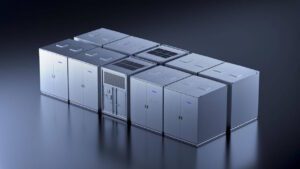
The new Fox ESS Power Cube was unveiled this week – and will no doubt be on display next week at the All-Energy Conference and Exhibition in Melbourne. It’s the new iteration of what has been an enormously popular brand in Australia, riding the wave of the Cheaper Home Battery rebate.
But before we get into the finer details of the new model, first – the back story…
Fox ESS came from nowhere to become Australia’s number one home battery brand after installing more than 12,000 systems in February, another 19,000 in March and more than 25,000 in April, in the weeks before the rebate settings were adjusted and the discount dialled back.
The battery maker captured the red-hot market with its sleek, stackable and easy to install systems and low prices, which undercut most of its main competitors, even without the rebate discount.
But its meteoric rise raised some questions and concerns, including around whether the ultra-cheap battery would perform as expected in Australian conditions. And when an autumn cold-snap triggered customer reports of Fox ESS batteries performing poorly in southern states, these concerns seemed somewhat justified.
As Solar Quotes founder Finn Peacock wrote here in May, these batteries aren’t faulty, per se, but rather are “just doing what lithium batteries do when they get cold: they get cautious, limit charge and discharge rates, and in some cases trigger forced charging to warm themselves up.
“This is a known issue with lithium batteries,” says Peacock. “The solution, in cold climates, is a battery heater, a small heating element built into the unit that keeps the cells above the threshold where chemistry gets sluggish.
“Fox, like many budget battery manufacturers, didn’t include heaters in some of their Australian models.”
A Peacock notes, the bigger worry here is that customers “faced with a battery that won’t charge properly on a cold morning” are DIY-ing insulation solutions like homemade jackets, and putting them “on a device that contains a significant amount of stored energy and needs specific clearances for cooling.”
“Fox has actually published guidance on this for their UK customers, who ran into the same problem,” he writes. “It specifies flame-retardant materials, minimum clearances from electrical components, what not to block.
“It also includes this note: ‘improper insulation may lead to elevated internal temperatures, accelerated degradation, or even thermal runaway. You assume all associated risks’.”
Which brings us to the new Fox ESS home battery, the Power Cube, which has a slightly different and perhaps slightly less sleek design than its predecessor, but offers the same modularity and ease of assembly and installation that has made it a favourite with installers trying to keep up with the rebate rush.
Crucially, however, the Power Cube also offers integrated heating, that Fox ESS says “helps maintain battery performance in colder conditions.”
Hopefully this means no more dangerous DIY battery jackets.

“Power Cube has been designed with the Australian market in mind,” said Brooks Richard, the battery maker’s managing director of APAC and Middle East.
“It delivers superior round-trip efficiency and a flexible range of capacities that align well with Australian household energy needs and available battery rebate tiers. Just as importantly, its integrated design simplifies installation, helping installers deliver a complete energy storage solution with greater ease.”
Fox says the Power Cube’s modular EQ5500 batteries offer storage capacities from 10.92 kWh to 49.14 kWh across two to nine modules, allowing homeowners to choose a system that suits their household energy needs.
Power options for different homes: Single-phase models from 5–12 kW (CEC Approved) and three-phase models from 5–15 kW (coming soon), all supporting up to 200% PV oversizing.
Other features include: IP66 rating for indoor or outdoor installation; on-grid full-home backup support; built-in battery protection – inter-cell insulation and an aerosol unit in each battery module provide two levels of protection, and; cloud-based AI-backed real-time monitoring and remote configuration for the smarts; 10-year warranty.
If you would like to join more than 29,000 others and get the latest clean energy news delivered straight to your inbox, for free, please click here to subscribe to our free daily newsletter.