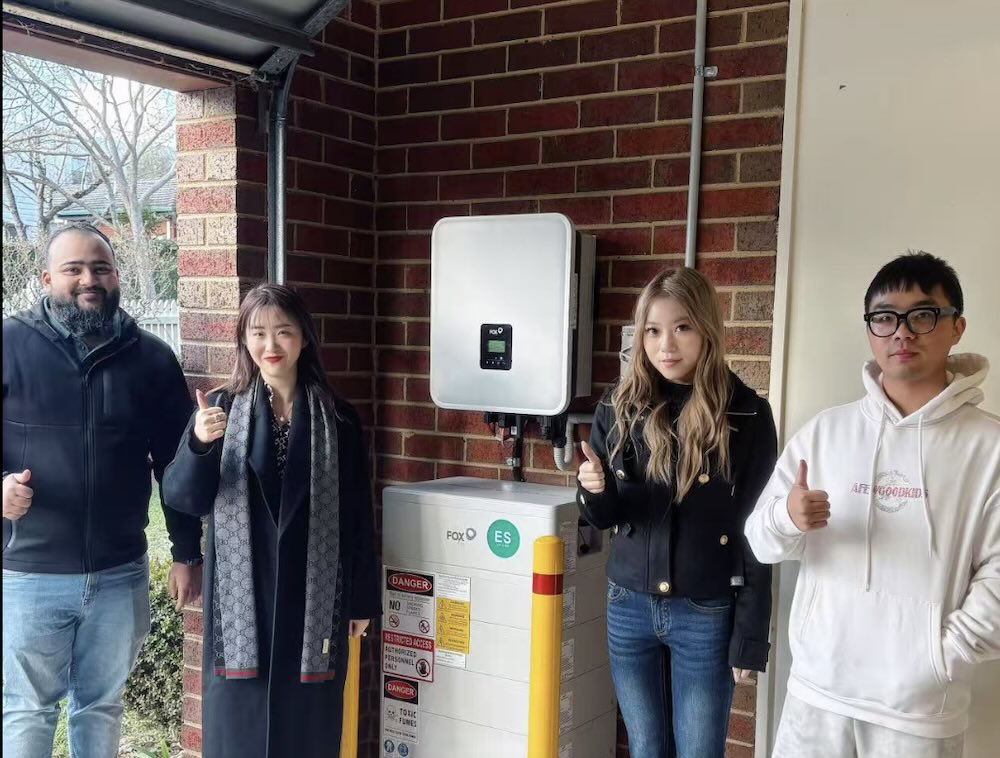
The newly minted leader of Australia’s home battery market, China-based manufacturer Fox ESS, has claimed a new installation record of 19,000 systems installed across the country in March – 7,000 more than its February total.
Fox ESS – a relative newcomer to Australia’s home battery market – was last month named as the new number one brand, taking the title from fellow China upstart, SigEnergy, based on the February data from industry analyst SunWiz.
As the March SunWiz data revealed early this week, the already booming home battery market “shattered” a range of records over that month, fuelled by the last-ditch scramble to take full advantage of the federal rebate before changes to its settings are introduced in May.
According to SunWiz, total nationwide registrations through the Cheaper Home Batteries scheme reached 1.6 gigawatt-hours in March – a new record, surging 35 per cent above levels recorded in February. The average size of battery being registered also jumped to a record 40 kilowatt-hours (kWh).
“The race to beat the 1 May CBHP subsidy cut sent the market into a frenzy,” said SunWiz managing director Warwick Johnston. “The urgency is written in the numbers: average ESS size hit a record 40 kWh, as buyers went big while the going was good.”
Fox ESS, too, appears to have shared in the March spoils, announcing its own monthly record in an update posted on LinkedIn on Thursday.
“We’re thrilled to announce that 19,000 Fox ESS systems were installed across Australia in March 2026,” the post says.
“That’s more than 2 systems installed every 5 minutes.”
The new record – and dizzying rate of installs – comes as the national Clean Energy Regulator (CER) issues a fresh warning to industry to brace for the change of rebate settings and only commit to what can be delivered ahead of the May 01 deadline.
The changes will see batteries sized up to 14 kilowatt-hours (kWh) continue to receive the full roughly 30% discount off the up-front cost of a storage system. Batteries sized between 14 kWh-28 kWh will get 60% of the discount, while batteries between 28 kWh and 50 kWh will get 15 per cent.
This means the existing rebate is only available for systems installed before 1 May – and the CER is keen to remind installers that there will be no exceptions to that rule.
“From 1 May 2026, the rebate will be tiered and adjusted according to the size of the battery, which could result in significant price differences for customers especially for larger systems,” the regulator said on Thursday.
Battery systems sold but not installed by May 01 will remain eligible, CER says, but will receive a reduced number of small-scale technology certificates (STCs) based on the changed rebate.
“This is another reminder to retailers to only commit to what they can deliver,” says CER executive general manager, Carl Binning. “Be honest about your availability to install solar batteries when quoting jobs to customers.
“Safety is the number one priority, and installers can claim no more than two installations per day.
“It’s very important that contracts entered into are honoured.
“If you agree to a solar battery installation before 1 May but can’t deliver, you may be liable to pay the difference.
“Deceptive, misleading or unsafe behaviour will not be tolerated,” Binning says. “This is a high integrity scheme, with robust controls in place, and we’re going to enforce them.”
The Australian Competition and Consumer Commission (ACCC) and state and territory fair trading bodies will also be closely monitoring the industry to ensure consumers are protected from any predatory market behaviour.
If you would like to join more than 29,000 others and get the latest clean energy news delivered straight to your inbox, for free, please click here to subscribe to our free daily newsletter.