Here’s a stat to blow your mind.
According to reporting from Energy Storage News the whole of Europe (including the UK but presumably excluding Russia) brought 3.4 gigawatt-hours of grid-scale battery capacity online in the month of March, which it states was likely to be a record level of monthly capacity for Europe.
The article notes this represents close to a fifth of overall global grid-scale battery installations -which were 18.4 gigawatt-hours. They don’t define “grid-scale” but I’m presuming it means large shipping container-sized battery systems installed by power utilities.
That’s not the impressive stat.
The impressive one is that by comparison Australian households (and a small number of small businesses) installed just under 1.65 gigawatt-hours of small-scale batteries over the same month of March.
Australian households are installing batteries equivalent to 9% of the total battery capacity installed by power companies across the entire globe, and almost half what Europe managed.
Another notable comparison point – Australian household battery capacity installed over March was equal to 19% of the capacity brought online in China over the same month.
To put this all into perspective, Australia has a population of 27 million, while Europe has a population of around 500 million and China has a population of 1,400 million. Both these geographies are dominated by utility-scale battery installations, with relatively small installations of batteries at the household level.
Not only that, over April Australian households will almost certainly install more than what they did in March. Green Energy Markets analysis indicates that Australian households are likely to crack 2 gigawatt-hours of battery installations over April.
Can monopoly power networks deliver batteries cheaper and faster?
As an aside, less than a year ago our monopoly electricity networks were claiming they could roll out “community” battery capacity faster than a free market solar industry working with households could do and at lower cost. So how has that gone?
Back in January 2023 the Federal Government launched its Community Battery finding program. According to a recent Auditor General review of this program as of January 2026, or three years later, 491 battery projects had been funded equal to around 0.3 gigawatt-hours or about 18% of what households installed just last month.
But here’s the kicker – of those 491 projects, 433 or 88% were still not operational.
The Auditor noted that in terms of the early rounds of funding which were administered by the Government’s Department of Climate Change and Energy (ARENA also administered grants but at a later date), 66 per cent of projects sought to extend their completion dates out by an average of 40 weeks.
Based on March household installation rates, the competitive solar industry could install 15 gigawatt-hours of household battery capacity over just that 40 week project delay period.
A monopoly utility faster than households and the highly competitive solar electrical trades industry? I don’t think so.
These “community” batteries delivered mainly by monopoly network utilities were also far more expensive than what is being delivered by the competitive solar industry to households. The original guidelines for the community battery program limited government grants to $1,000 per kilowatt-hour.
But the Department of Climate Change and Energy clearly quickly threw that constraint out the window once they saw what the networks needed, and the average grant actually provided was $1,586 per kilowatt-hour.
Networks were originally expected to fund 50% of the cost (of which electricity consumers would have probably had to pick up the tab via Regulator approved “innovation allowances”), so if the Government upheld this requirement then the overall cost would have been $3,000 per kilowatt-hour.
ARENA didn’t manage to do all that much better and gave $1,280 of taxpayers’ money per kilowatt-hour. In this case we actually know the contribution to the project cost from the networks and other community battery proponents was 60%.
So that means the overall cost of these so called “community” batteries was $3,200 per kilowatt-hour (excluding GST).
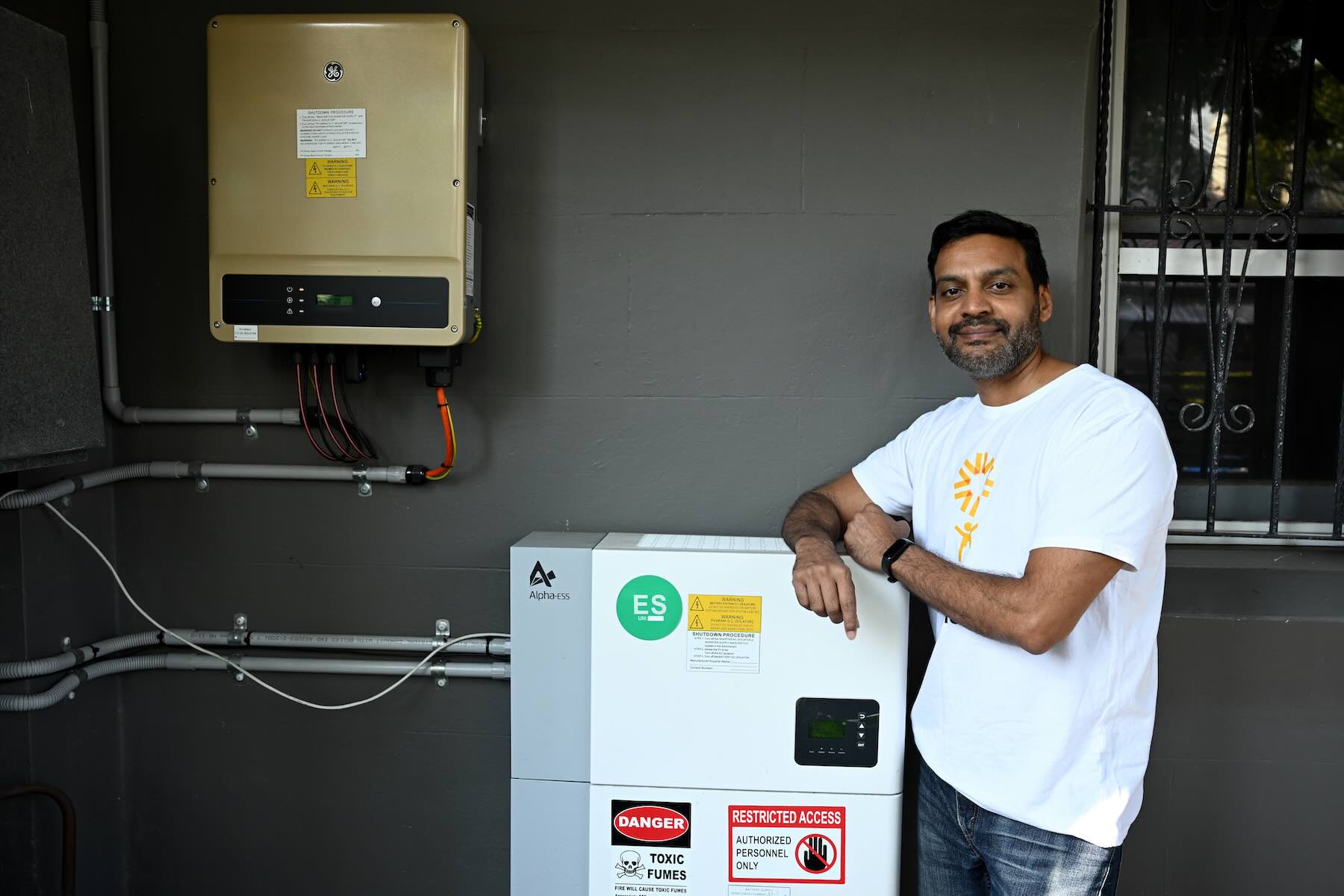
By comparison my very own battery system cost $500 per kilowatt-hour fully installed including GST – before applying the STC rebate (pre rebate cost).
The average cost being paid by the market as a whole is likely to be a bit above that, but it’s pretty damn clear that monopoly networks’ costs are far, far above what the competitive solar industry can deliver.
Keep this all in mind, as monopoly electricity networks mount a campaign to be given the regulatory right to force electricity consumers to pay them to roll out electric vehicle charging infrastructure. This too is based on the claim they can do this faster and cheaper than via a competitive market.