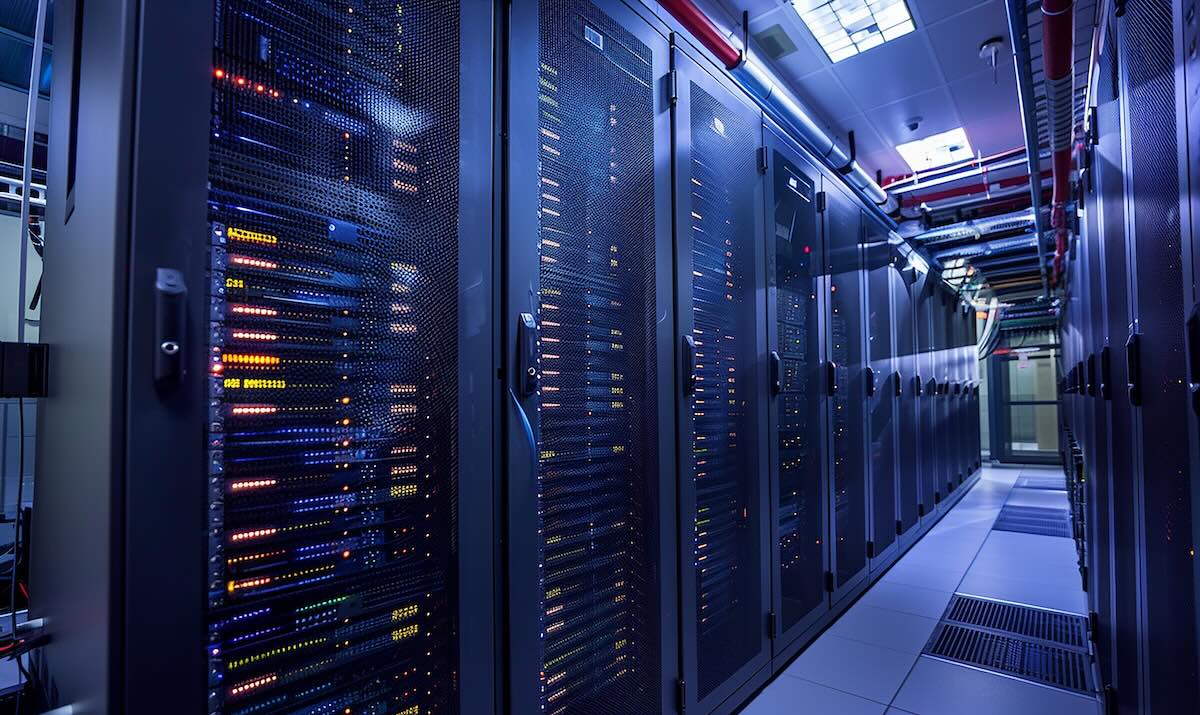
Elon Musk reckons that the newly floated SpaceX will be sending AI data centres into orbit as soon as next year, powered by solar, and he also predicts a trillion dollars of revenue for the company within four years. Good luck with meeting those predictions.
In Australia, there are more earthy ambitions, but the hope is that data centres can come to the rescue of the country’s renewable energy target, and even unlock those latent hopes of becoming a renewable energy superpower, although not in the way that most people imagined just a few years ago.
We’ll put aside Musk’s wild predictions for the moment, apart from noting that the market did not react well to his musings, and sent the share price of SpaceX down by another 10 per cent, or about $A200 billion.
It seems almost too casual to mention a loss of that size disappearing in a matter of hours, or even minutes, but that sum would easily cover the cost of what Australia needs in new wind, solar and storage investment to meet that now ambitious target of 82 per cent renewables, maybe twice over.
Musk is planning to power his orbital Ai data centres directly from the sun, but his terrestrial plans seem to be a mix of gas turbines and Tesla Megapack batteries. In Australia, if federal energy minister Chris Bowen and most other state energy ministers have their way, that wouldn’t be allowed.
“Data centres aren’t a challenge to 82% (renewables target). Handled well, they help us get there,” Bowen told the National Press Club in Canberra on Wednesday as he and the market rule maker rolled out a package of measures designed to ensure that outcome.
Bowen’s intention is to require all data centres to bring their own firmed renewables, and he intends to legislate it to stop the Coalition-led Queensland and Northern Territory governments going down the fossil gas route.
Their antipathy to renewables and the roadblocks they have set up over the near term is already making the national 82 per cent target look harder to reach, and Bowen’s flagship Capacity Investment Scheme has been hamstrung by the inability of wind projects to reach financial close – just three out of 31 to date.
The new data centre rules, Bowen hopes, will now get many of those projects over the line. Bowen and the Australian Energy Market Commission on Wednesday unveiled a bundle of new proposals to try and ensure that is the case.
These include the use of REGO (renewable energy generation of origin) certificates to offset energy consumption, and a requirement of data centres to buy sufficient “firm” generation contracts to cover their load.
More importantly, data centres will face requirements to register with the market operator, possibly under a new category with its own requirements – mostly focused on flexibility and strict rules about how they behave within the grid.
And they will be encouraged to “co-locate”, which most likely means battery storage, as a way of fast-tracking connection approvals and guaranteeing flexibility.
But it could also fulfil some renewable energy developer dreams of having data centres sit side by side with their wind or solar farms, and lessen their dependence and limitations on the transmission network.
Bowen is accused of over-reach on renewables by the fossil-fuelled Coalition and many in mainstream media. But this approach, to ensure that these data centres are powered by green energy, and do not add to emissions, may have a greater silver lining – and one that opens the door to opportunities not even dreamed of before.
Much of the data centre focus has been around those based on inference compute – essentially running the Ai tools that people are using now, that power Netflix and other streaming services and the like, They use a lot of energy, but mostly are within the bounds of what we know can be accommodated in the grid.
The big Ai companies, Anthropic and the like, are looking for capacity for training runs that build new Ai models, and which use a phenomenal amount of energy – some same 100 gigawatt hours of more. These deliver so-called model weights, described by some as the DNA of new models.
And it is this opportunity that Australia may be able to seize. US and China lead on Ai, but both countries offer headaches for Ai developers for various and multiple reasons. Australia, industry insiders suggest, could position itself as a stable, western democracy with untold riches of wind and solar. And there are not many of those.
The Ai developers, the expers suggest, will be attracted by Bowen’s tough restrictions, and see benefits operating in a country not afraid to impose strong regulations. Some of these companies are fearful of their own technology – in the wrong hands and without proper oversight.
Australia has been dreaming, at least for the past decade, of the potential of being a renewable energy superpower – initially through green hydrogen, then through sub-sea cables, and more recently with green steel. These are all promising, but are not happening at scale anytime soon.
With Ai data centres, the country is now dealing with an industry that wants to go as fast as possible, are not sensitive to cost, and which want to be in a stable western democracy.
This is obviously already the target of tech-savvy green investors like Andrew Forrest, Mike Cannon-Brookes and Intercontinental Energy, all seeking to unlock the tens of gigawatts of wind and solar capacity at their doorstep.
“The superpower mission has never been short of electrons, it has been short of a way to sell them,” one expert tells Renew Economy. “Compute closes the gap; computation done on cheap renewable power, exported as bits, with the transmission already laid on the seabed.”
Janet Egan, a Washington-based Ai expert, wrote an interesting piece for The Strategist, from the Australian Strategic Policy Institute in March, that touches on some of these possibilities.
Australia, she said, is uniquely placed. “Its land, solar and wind resources and skilled trades workforce allow it to build large-scale clean energy projects quickly. AI companies are already agreeing to absorb any energy price increases that their operations would otherwise impose on households,” Egan writes.
“Data centres could de-risk investment in clean-energy projects and accelerate Australia’s energy transition. AI chip supply will be constrained over the next few years, meaning that AI infrastructure built in Australia wouldn’t be adding to global computing power; it would be displacing dirtier alternatives.
“Australian AI data centres can be good for the grid and good for the world.”
But Egan writes that there are other benefits. One is that when major AI companies can build and conduct frontier AI research in a country, talent follows, engineers relocate, institutional partnerships form and startups spin out, seeding a vibrant AI ecosystem.
But that also means that AI labs with a big presence in Australia would have stronger incentives to consider Australian policy objectives, engage meaningfully with the Australian AI Safety Institute and more readily support Australia’s intelligence and defence agencies.
“Data centres represent the point of entry, but the broader objective is positioning Australia as an active participant in shaping the AI future,” she writes.
To join more than 29,000 others and get the latest clean energy news delivered straight to your inbox, for free, click here to subscribe to our free daily newsletter.