If Australia is to achieve its target of reaching 82 per cent renewables by 2030, or even a few years later, and reach even higher levels down the track, it’s going to have to learn to operate the grid without fossil fuel – and, quote possibly, without spinning machines.
The share of renewables in the power system is one thing, but the biggest challenge for grid operators has been to ensure “system strength”, a broad term that is often referred to as the “heartbeat of the grid”, the ability to respond and resist catastrophic disruptions. Without that heartbeat, the system dies.
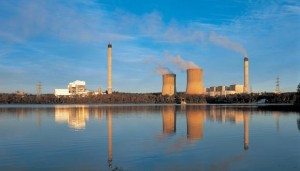
The traditional view of system strength is that it must be supplied by a spinning machine, either burning fuel like a coal or gas generator, a hydro turbine or a synchronous condenser – massive machines that replicate the grid services of spinning turbines, without burning any fuel.
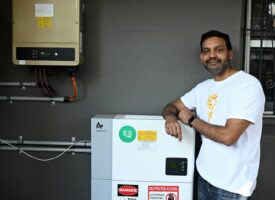
But the likes of Tesla, Fluence, SMA and others have a different idea. They all make grid-forming battery inverters, now installed in just about every big battery (and home battery for that matter) being built in Australia.
They argue that these inverters can replicate all of the system services needed for the grid, including the heartbeat known as system strength.
And, they say, they can do this at a fraction of the price of the dozens of syncons that are being ordered around Australia at a cost of multiple billions. And with price of syncons soaring even further, and proving hard to find, it has become a critical issue for the success of Australia’s green energy transition.
The Australian Energy Market Operator and the transmission companies that are responsible for maintaining system strength in their respective states have accepted the grid forming inverter argument, up to a point – but have baulked on the issue of whether they can provide protection grade fault current, a critical component.
Grid-forming inverters have proved their worth in multiple instances – in your EV, in your home, is isolated mini grids, and even in bigger grids such as Fortesue’s mining operations in the Pilbara.
But AEMO and the transmission companies want proof that it can be done on a very big grid, and have flagged a world-first trial on a grid with a load of more than 100 megawatts to test those claims.
AEMO’s head of system design Nicola Falcon says the preparations for that grid trial are still progressing, but is taking time because of the complexity of such an endeavour, and because there are significant assets that must be protected.
“We’re still working through the trial design because there’s a few risks that need to be managed …. but it’s really encouraging to see some of the options that we’re pursuing,” Falcon tells Renew Economy in the latest episode of the weekly Energy Insiders podcast, published on Friday.
“We’re continuing to put our foot on the pedal on it. It’s just going to take some time.
“It’s urgent for us because we see that if it can be proven that these batteries that are grid forming can support protection quality fault current, then you this is a really big game changer, which will help ensure that this transition is done as efficiently as possible.”
That urgency was underlined this week by NSW transmission company Transgrid, which said it was reducing the number of syncons it was installing because of soaring prices, and because they were proving hard to obtain.
“Transgrid has optimised its preferred system strength portfolio in response to rapidly changing market conditions, including the rising cost and delayed availability of synchronous condensers, and updates to anticipated NSW coal retirement timelines,” the company said in a statement on Tuesday.
Transgrid had already flagged that the cost of syncons had doubled in the four years prior to announcing a revised budget of $1.2 billion for its first 10 syncons. And it is now looking for a greater role for grid forming battery inverters because of further price rises.
The syncon headache had also been flagged in AEMO’s 2026 Integrated System Plan that was released in late June, which noted that many countries are competing for the same materials and technologies, which is exacerbating delivery risks and pushing up costs.
“Australia may not be able to access reliable and cost-effective supply of these assets as global demand remains high, especially if the global supply chain is vulnerable,” AEMO noted.
The issue over syncons and grid forming inverters is a contentious one, and often guided by the technologies that various engineering experts are familiar with, or have an economic interest in. But AEMO’s Falcon says there has been important progress, at least in defining the problem.
“The other thing that we are doing is starting to have more conversations with protection engineers to make sure that when we talk about protection quality, fault current, we’re talking about the same thing,” Falcon told Energy Insiders.
In the podcast, Falcon discusses the latest ISP and how how it has changed since the draft released in December last year, and from 2024 version and the first that was produced in 2018.
And she notes that work has already started on the 2028 version, with the updated scenarios, inputs and assumptions to be published later this year, as well as an updated transition plan for system security, which is likely to take into some of the latest thinking on grid forming inverters.
“We’re having a bit of an in-house joke at the moment that the ISP is a little bit like painting the Sydney Harbour Bridge,” Falcon says. “As soon as you get to the end, you start at the new one.
You can listen to the full interview with Falcon in the latest episode of the Energy Insiders podcast here: Energy Insiders Podcast: Is Australia on target for a “step change” in energy?
You can listen to the full interview with Falcon in the latest episode of the Energy Insiders podcast here: Energy Insiders Podcast: Is Australia on target for a “step change” in energy?
You can also listen to other Energy Insider podcast episodes on this issue, featuring interviews with Tesla’s head of energy in Australia Josef Tadich here, and with SMA Global CEO Jürgen Reinart here.