Flying in the face of the fearmongering often dragged out to oppose clean energy technologies, fully renewable energy utility ScottishPower recently revealed that 99.9 per cent of the materials from Scotland’s first commercial wind farm have been successfully recycled and reused following decommissioning.
One of the most pervasive “warnings” against clean energy technologies like solar and wind energy is their supposed inability to be recycled at the end of their life.
And while continued innovation and governmental policy support will be required to ensure that things like solar panels and wind turbine blades are able to be recycled or reused, the groundwork has already been laid.
ScottishPower, part of the Iberdrola Group, and the first integrated energy company in the UK to generate 100 per cent green electricity, recently highlighted how the framework for recycling and reusing wind turbines is already in place in the UK.
According to a report published following the decommissioning of Scotland’s first commercial wind farm, 99.9 per cent of the materials from the 26 wind turbines were recycled and reused, with contracts for at least 10 supply chain companies in Scotland and elsewhere in the UK.
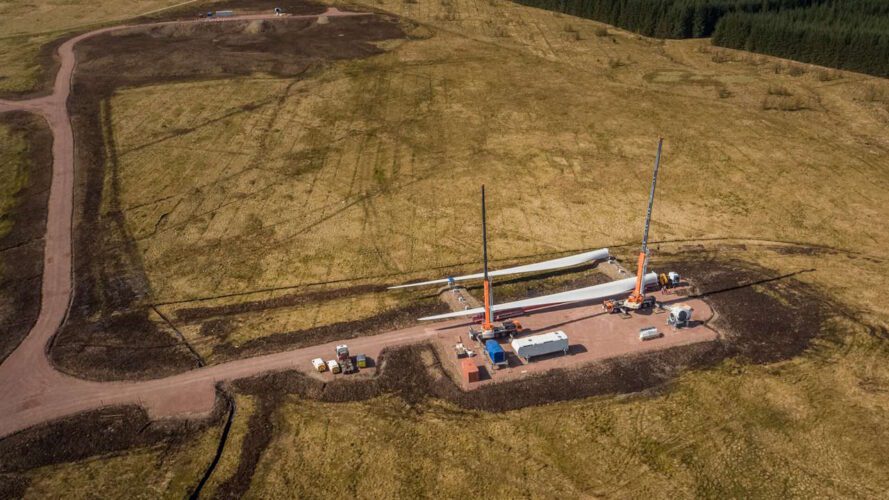
“The decommissioning of Hagshaw has been a real flagship project as it proves we can commit wind power to being part of a circular economy, but also that we can support a whole new industry of the future,” said Ross Galbraith, ScottishPower Renewables onshore construction and operations director.
“One of the ambitions for the project was to maximise the reuse and recycling of the 26 decommissioned wind turbines and their associated components, and we achieved a fantastic recycling outcome of 79.5% and reuse outcome of 20.4%.
“This is a great result for the project and demonstrates what is achievable with the support of the supply chain, the majority of which was within 30 miles of the site – another fantastic achievement of the project.”
The Hagshaw Hill wind farm was Scotland’s first commercial wind farm, completed and operational in 1995, consisting of 26 600-kilowatt (kW) wind turbines for a total generation capacity of 15.6 megawatts (MW). A further 20 wind turbines were added in 2008.
Thirty years after it began operating, however, the original 26 wind turbines had to come down – making way for 14 new, larger, and more efficient turbines which were installed as part of the “repowering” process which was completed last year.
And those 26 turbines, instead of heading directly to landfill or any of a dozen other horror stories clean energy opponents like to parrot, are now being recycled and reused.
According to the decommissioning report, compiled by engineering, management, and development consultancy Mott MacDonald on behalf of ScottishPower Renewables, 99.9 per cent of the materials from those 26 turbines were recycled and reused.
“Through reviewing the project decommissioning data and interviewing project stakeholders, we have been able to evidence that the continued evolution of the wind energy sector maximises the value of resources, minimises carbon emissions and supports jobs in the local economy,” said Mark Crouch, Mott MacDonald’s decarbonisation lead.
“The energy sector and companies in the supply chain can invest with confidence when they can see windfarms being approved for repowering. This could mean jobs and opportunities for years to come as the first windfarms make way for the next generation.”
For example, Northern Ireland-based company Plaswire recycles the blades, converting them into a polymer used to replace traditional building materials like concrete, timber, and virgin plastics, and used in a wide array of applications from site fencings, marker posts, drainage components, and other construction materials.
“This is a time of explosive growth for wind decommissioning, and this report is evidence that there are incredible opportunities for the future,” said Andrew Billingsley, CEO of Plaswire.
“As well as the work we have been doing with companies in the UK and here in Northern Ireland, we’ve now finally had approval to process blades from outside the UK, opening up a massive European and international market for us.”
Other components from the 26 wind turbines are being reused, including as training aids as the wind industry gears up to repower many of the first operational wind farms.