Chinese clean technology is helping Australia decarbonise electricity, transport, industry and mining. The challenge is to turn access to globally competitive, scaled supply chains into lasting local capability and competitive advantage.
Chinese technology is now deeply embedded in Australia’s energy transition, from batteries to solar and wind farms, electric vehicles (EVs) and mining equipment.
The question is no longer whether Australia will use Chinese technology, but how it can do so while strengthening our energy security and capturing more economic value at home.
The debate too often swings between two extremes: Chinese technology is indispensable, or Chinese involvement inherently creates too big a geopolitical risk.
In October, former Australian ambassador Geoff Raby argued that Canberra’s China policy needs to move beyond stabilisation, identifying energy security and economic decarbonisation as practical areas for cooperation.
His warning about the Foreign Investment Review Board (FIRB) highlights a real tension: Australia needs technology and capacity to build its future clean energy system, while managing security risks transparently and proportionately.
Recent projects suggest a more practical approach. Australia can draw on the scale and competitiveness of China’s clean-tech industries while setting clear rules for security, investment and local benefits.
China’s exports of batteries and EVs reached record levels in the first three quarters of 2026, according to Ember’s clean-energy export tracking. The 12-month rolling sum of exports of batteries and EVs to Australia was US$4.93 billion and US$7.05 billion by September 2026, up 85% and 153% year on year. China’s exports to Australia made up 5% of batteries and 7% of EVs globally.
Australia’s transition is advancing: renewables supplied 47% of national grid electricity generation in the 12 months to October 2026, while battery-electric vehicles accounted for 24.9% of new vehicle sales in August 2026, outselling petrol-only cars for the first time.
These outcomes reflect expanding policy, local deal capacities, network investment, global innovation, and Chinese suppliers. Competitively priced products from China have lowered the cost and broadened the choices available to Australian households and businesses.
The opportunity is bigger than importing cheaper equipment. It is to use world-leading, low-cost technology to build a more affordable, reliable, and productive Australian economy, including building a competitive advantage in globally low-cost, clean energy to enhance our downstream industries, including mining value-add.
Policy creates demand; competition helps deliver it
Australia’s rooftop solar success shows how policy and global supply can reinforce each other. The Small-scale Renewable Energy Scheme, state incentives and the federal Cheaper Home Batteries Program have supported household adoption of solar and storage.
Chinese manufacturers are major suppliers: SunWiz data put Sigenergy at around 25% of Australia’s home-battery market in 2025, with Sungrow also among the leading brands.
The next opportunity is commercial and industrial rooftops. In October, the small-scale scheme was expanded to cover systems up to one megawatt (MW). The government estimated that support could reduce the cost of a 250-kilowatt (kW) system by about $68,000 and save its owner $50,000 a year. Trina Solar has said the change is encouraging businesses to combine solar panels and batteries.
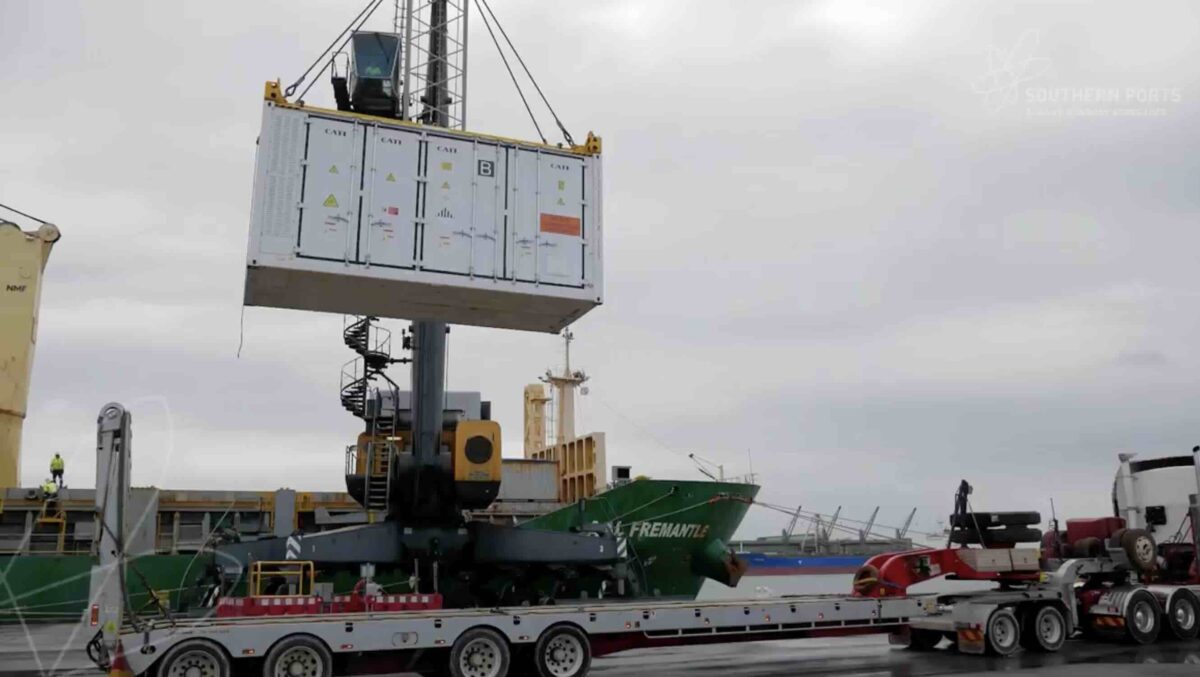
At grid scale, the CATL–Quinbrook partnership at Queensland’s Supernode battery energy storage system (BESS) illustrates how Chinese battery technology can become part of a long-term Australian asset.
The project will reach a capacity of 780 MW and deliver 3,074 megawatt-hours (MWh) over its first three stages. It has secured $1.2 billion in financing through syndicated bank debt from 7 banks, including Bank of America, Commonwealth Bank of Australia (CBA), Deutsche Bank, Mizuho Bank, MUFG Bank, DNB Bank, and Rabobank.
CATL supplies battery systems and lifecycle services; design optimisation for stage three could reduce the site footprint by 20%. By easing pressure on the electricity system and better using existing network capacity, large-scale storage can also support efforts to reduce grid bottlenecks and connect new renewable generation faster. Storage shifts solar power into evening peaks, absorbs otherwise curtained generation and provides fast grid support as coal units retire.
Wind is seeing a similar change. Envision Energy is supplying 7.8MW turbines for Fortescue’s 132MW Nullagine project and Neoen’s 179MW Narrogin wind farm. Envision is also associated with a hybrid proposal at Tronox’s Cooljarloo mineral-sands operation: 156MW of wind paired with a 169MW/1,447MWh, eight-hour battery.
From imported equipment to cleaner industry
The economic potential grows when clean technology is applied to Australian industry. Fortescue’s plans to electrify its Pilbara operations include renewable power to permanently cut reliance on high-emissions, expensive imported diesel.
Fortescue has contracted electric mining equipment from China’s XCMG, including haul trucks, water trucks and loaders. Envision’s turbines for Nullagine are the largest deployed in Australia to date. At the same time, Fortescue’s self-lifting tower design should accelerate deployment rates and reduce concrete and heavy-crane requirements in the remote, cyclone-exposed Pilbara.
Renewable-powered mines and electrified equipment would reduce exposure to volatile fuel prices and permanently improve our Australian trade balance as our key North Asian trade partners increasingly focus on opportunities to cut embedded emissions in the whole supply chain. Projects also support local work in construction, electrical trades, engineering, logistics, installation and maintenance.
EVs offer clear evidence of reaching a pivot point. In August 2026, Chinese brands BYD, GWM, MG, Geely and Chery together accounted for 26.4% of Australia’s new-vehicle market.
BYD was the eighth best-selling car brand in Australia in 2025 after just three years of operating in the country. Sales of BYD’s plug-in hybrids and EVs jumped 61% to 76,614 in the year to September 2026.
A wider range of competitively priced models can make electric driving more accessible and reduce reliance on imported petrol and diesel. Policy settings, charging infrastructure and consumer preferences also matter, but product choice and superior technology at lower prices are a key part of the story.
However, China’s involvement is also gradually expanding to include research and development, construction, financing, and job creation.
Sunman’s proposed Hunter Valley Solar Foundry, backed by up to $151 million in conditional Australian Renewable Energy Agency (ARENA) support and $20 million from the NSW government, aims to manufacture 500MW of modules a year leveraging lightweight solar technology developed by UNSW alumnus Dr Zhengrong Shi.
Its proposed factory is expected to create 200 construction jobs and 100 ongoing advanced-manufacturing roles, alongside training pathways in solar production, robotics, automation and precision engineering.
Canadian Solar’s e-STORAGE project – the 960MWh Summerfield BESS outside Adelaide, SA – is being delivered under a turnkey engineering, procurement, and construction (EPC) contract.
A joint venture of INTEC Energy Solutions and Gotion Hi-Tech Australia has taken on a significant hybrid project, the Lower Wonga solar farm and BESS project in Queensland, for Lightsource bp.
Akaysha Energy is gearing up for the next phase of large-scale energy storage development after a consortium of 11 banks, including Bank of China, contributed to a new $A1.75 billion financing facility.
BYD’s recent employee directories list 163 corporate employees in Australia. The company is rapidly expanding local functions spanning product, IT, fleet management, customer service, aftersales, and battery energy storage.
Beyond direct employment, BYD’s rapidly expanding network of more than 120 sales and service sites is supporting a much broader workforce of local sales staff, technicians, service advisers, logistics workers and other automotive professionals. BYD currently employs 10,000 people in Europe, and plans to grow its workforce to 40,000 by 2030.
The Sundown solar and battery project in New England, NSW, shows how Chinese-linked clean energy companies are moving beyond exporting equipment to developing projects in mature markets. Developed by Recurrent Energy, it has recently moved one step closer to construction while navigating Australia’s environmental, planning and community requirements.
This is a more realistic interpretation of “Future Made in Australia” than trying to manufacture every component domestically. Australia can’t reproduce China’s entire solar, battery or turbine supply chain at scale in an economically viable way.
It can, however, build on its strengths in research, renewable resources, critical minerals, project development, grid integration, mining applications, and recycling, and as a trusted key Asian trade partner.
Security needs clear, proportionate rules
Australia’s growing over-reliance on Chinese cleantech carries supply-chain and cybersecurity risks, from potential trade disruptions to remote access to connected infrastructure.
But risks should be assessed proportionately: importing a battery is not the same as granting a foreign investor control of a critical grid asset. Clear standards should address ownership, data access, supplier dependence and contingency planning, regardless of nationality.
For example, battery systems connected to critical infrastructure could be required to keep ultimate operational control in Australian hands, with clear limits on remote access and backup arrangements if a foreign supplier becomes unavailable. Even a “China +1” strategy.
Investment screening needs greater transparency, predictability, and strategic alignment. An April 2026 study by the University of Technology Sydney’s Australia-China Relations Institute (ACRI) found that Chinese direct investment in Australia had fallen by about a quarter since 2019, to less than three per cent of total foreign investment.
In Climate Energy Finance (CEF)’s reports on China’s outbound cleantech investment, we found that while security screening remains essential, opaque or protracted reviews can deter capital and delay projects.
Published criteria, clear timelines and risk-based conditions would help Australia protect critical infrastructure while attracting investment needed for the energy transition. Trade and investment are two sides of the same coin:while Australia enjoys record-high trade levels with China, it faces a concerning decline in investment opportunities.
A model for other middle powers
Australia’s experience is not an argument for unconditional dependence on China, nor for rebuilding every clean-tech supply chain at home. It is a case for combining ambitious domestic demand with access to competitive global technology, then using policy to retain more value locally.
That means maintaining effective deployment incentives, speeding up grid connections, strengthening safety and cyber standards, and directing public funding towards skills, research, domestic supplier development and commercially viable manufacturing.
Other middle powers can’t alone match China’s industrial scale, but they can shape how global technology serves their economies. They could collectively diversify supply where doing so improves resilience, while recognising that such diversification comes at a public cost.
They can welcome foreign suppliers while setting clear expectations for local training, services and partnerships. And they can screen genuine security risks without using nationality as a substitute for evidence, while ensuring access to domestic resources is conditional upon domestic value-adding, as Indonesia, Zambia and Guinea are requiring.
Australia’s transition will be built through many technologies and multiple strategic bilateral partnerships. Chinese clean-tech firms are already helping to supply them. The strategic choice is not simply whether to engage, but whether Australia can make that engagement collaborative, as well as cheaper, safer and more productive – for our electricity system, industries and workers, towards alignment with the climate science.
Tim Buckley is director of Climate Energy Finance. Li Ang is China analyst, Climate Energy Finance