PRESS RELEASE
Australia’s home battery boom raises a question: how much storage should households buy now, and how much might they need later?
The Clean Energy Council recorded 276,011 installations in the first half of 2026, up 52% on the preceding six months. Average installed battery size reached 35.3kWh in April before falling to 26.6kWh in June. The drop coincided with May’s rebate changes, although a direct causal link has not been established.
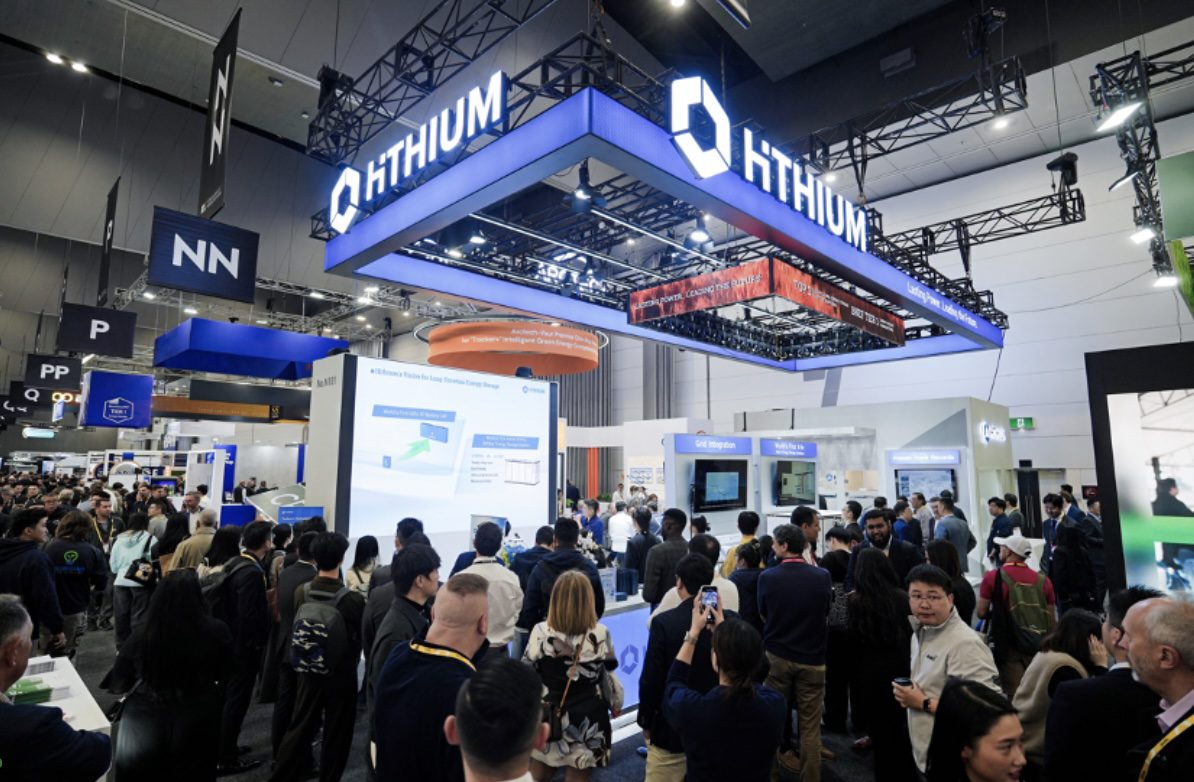
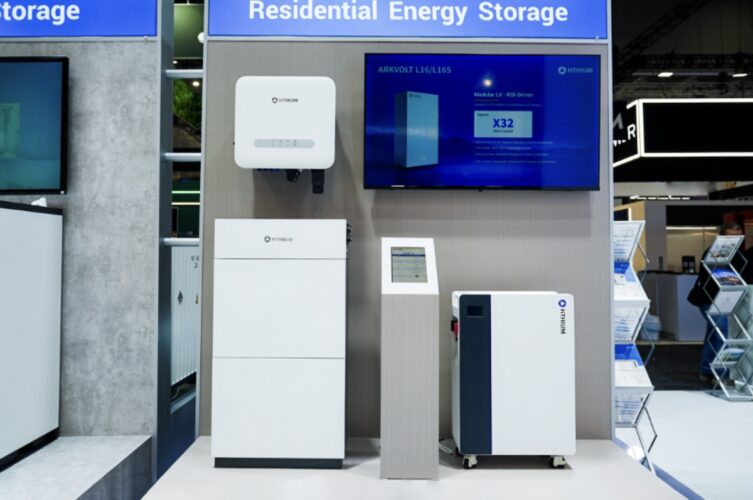
At All Energy Australia, held in Melbourne on October 28–29, Chinese energy storage manufacturer HiTHIUM showcased two home battery systems with distinct technical approaches: the ARKVOLT F8S and HeroEE 16.
Capacity Planning and Long-Term Value Come into Focus
Since May 1, the federal Cheaper Home Batteries Program has applied progressively lower small-scale technology certificate (STC) factors as eligible usable battery capacity increases. The scheme applies only to battery systems that meet the relevant eligibility requirements, including applicable product approval and installation conditions.
Beyond policy settings, the cost-effectiveness of a home battery system depends on how much storage a household is likely to use. A household with surplus rooftop solar, high evening electricity demand or plans for an EV may benefit from a larger battery, while another could end up paying for capacity it rarely uses.
There is therefore no one-size-fits-all ideal battery capacity. Appropriate sizing should take into account current electricity consumption, anticipated future demand and long-term system costs.
Two household strategies, two technical approaches
These varying needs point to two broad approaches to home battery sizing. Households uncertain about future loads may want to install enough for today, then expand as electricity use grows. Those with high, predictable demand may prefer substantial capacity upfront.
When comparing upfront installation with future expansion, households need to consider initial investment, the cost of additional equipment and installation, system compatibility, and long-term energy needs to determine the most suitable battery capacity configuration for their circumstances.
HiTHIUM’s answer is to offer two distinct technical appraoches. The high-voltage F8S focuses on flexible module-level expansion; the low-voltage HeroEE 16 offers a larger starting unit with whole-unit scalability and targeted servicing.
ARKVOLT F8S: expansion without starting over
The high-voltage ARKVOLT F8S offers approximately 8–32kWh configurations, addressing a familiar problem: modules age differently.
In conventional series-connected strings, differences in capacity or state of charge can cause one module to reach its operating limit early, constraining the others. Adding new modules years later can make that mismatch more relevant.
HiTHIUM says the F8S combines DC-BOOST technology, an intelligent battery management system (BMS) and independent module management to limit these effects. It supports manufacturer-approved configurations with new and existing modules, while the company claims DC-BOOST can improve system energy throughput by 15 per cent.

For a family expecting an EV or heat pump in future, that could mean starting with a suitable battery today and retaining compatible installed modules when expanding later, rather than replacing the whole system. Installers may also benefit from module-level information when checking configurations, locating faults and planning maintenance.
Using LFP cells, the F8S carries an IP65 rating and a manufacturer-stated cycle life of at least 11,000 cycles at 25°C, 0.5C and 90 per cent depth of discharge. Its proposition is not simply more capacity, but a system designed to remain adaptable as household needs change.
HeroEE 16: more capacity from day one
For households with substantial, relatively predictable evening demand, HeroEE 16 takes the alternative approach. Built with 314Ah LFP cells, it offers 16kWh of nominal storage in a single 51.2V low-voltage unit, reducing the need to combine several smaller enclosures for a comparable starting capacity.
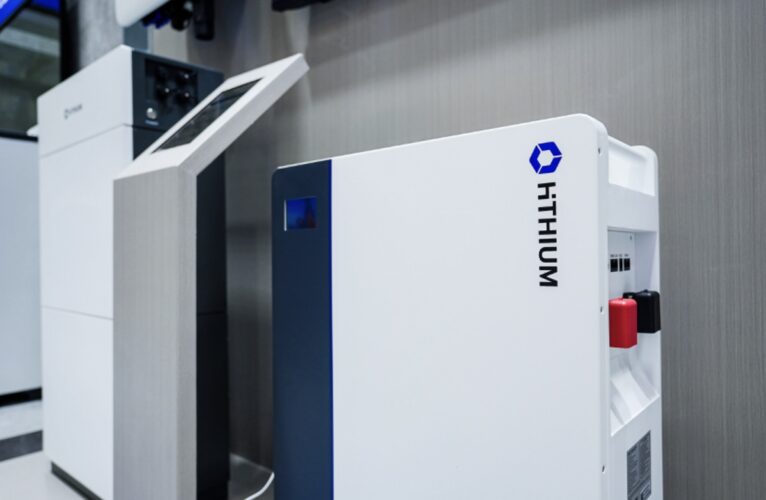
HiTHIUM specifies 11,000 cycles under testing at 25°C, 100 per cent depth of discharge and a 0.5P rate, measured to 70 per cent state of health. This provides a defined reference for durability.
Maintenance and expansion are also built into the design. Individual modules can be tested or replaced without dismantling the entire unit, allowing targeted servicing. Additional compatible HeroEE 16 units can be connected in parallel if storage requirements increase — a whole-unit approach distinct from the F8S’s module-level expansion.
HeroEE 16 is IP30-rated and intended for indoor, floor-standing use, with a specified charging range of 0°C to 40°C.
An Australian foothold beyond the home
HiTHIUM brings wider battery engineering experience. InfoLink Consulting ranked it second globally for shipments in 2025 and the first half of 2026. Its Australian utility-scale partnerships include Woolooga in Queensland with Lightsource bp and Gnarwarre in Victoria with FRV.
For home battery buyers, the distinction is practical: ARKVOLT F8S uses module-level management to support staged expansion, while HeroEE 16 offers higher initial capacity with the option to scale through parallel units. Both designs draw on HiTHIUM’s expertise in specialized LFP cells, system engineering and long-cycle-life battery development. Together, they illustrate why choosing the right storage architecture can matter as much as choosing the right battery capacity as household energy needs evolve.
Underpinning these flexible solution pathways is HiTHIUM’s deep expertise in specialized battery cells, smart modular architecture, and extended cycle reliability. Anchored by its cell innovation and system engineering capabilities, HiTHIUM will continue turning technology leadership into long-term value for residential users across different operating environments.