The $30 billion-plus Anthropic data centre proposed for Queensland’s Darling Downs could significantly add to greenhouse gas emissions and drain as much as a fifth of the state’s peak electricity demand unless it is required to rapidly ramp up renewable energy, energy and climate analysts say.
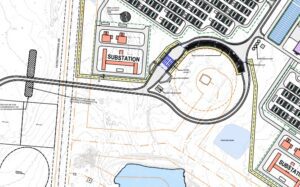
Anthropic, the US-based artificial intelligence behemoth, and Singapore-based Zerra DC developer, released details of the 2.16 gigawatt-capacity data centre planned for a site near Dalby.
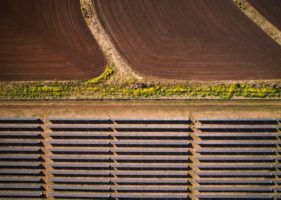
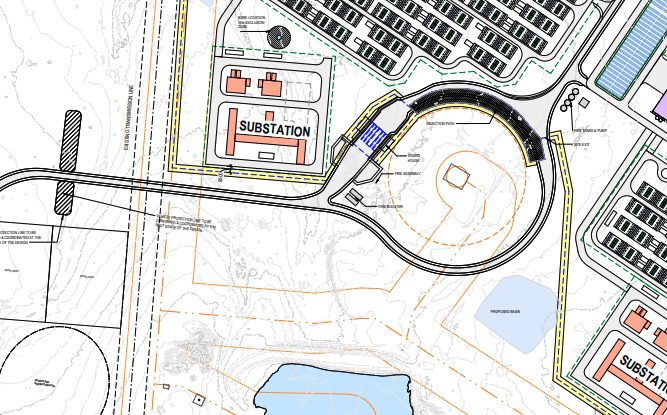
The project’s development application states the location was “located within one of Queensland’s most significant energy precincts.” Nearby is the Braemar 1 and 2 gas-fired power stations, of 504 megawatts (MW) and 450 MW capacity respectively, the 27.4 MW Daandine gas power plant, and the 110 MW Darling Downs Solar Farm.
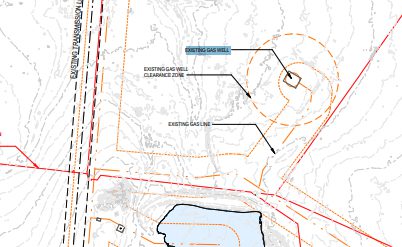
The proposed location even has coal-seam gas wells drilled on the site, with one well in operation. The Western Downs Digital Park, as the project is dubbed, has been designed around that single gas well.
Andrew Smith, Western Downs mayor, says the gas plants are “basically over the fence, with a fair bit of capacity up their sleeve,” and are an option for providing some of the power needed by the data centre.
Smith says the 38,000 square-kilometre shire has 24 approved solar farms and three wind farms, and a large battery. Projects in the approval pipeline, though, “take a fair bit of time to get up and running.” The first stage of the project is reportedly planned to come online by 2027.
The sheer scale of the data centre project – equivalent to about a fifth of Queensland’s maximum summer power demand, according to IEEFA – could be an early test of the federal government’s determination to tie new data centre development with additional power generation capacity.
Last month’s national cabinet implied that Prime Minister Anthony Albanese would support such ventures provided there was “surplus” capacity available, while federal climate change and energy minister Chris Bowen later reiterated that he would oppose “carve-outs” that permitted gas and coal to meet the extra load.
Asked by the Greens in Question Time on Thursday whether he would legislate to require data centres build renewables of “at least” the capacity of the extra demand, Albanese didn’t answer directly.
Artificial intelligence would bring “enormous benefit [to Australia]… but that doesn’t mean there are not risks that need to be mitigated,” he said.
“If there is surplus energy – in gas, for example, in some areas – then we would allow that to be used on the proviso that it does not put pressure on the system, and therefore, put pressure on prices that ordinary Australians are paying,” Albanese said.
“That’s important because you need social licence for these institutions.”
As noted previously by Renew Economy, the government has largely avoided mention of the greenhouse gas emissions impacts if new data centres end up using fossil fuels as their energy source.
“The Queensland and federal governments should reject this project, introduce a moratorium on data centre approvals, and move quickly to legislate appropriate safeguards so our climate, and the communities where data centres are being built are protected from Big Tech,” said Joe Rafalowicz, head of climate and energy at Greenpeace Australia Pacific.
“Then Anthropic can reapply,” he adds.
According to Greenpeace, the new centre’s power demand is comparable to that used by 1.5 million Australian households.
“Planning documents show the first stage of this behemoth project could be powered by ‘behind-the-metre’ gas – the same playbook AI companies have used in the US, leading to a 20% increase in climate pollution from electricity,” Rafalowicz said.
“Now they want to bring their cowboy plans to Australia and the federal government is allowing it.
“If they plugged into the local grid, the power required would increase Queensland’s electricity grid emissions by around 6.6 million tonnes – an 18% rise,” he said. “If they build their own gas-fired power plants, this will drive up Queensland’s emissions even more.”
Jonathan Upson, a consultant with Strategic Renewable Consulting, said the prospect of the data centre tapping into nearby gas plants “might get them past the ‘Bowen test’” in terms of not pushing up power prices – assuming there was sufficient spare capacity.
Upson and fellow energy analyst, Tristan Edis of Green Energy Markets, recently detailed here how the data boom might be managed to avoid “sending power prices through the roof”.
“Data Centres should be required to surrender a new project Renewable Energy Guarantee of Origin for every megawatt-hour of electricity they consume [from the grid],” Upson and Edis wrote. “Only by limiting REGO surrender to new projects, will the government’s objectives of not raising electricity prices and preventing rises in emissions be realised.”
Upson told Renew Economy that recent advice on the treatment of REGOs provided by the Australia Energy Market Commission to energy ministers was incorrect. The advice stated: “Data centres can currently procure a REGO certificate directly from a producer or from the market. These certify that the bearer owns one megawatt-hour of electricity generated from renewable sources.”
The AEMC paper’s recommendation for using generic REGOs for compliance issues was both “useless and very low-cost” and did not require the majority of firming to be from new dispatchable capacity, Upson said.
“If the REGO is from a new renewable energy generator, then it does have meaning as it’s the green credential from additional, incremental clean energy generation,” he added.
On the other hand, if the data park ended up generating its own power then the centre would be covered by the Safeguard Mechanism, and hence require Australian Carbon Credits Units as offsets. A challenge for the developers would be how to acquire gas turbines or other energy sources in time for its commencement, with the wait-time for turbines stretching five years or more, Upson said.
Johanna Bowyer, a lead analyst with the Institute for Energy Economics and Financial Analysis (IEFFA), said Queensland is presently doing relatively well among the states in terms of new wind and solar farms under construction. That said, at full capacity, the 2.16GW data centre’s power demand would eclipse the 1.1GW of new utility solar and 500MW of wind being built in the state.
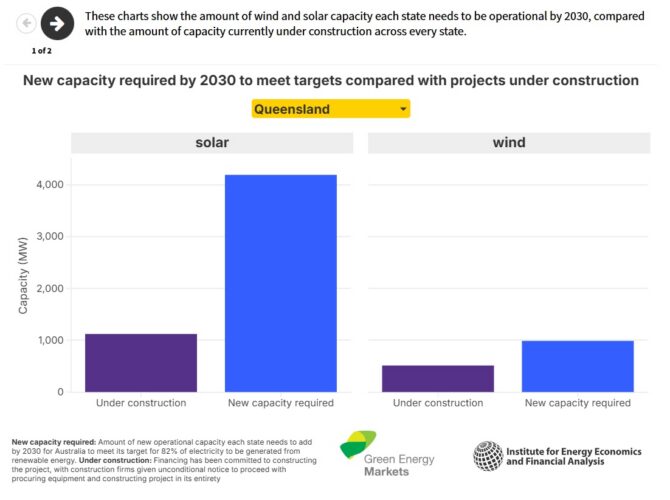
Peak summer load in Queensland was also about 10.655GW, so at full tilt, the data centre would be the equivalent of almost a fifth of that total. “That’s a huge amount” of additional load, Bowyer said.
Back i\on the Western Downs, Mayor Smith said he was confident the project would add to the region’s “wonderfully diverse” economy based on energy and agriculture.
“Our economy is super strong,” he said, with the Western Downs “one of the most financially viable councils in Australia”.
Smith said the Queensland government under Premier David Crisafulli wants “this to happen. They won’t be putting any roadblocks in front of this application”.
Renew Economy sought comment from the federal and Queensland governments, and from Anthropic and Zerra.
To join more than 29,000 others and get the latest clean energy news delivered straight to your inbox, for free, click here to subscribe to our free daily newsletter.