Neoen Australia is moving ahead with plans to develop an up to 500 megawatt wind farm and eight-hour big battery in one of the windiest spots on Western Australia’s main grid, as the state scrambles to quit coal by the end of the decade.
According to a state development application, the Yathroo Wind Farm Project is proposed for freehold land around 5 km south of Dandaragan, 6.3 km north of Regans Ford and 120 km north of Perth.
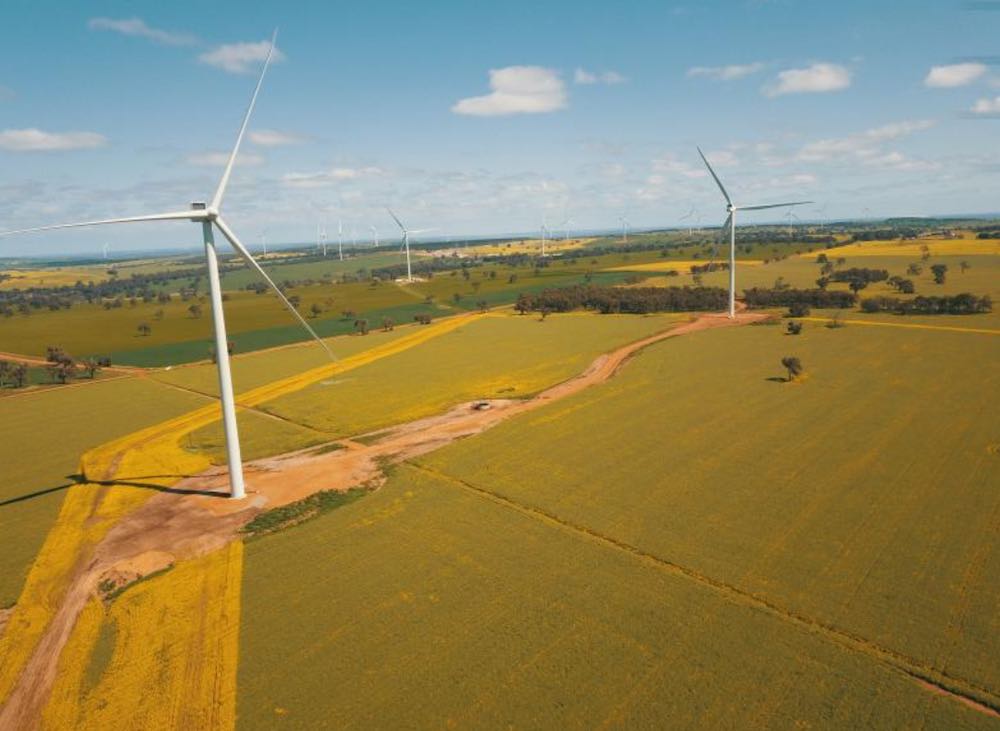
The project would feature up to 65 wind turbines with a maximum production capacity of up to 500 MW and a battery energy storage system (BESS) with a capacity of 400 MW and 3,200 megawatt-hours (MWh). That would make it the biggest battery storage project in Australia.
The development application, which just completed a period of public exhibition, suggests the wind farm could be developed in time to support Western Australia’s planned exit from state-owned coal power generation by 2029 – pending various approvals.
Neoen says another key advantage of the proposed project is that it can connect to the WA’s main grid – the South-West Interconnected System (SWIS) – via the committed Clean Energy Link – North. It has been awarded critical project status with Western Power to enable a timely connection.

According to Renew Map, the Yathroo project would be built right next door to the Ratch-Australia and Alinta Energy-owned Yandin wind farm, which has been in operation since 2020 and regularly ranks among the top performing wind generation assets in Australia.
Renew Map shows that Alinta is also currently proposing to build another wind farm on the other side of Yathroo – a 550 MW project called the Marri wind farm.
Neoen says construction of the Yathroo Wind Farm would create up to 450 jobs during the up to 33-month construction period and up to 15 permanent jobs during the operational period.
A Community Benefit Fund would provide an annual contribution of $1,050 per megawatt of installed capacity and Neoen has also committed to establishing a Neighbour Benefit Fund and First Nations Benefit Sharing.
Neoen says it has engaged with key stakeholders, including local government, community members, traditional owners, local special interest groups and businesses, and State and Commonwealth regulatory agencies.
“Comprehensive assessments have been completed to understand potential impacts related to flora, fauna, hydrology, noise, landscape and visual, traffic, Aboriginal and historic heritage, aviation, bushfire, electromagnetic interference and shadow flicker,” the documents say.