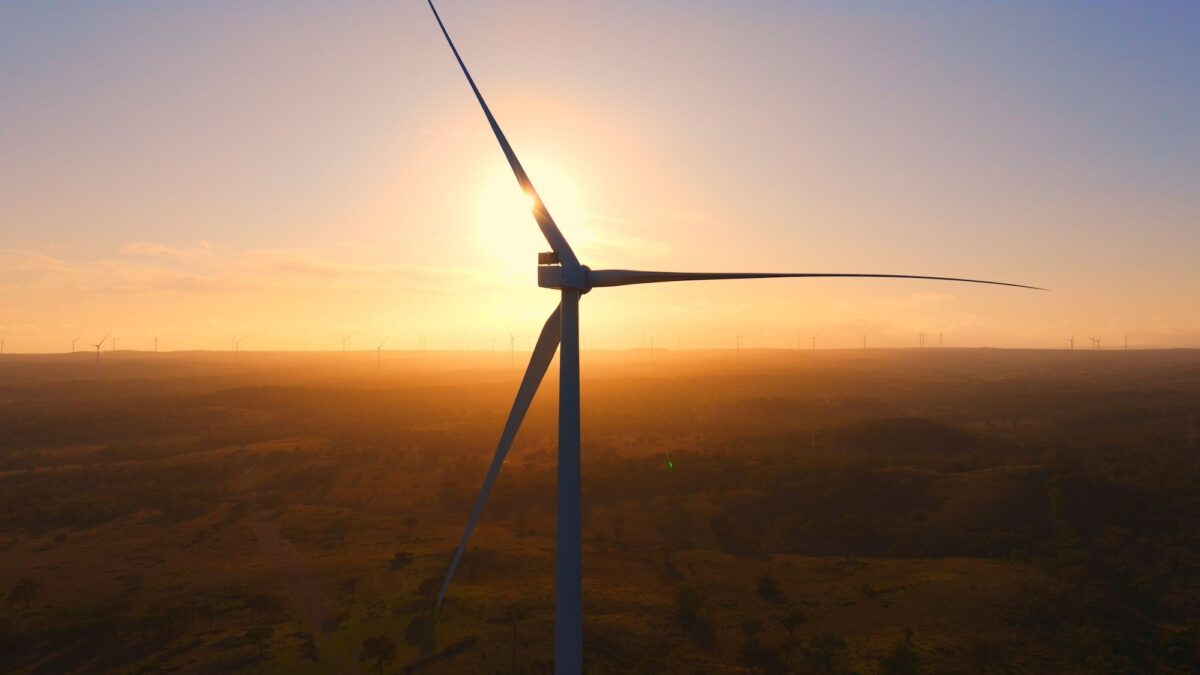
Plans for what could turn out to be the biggest wind project in Australia’s main grid will be released next week, with 250 turbines to be spread across the state-owned softwood plantations in the central west of NSW.
Owner TagEnergy is currently building the 1.33 GW Golden Plains wind farm in Victoria, which will stake its claim as the biggest in the country when complete next year, and is one of a number of groups granted permits by the state owned Forestry Corp to explore the feasibility of wind projects in the Gurnang, Mt David and Vulcan state forests.
Its proposal for the Pines wind project is for up to 250 turbines – each rated at about 8 megawatts each – that would deliver total capacity of around 2,000 MW. It says the project would generate as much power as five million solar panels and equivalent to the needs of 1.25 million homes.
The draft layout for the wind turbines is expected to be published next week ahead of planned drop-in sessions with local communities in Oberon, Burraga and Black Springs.
The Lisbon-based TagEnergy will own and operate the project, but it has engaged Stromlo Energy, a company also headed by former senior executives from Neoen Australia, to lead the investigations and permitting phase.
It says the final design and layout is not locked in, and could get even bigger given the interest of neighbouring landowners to also host turbines.
“The draft layout will evolve as the design progresses and will be influenced by detailed studies (for example traffic and transport routes, fire risk management, grid studies, visual impact, noise,ecology, heritage, constructability, wind resource, etc) and further discussions with the community,” it says in a statement published on its website.
It says some neighbouring landholders had expressed interest in hosting wind farm infrastructure, including turbines, which could mean that the size of the project will grow over time.
It says the project will deliver direct benefits to landowners who wish to host turbines and other project infrastructure, and to neighbouring residences who would be eligible for Neighbour Benefit Program payments.
There will also be a Community Benefit Fund and an Electricity Bill Credit program which it says could deliver up to $20 million in electricity bill reductions over the life of the project.
“The final size of the project will be determined by discussions and agreements with neighbouring landowners, the capacity of the existing transmission line, the outcomes of studies, as well as feedback from neighbours, potential wind turbine hosts and the community,” it says.
It is also still subject to approvals from the Department of Planning, Housing, and Infrastructure.
The Pines wind project is one of three awarded feasibility permits in the central west by Forestry Corp in May, with the others being a 500 MW project called Sunny Corner proposed by Mainstream Renewables and Someva Renewables, and Iberdola’s Four Mile Creek project, formerly called Canobolas.
A fourth permit was issued to Neoen Australia for the Bondo wind project in the south of the state near Tumut.
The drop in sessions for the Pines project next week will begin at the Oberon Library and Community Centre on October 17, following by the Black Springs community hall on October 19, and the Burraga community hall on October 22.