The CEO of South Australia’s electricity transmission network says the plan for the nation’s most advanced grid is to go well past its target 100 per cent net renewables and become a clean energy powerhouse, ultimately able to meet peak demand around eight times greater than current levels with firmed wind and solar.
In a recent presentation detailing South Australia’s world-leading transition to its current average of 74 per cent renewables, ElectraNet chief Simon Emms says the network company is “working hard” on plans to grow its network capacity to 25 gigawatts (GW).
Emms more recently spoke about the state’s “once-in-a-lifetime” growth opportunity in a statement released alongside ElectraNet’s 2026 Transmission Annual Planning Report (TAPR), on March 31, which forecast a doubling in peak demand from 3.3 GW currently to more than 6.5 GW over 15 years.
But the longer-term view for the network appears to be much more ambitious than that, once you factor in the potential demand from future industries including in the resources sector and from energy hungry data centres.
“South Australia, on the back of its 100% net renewables [policy] is seeing an increase in demand. There’s no doubt about that.
“A 25 gigawatt network … really allows the future of South Australia to unfold, because the grid continues to be an enabler of the transition,” he told a solar and energy storage summit hosted by Sungrow in Sydney last month.
“I think South Australia’s got 70% of Australia’s copper and 50% of Australia’s magnetite, so we’re really well positioned to exploit those resources,” Emms told the Sungrow Summit.
“And we see ourselves as the natural home for data centers, mainly because of the capacity we’ve got for renewables – and also the fact that we’ve already shut our coal down, so we don’t have to worry about this, let’s say predictable, but maybe unpredictable, coal exit from the system.”
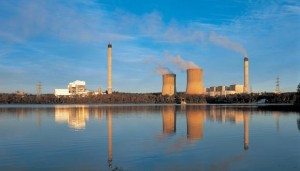
As Emms noted, South Australia shut its last coal plant in 2016 since then has blazed a trail to renewables that is marked with a number of major firsts, not least of all the landmark installation of Australia’s first – and at that time the world’s biggest – big battery at Neoen’s Hornsdale wind farm.
“We heard about the largest battery in the world in 2018 – that is now 50 per cent bigger than when it was originally installed, but is now less than 10 per cent of the battery capacity in South Australia,” he told the Summit. “So that’s how quickly things are moving.
Then, with the rapid expansion of small and large-scale solar, “what was thought to be a theoretical idea of negative system demand of the transmission network – that happened,” Emms said.
“So on a grid with an average demand of 1400 MW, peak demand about 3,400 MW, we’ve almost had negative 300 MW on the transmission network. So that just shows what was our largest load, being the distribution network, is now our largest generator.”
On storage, the trajectory also has been mind-blowing.
“If you look at what we had in 2020, that was basically the Hornsdale Power Reserve, 100 MW, 127 MWh. We’re now looking at the average [energy storage duration of batteries] being more than three hours.
“It won’t be long before we … can run the whole system for an hour on batteries at peak load. So the batteries are definitely creating lots of energy solutions.”
Emms says there’s plenty of work ahead for the industry, regulators and market operators in balancing the batteries, the synchronous condensors and all the renewables, big and small, to make it all run like clockwork.
But he’s confident it can be done.
“You can see where we stand in the world,” Emms told the Sungrow Summit. “There are a lot of times we are 100% renewable every day.
“So while on an annual average, we’re currently sitting at 74 per cent, I prefer to say we’re actually 100 per cent renewable, 74 per cent of the time.”
If you would like to join more than 29,000 others and get the latest clean energy news delivered straight to your inbox, for free, please click here to subscribe to our free daily newsletter.