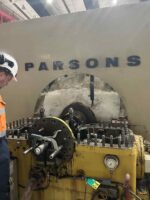
Eraring power station, the New South Wales giant coal plant whose retirement has been pushed out from this year to at least 2027, experienced around 6,000 hours of outages across its four units over the course of 2024, a new analysis has found.
The 2.88 gigawatt (GW) coal generator had been due to retire this year, but its owner, Origin Energy, struck a deal with the NSW government to keep it open until August 2027, and possibly longer, backed by up to $450 million in state funding support if needed.
The extension of the coal plant, which holds the title of the largest remaining in Australia, has been framed around the need for energy reliability as NSW installs enough renewables and energy storage to cover its exit.
But this line of reasoning has been questioned by energy experts, and put under doubt by the energy market operator, AEMO, and by Origin, itself, which last year admitted that Eraring is prone to trips, just when it is needed most and operating at or near full capacity.
This week’s report from Nexa Advisory underscores these concerns, toting up the past year’s outages as equivalent to each of the coal plant’s four units being down for an average of two months, due to a mix of planned maintenance and unplanned breakdowns.
In line with Origin’s own findings, the Nexa report also brings into question the plant’s reputation for supplying reliable electricity during periods of peak demand.
As illustrated in the chart below, the report finds that the average generation on the two highest demand days in 2024 was well below the 720 MW nameplate output (shown in yellow) of its four units – particularly for Unit 4 (ER04). On the third highest average demand day (20 June), Unit 4 was unavailable.

Figure 3 – average generation (MW) during highest daily New South Wales demand in 2024
Nexa says the coal plant’s patchy generation profile provides further evidence that it is already “unreliable and incompatible with today’s dynamic electricity system,” and that any further extensions of its life, such as might be necessary under the Coalition’s plan for nuclear, would further drive price volatility in the state.
Nexa says that some hard questions must be asked, and answered by state and federal governments, including how much longer can coal power last? And what does this mean for federal energy policy?
‘‘Eraring is 43 years old, it is already not doing the job its being paid for,” Nexa CEO Stephanie Bashir said on Thursday. “Its frequent unplanned outages and downtime are clear indicators that it is no longer fit for purpose and that is costing consumers.
“The $450 million burden on New South Wales taxpayers of extending Eraring’s operation until 2027 is unnecessary and would have been better invested in accelerating the replacement renewable generation, storage and consumer solutions.
“There are 10.4 gigawatts of wind and solar, and 4.5 gigawatts of large-scale battery projects in the pipeline, just in New South Wales alone. We need to get these online so we’re not crossing our fingers and hoping that Eraring holds on for a couple more years.
“Governments at all levels must lean into the transition not add drag to the process and cost consumers and taxpayers,” Bashir says.