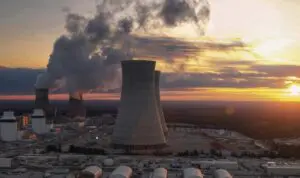
The least surprising news of 2026 so far has already become the most important: Origin Energy’s decision to extend the life of the country’s biggest coal generator – again – has been seized as proof by the naysers that the energy transition to renewables and storage can’t and won’t work.
Of course, the likes of Origin Energy and the other legacy generators have done S.F.A. to disprove this theory, happy to be driven by the greed of their shareholders and their option deals to ignore climate change and new technologies, and use their market power to feather their own nests.
Is there any chance that their market dominance, and their near total capture of regulators and policy makers be broken in enough time to save the transition, and give the country some chance of meeting its renewable and emissions targets?
Enter the consumer. That’s you and me, and the half million or so households that will, by the end of this financial year, have taken advantage of the federal government’s home battery rebate scheme, and who will likely have installed some 11,500 gigawatt hours of storage, and nearly another 3 gigawatts of rooftop solar.
By 2030, that number will have grown to 2 million households. This is the basis of a mass movement. One that tells the legacy energy industry that they can stick their obfuscation and spin – and the plans to extend the life of their ageing and dirty fossil fuel generators – into their own conduits.
The big retailers, and the market operator for that matter, dearly hope that households will sign away control of their newly acquired batteries to so-called virtual power plants, for the sake of the grid.
There’s diminishingly little chance of that, given the breach of trust that is now so deep that most consumers are determined to use the technologies available – rooftop solar, battery storage, electric vehicles, demand management and smart controls – to take charge of their own energy destiny.
They can take heart from the actions of some of the nation’s biggest consumers.
Take Rio Tinto, for example, which is defying the bloody mindedness of the state LNP government in Queensland – and its attempts to cancel approvals for wind and solar projects – and telling it that its coal-fired power station in Gladstone will be shutting down in 2029, as it has flagged.
And yes, Rio Tinto needs wind, solar and storage – and a lot of it – to guarantee the future of the port city’s giant smelters and refineries. And it is making it clear to the LNP, that it should please get out of the way, if you don’t mind.
Even more inspiring is the actions of another big consumer, the iron ore magnate Andrew Forrest, who has vowed to eliminate fossil fuels altogether from his giant Pilbara iron ore mines, and supply its isolated grid with wind, solar and battery storage, and electrify all its transport and mining equipment – by 2030.
In just five years.
Forrest’s plan has some advantages over others because he is in control of his own destiny. He is the customer, and now he can be the energy provider too. And he doesn’t have layers of regulators and policy platforms to make life difficult for him.
He can just go out, find the technologies – such as the recently purchased Nabrawind – sign contracts (such as those with Envision, solar panel makers, battery suppliers and electric trucks), spend the money, and get it done.
Still, many reckon he is dreaming, and they would rather he didn’t succeed.
That’s because, if Forrest can transform one of the country’s biggest economic zones from its almost total fossil fuel dependency to renewables in such a short period, that might be bothersome for boosters who argue it is the only technology capable of keeping Sky After Dark on the air and the rest of us out of caves.
Forrest, though is determined. And this week he compared his goal of reaching “real zero” by 2030 – rather than the “net zero by 2050” that the likes of Origin use as an excuse to do not very much – to the challenge he faced nearly two decades ago of breaking the BHP and Rio Tinto duopoly and build his own railway from mine to port.
“Whenever someone tells us we’re crazy, we tell the story of the banker who said we’d never build a railway between Cloudbreak (his iron ore mine) and Port Hedland,” Forrest wrote.
“Back then, we were up against an industry monster: the iron ore duopoly of BHP and Rio Tinto. We were told it was unbreakable. That there wasn’t a snowflake’s chance in hell we’d ever ship a single tonne, with no rail, no port, and no mine.
“In 17 months, we built the world’s heaviest heavy-haul rail system (a world record), finished our deep-water wharf in less than two years, and in April 2008, our first trainload of iron ore arrived at Herb Elliott Port.” Fortescue now ships 200 million tonnes of iron ore a year.
“Now we’re taking on something even bigger: the fossil fuel industry, a multi-trillion-dollar machine,” Forrest wrote.
“I’m just as confident today as I was in 2007. We will break the grip of fossil fuels more decisively than we broke the iron ore duopoly.
“Today, battery-firmed renewables deliver energy at a lower cost than fossil fuels, and in the Pilbara, we’re demonstrating how a 24/7 renewable system could be delivered.
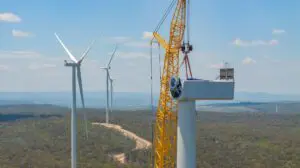
“Over the past few months, we’ve installed 48 BYD battery energy storage systems, our 190MW Cloudbreak Solar Farm is more than 50% complete, we’ve strung 460+ kilometres of transmission lines, and this week began construction of our first wind project.
See: Fortescue begins work on first wind farm, with self-lifting towers and Australia’s biggest turbines
“Scaling 10× through to 2030, this forms the world’s first major industrial 24/7 green-energy operation.
“We’re not doing this to be heroic. We’re doing it because it’s the right thing for our planet and our shareholders.”

And Forrest referred to a poster produced by Fortescue 19 years ago (see above), making fun of an anonymous investment banker who said it would be impossible for Forrest to do what he did.
“And that’s why I’d happily put that poster up again today for anyone who says it can’t be done,” Forrest wrote.
Forest may or may not reach his “real zero” target by 2030, but he will give it a good shake and at least get very close. But his efforts give comfort to us all – change won’t come from incumbents, it will be driven by consumers wanting a better deal.
Some consumers like Forrest have the means to do a lot, very quickly. For the rest of us, there is safety and assurance in numbers. Every little bit counts, and now it might be time to move. As Forrest says, it’s the right thing for the planet, and the hip pocket.
If you would like to join more than 29,000 others and get the latest clean energy news delivered straight to your inbox, for free, please click here to subscribe to our free daily newsletter.