Victoria’s Coalition opposition has stopped just short of pledging to extend the life of the state’s remaining coal-fired power stations, announcing that it will not shut any of them down early – something literally no one is proposing to do – while also pledging to reverse the state’s transition away from gas.
In a statement published on Friday, the Victorian National Party’s state member for Morwell, Martin Cameron, said a Nationals and Liberals’ Energy Security Requirement would secure “additional new firm electricity generation” through competitive tenders.
And while he stressed that this would not include new coal plants, Cameron says the Energy Security Requirement complements the LNP’s plan to “throw open the door to new conventional gas exploration and extraction and overturn Labor’s ideological gas ban.”
“We don’t need new coal-fired power stations, we just need to allow the existing ones to operate until the end of their lives,” Cameron said.
“Coal has a role to play in ensuring the lights stay on while alternative energy resources come online and until they can replace the base-load power Victorians rely on.”
Victoria is due to hold its next election in November, and the result looks too close to call, with Labor in turmoil and tailing the Coalition, and One Nation polling strongly.
The renewables industry fears that a Coalition state government will follow the Queensland LNP, which has ripped up renewables targets, extended the life of coal generators, and put obstacles in the way of new wind and solar.
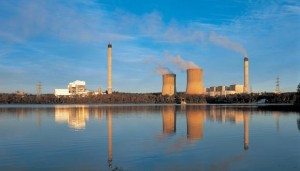
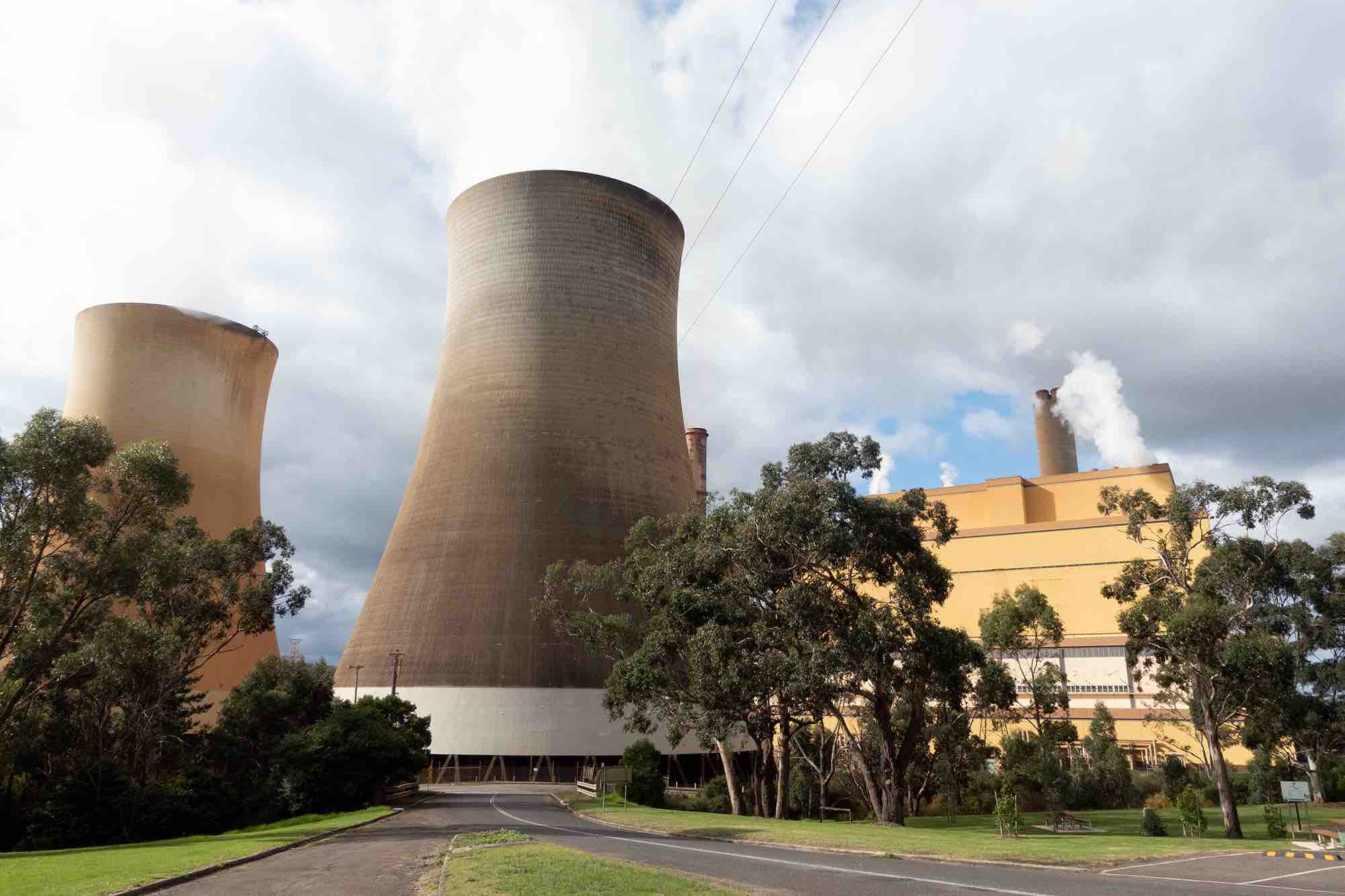
Victoria has three remaining brown coal-fired power stations in operation, all located in the Latrobe Valley: Yallourn, Loy Yang A and Loy Yang B. The 1,480 megawatt (MW) Yallourn power station is the oldest and is scheduled to close in mid-2028 – a date its owner, EnergyAustralia, has repeatedly said will not change.
The AGL-owned Loy Yang A is the biggest, at 2,200 MW, and is scheduled to close at the end of June in 2035. Alinta’s Loy Yang B currently has an official closure date of 2047, which clashes with the state legislated renewables target of 95 per cent by 2035. Alinta has not ruled out closing it much earlier, in the 2030s.
While Victoria’s Labor government has put in place ambitious targets for renewable energy – including a target for 2 GW of offshore wind by 2032, which looks increasingly unlikely to be met – it could not be accused of ambition in shutting down the state’s remaining coal plants, even as it scrambles to meet its own emissions targets.
On this measure, it looks like the state Coalition and Labor are in lock-step, although the Labor government is – crucially – doing much of the heavy lifting necessary to ensure coal power can retire to schedule.
On gas and renewables, however, the two parties’ policies start to diverge, although only partly. The LNP’s promise to “overturn Labor’s ideological gas ban” does not refer to exploration and extraction – Labor just this year signed off on a major gas project in the offshore Otway Basin, its second this term.
What the LNP wants to overturn is the state’s Gas Substitution Roadmap, which is designed to phase the fossil fuel out of homes and businesses, in favour of electrification backed by rooftop solar and an increasingly renewable grid power supply.
This would be a shame, because Victoria leads the nation on the orderly exit from reticulated gas, which is important, because it avoids the disorderly exit that regulators and even gas companies are fully aware will happen, regardless, as more and more consumers opt to electrify appliances.
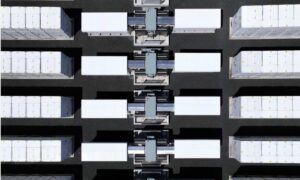
Cameron’s media release also suggests the Victorian Coalition is keen to continue the party’s long tradition of underestimating the role and importance of battery storage in the grid, that started when then PM Scott Morrison compared Australia’s original big battery – the Tesla Hornsdale Power Reserve – to the Big Banana, or the Big pineapple, and then resources Minister Matt Canavan likened it to Kim Kardashian.
“What is often lost in the conversation about renewables is the fact that batteries don’t generate power – they only store power,” Cameron said on Friday.
“Unlike Labor,” he conintued, “The Nationals understand the need for more firm electricity supplies and have a plan to deliver exactly that.”
But batteries don’t “only store power.” Crucially, they also dispatch it when the grid needs it most – such as at times of peak demand, when the sun goes down, or when aging coal plants have an unexpected breakdown – and in this way are already helping to reduce price volatility and to push down the wholesale cost of electricity.
Just last week, Origin Energy – Australia’s largest electricity retailer and the owner of the country’s largest remaining coal plant – confirmed “we start our gas fleet less,” thanks to big and small batteries increasingly stepping in and perform the role of peaking gas plants.
“Grid-scale batteries in the NEM have more than doubled in the last 12 months, and they’re now able to meet about 25% of peak demand,” Origin CEO Frank Calabria told analysts at a briefing on the gentailer’s 2025-26 financial year results.
“At the same time, you can see there’s greater than four times growth in behind-the-meter batteries in the last 12 months, and that’s having an impact on the shape of residential grid demand,” Calabria said.
“The role of batteries and gas work well together, with batteries being suited to managing those evening peaks and the short sharp spikes,” he said.
At the end of June, the Australian Energy Market Operator (AEMO) reported that wholesale electricity prices through Australia’s main grid plunged by nearly 50 per cent in the June quarter amid a surge in renewable energy output, a slump in coal output and the lowest amount of gas generation for 23 years.
AEMO’s Quarterly Energy Dynamics report highlighted how grid-scale battery storage was soaking up excess solar and saving it for the evening peaks. The average level of charging during the middle of the day and discharging in the evening both grew by more than a gigawatt from a year ago.
“The increasing role of grid-scale batteries also changed price-setting outcomes, with battery charging and discharging setting prices in 36% of dispatch intervals, up from 17% in Q2 2025,” AEMO wrote.
If you would like to join more than 29,000 others and get the latest clean energy news delivered straight to your inbox, for free, please click here to subscribe to our free daily newsletter.