There has been some extraordinary and harrowing testimony given in the past week to the Senate inquiry into misinformation about climate and energy, but you didn’t have to travel far to hear some real-life examples – from the country’s would be federal government.
As a bushfire survivor was sharing her experience with the Senate committee, federal opposition leader Sussan Ley and energy spokesman Dan Tehan popped up at Parliament House to sprout some staggering nonsense about the intent of the Paris climate treaty and some complete claptrap about energy.
Chief among them was this pearler from Ley: “So one faulty photovoltaic inverter in an entire grid had a cascading effect that shut down the entire Iberian peninsula, which had previously the market operator there had been saying, ‘Look, we can run this on renewables’.”
The chances of a country-wide blackout being triggered by a single PV inverter are probably about the same as a blackout being triggered by dropped catch in the slips cordon in a cricket game.
And although a favoured meme by long established renewable critics, and now the federal Coalition, such claims have been rejected out of hand by authorities in Spain and experts across Europe.
Ley and Tehan, though, are now singing from the same song book as the growing number of fossil fuel sponsored right wing “think tanks” and “grass-root” organisations who infest their thinking.
Baseload bollocks
Ley talked of a “technology neutral” approach and the importance of “baseload,” which sounds neither neutral nor well informed or well intentioned.
On Sunday, announcing the “formal policy” with the Nats, Ley offered this: “We’re not anti-renewables, but they have to be in the right place and they have to be balanced by base load power.”
Which sounds nice but basically means that they don’t want much renewables, because if you do want lots of wind and solar, the last thing you need is “baseload”. That is because it is fast and flexible capacity like battery storage, and pumped hydro and a soupçon of gas that is needed to fill in the gaps.
It is sometimes worth reminding ourselves that it was a state Liberal government in South Australia, a state which knows a thing or about state-wide blackouts, that was the first to commit the state to reach 100 per cent net renewables.
The lights-out events in South Australia and Spain have a common thread. The blackouts were not the fault of renewables, despite what the likes of Chris Uhlmann will tell you, but the lack of proper process and poor grid management.
Neither state had battery storage at the time. In South Australia, because the technology had never been deployed at scale until it did so the following year, and in Spain because they either forgot or were too slow. The Spanish authorities are now doing something about it.
Just this past weekend, South Australia reached a new peak of 157 per cent of local demand, exporting and storing much of the surplus. Ley’s contention is that Spain had too much renewable in the grid. It is patently complete nonsense.
The world is learning that batteries are the glue that helps keep the grid together, even when you have ageing coal fired generators going boom in the middle of the day. And now they want to pay more to keep them open for longer. Or even to build new ones.
Venal and vacant
I once asked Matt Kean, the former energy minister and treasurer in the NSW Liberal government, and now chair of the Climate Change Authority, why he remained a member of the Liberal Party when so many were lining up with the climate deniers and technology troglodytes.
Kean reversed the question by asking what the deniers and the troglodytes were doing in his party. Now we know – they are taking over. In one aspect, this is a good thing, because the federal Coalition can now drop the veneer of pretending to want to do something on climate and the energy transition. They clearly don’t.
“Venal, Vacant, Reactionary: How the National and Liberal Parties have Sabotaged Australia’s Energy Future” wrote Andrew Want, a former leading executive in the solar industry, in a LinkedIn post.
“For over twenty years, the need for Australia to transition to a modern, renewables-based, low-carbon energy system, and wean itself off imported liquid fossil fuels, has been clear: The economics are clear. The science is clear. The strategic imperatives are clear. The global investment trends are clear. The public sentiment is clear.
“Yet for two decades, the National and Liberal parties, riven by internal issues, dominated by mad ideologues (Joyce, Canavan) and grifting leadership aspirants (Abbott, Morrison, Hastie) have poisoned debate and knowingly, deliberately, disinformed and promoted uncertainty.”
Andrew Want’s description is harsh, but what else to say?
Ley and Nationals leader David Littleproud have not dropped the climate veneer at all, and Ley on Sunday said the “science was settled” while at the same time rolling out policies that deliberately ignore it.
Among the Coalition’s proposals: Putting coal into the CIS, stripping environment out of the National Electricity Objective, supporting gas, supporting CCS, backing “blue hydrogen (made from gas and incredibly polluting), and getting the CEFC to support technologies “that we haven’t heard of today.”
Bob Brown’s fond farewell to Richo and his Labor despair
Of all the responses to the death of former minister and Labor “numbers man” Graham Richardson, the most surprising was from former Greens leader Bob Brown.
Richo, we sometimes forget amid his other controversies and Sky punditry, was a former environment minister – and Brown reminded us of some of the things he did: doubling the size of the Tasmania wilderness area, stopping the Wesley Vale pulp mill, and on top of that you can add ensuring that Kakadu and Daintree were protected.
Brown’s despair is that there is likely no one in the current Labor government who would do the same – a critical issue given the threats the Tarkine from mining and logging, and the environmental catastrophes that are the logging of native forests, salmon farming and the wholesale pillaging of krill resources in the southern Oceans.
“In the lobbies of Canberra, corporate power rules. But across the nation there is rising frustration, anger and action engendered by the loss of forests, woodlands, wildlife, wetlands and marine (including coral) wellbeing,” Brown wrote in a later piece in the AFR.
And he is probably right. These comments by current environment minister Murray Watt a fortnight ago – about the issue of native forests and the impact of the new EPBC ACT – left environmentalists speechless.
David Speers: But leaving them (native forests) unlogged would be a better outcome for the environment, wouldn’t it?
Murray Watt: Some would argue that, David. But …
Just some?
Over his dead body
The venality of the conservative Coalition parties is possibly best highlighted by the planning minister in the Queensland LNP government, which is doing its best to bring a halt to all new wind and solar projects in the state.
One project in particular, Moonlight Range, has had its approvals killed by Jarrod Bleijie, but even as it sought to continue its federal approvals process, Bleijie declared it would be developed “over my dead body.” Perhaps Australia would be best served if Bleijie focused on his Elvis impersonations.
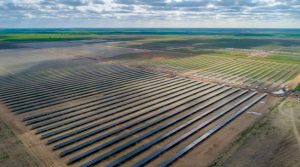
Some projects are going ahead despite the LNP’s best efforts. The large Punchs Creek solar and battery hybrid – proposed by Portugal’s EDP – has signed an “exclusivity deal” with the QIC, which has now emerged as the state’s investment gatekeeper.
And things are moving elsewhere too. Octopus Australia reached FID on its Blind Creek solar and battery hybrid project in NSW, two new solar farms have joined the grid, and others are working their way successfully through state and federal planning systems.
The not so super super battery
One of the main stories of the week was the revelation that the country’s most powerful battery, the 850 MW, 1680 MWh Waratah Super Battery had suffered a setback from the “catastrophic failure” of one of its transformers, and problems at another.
The story is not really one focused on technology issues, although that is of interest, particularly for such a landmark project. The real problem here was the fact that this was only revealed by a leak of internal documents.
The Waratah Super Battery has a handsome contract with a state government body. The money it receives comes from taxpayers. Yet there is an extraordinary amount of secrecy about its deal – whole pages and every interesting number is blacked out in regulatory documents.
The ACT government, as we noted recently, had the best renewable transition policy of all, and it did it in full transparency – publishing the details and prices of all its contracts. Other state bodies, and the federal government, should be doing the same. It might even encourage more investment.
Highlights of the week
On the issue of misinformation and disinformation, Anne Delaney has been writing some excellent reports on the Senate hearings this week. You can read her stories here:
“The wheels fell off:” Farmer tells Senate how misinformation killed a community battery project
“Dead Man Walking”: IPA’s climate obstruction on full display at Senate misinformation inquiry
And please do check out our latest podcasts:
Energy Insiders Podcast: Where the bloody hell is our super?
SwitchedOn podcast: The power of good rules, building trust in the energy transition
The Driven Podcast: Robert Llewellyn on the state of the charge
And Solar Insiders Podcast: Would you like electrification with that?