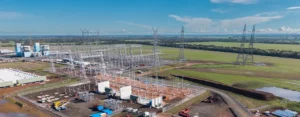
Big three utility EnergyAustralia has unveiled plans to build what would be the nation’s biggest ever gas power plant to help fill what it says will be a supply “gap of gigawatts” created by retiring coal and new demand, including from data centres.
According to plans referred for assessment under the federal government’s EPBC Act, EnergyAustralia is seeking to almost double the capacity of a project previously approved for development in the New South Wales Southern Tablelands.
The Marulan gas-fired power station – which is declared Critical State Significant Infrastructure by the NSW government – was given federal environmental approval for construction on EnergyAustralia-owned land in Brayton all the way back in 2009.
At that time, the up to 800 megawatt (MW) project proposed to combine an up to 350 MW open cycle gas turbine (OCGT) peaking plant with up to 450 MW of combined cycle gas turbine (CCGT) technology for baseload generation.
But EnergyAustralia has modified its plans, seeking federal approval to increase the combined capacity of the two power stations to 1.43 gigawatts (GW) in total, and to operate it as a peaking power plant using only OCGT technology.
“The [National Electricity Market] currently requires fast-start firming capacity and enhanced grid stability to support the integration of renewable energy sources at a time when large thermal generators are being progressively retired,” the referral documents say.
“The modified project would deliver dispatchable energy, which is essential for addressing sudden spikes in electricity demand and providing vital support during periods of low renewable energy generation.
“This capability is becoming increasingly critical as the share of variable renewable sources, such as wind and solar, increases in the energy mix.”
This huge bet on peaking gas generation – EnergyAustralia’s project manager Matthew Poole has described it as a “mega project … in the billions of dollars” – at a time when gas fuel costs are soaring and the cost of firmed renewables continues to fall is a questionable choice for the big-three gentailer.
As Renew Economy has reported, NEM data shows that the steady procession of big batteries joining the national grid is increasingly eating away at the generation share once dominated by peaking gas generators – even as demand grows and the generation mix relies more heavily on solar and wind.
EnergyAustralia has invested in a number of big batteries, including the 350 MW, four-hour Wooreen BESS in Victoria’s Latrobe Valley and the 50 MW/245 MWh Hallett BESS in South Australia and the up to 500 MW, four-hour Mt Piper BESS near Lithgow in NSW.
But like the other big-three gentailers, there has been little investment in new wind or solar projects, with the plan for replacing outgoing coal still largely focused on existing and new gas generation.
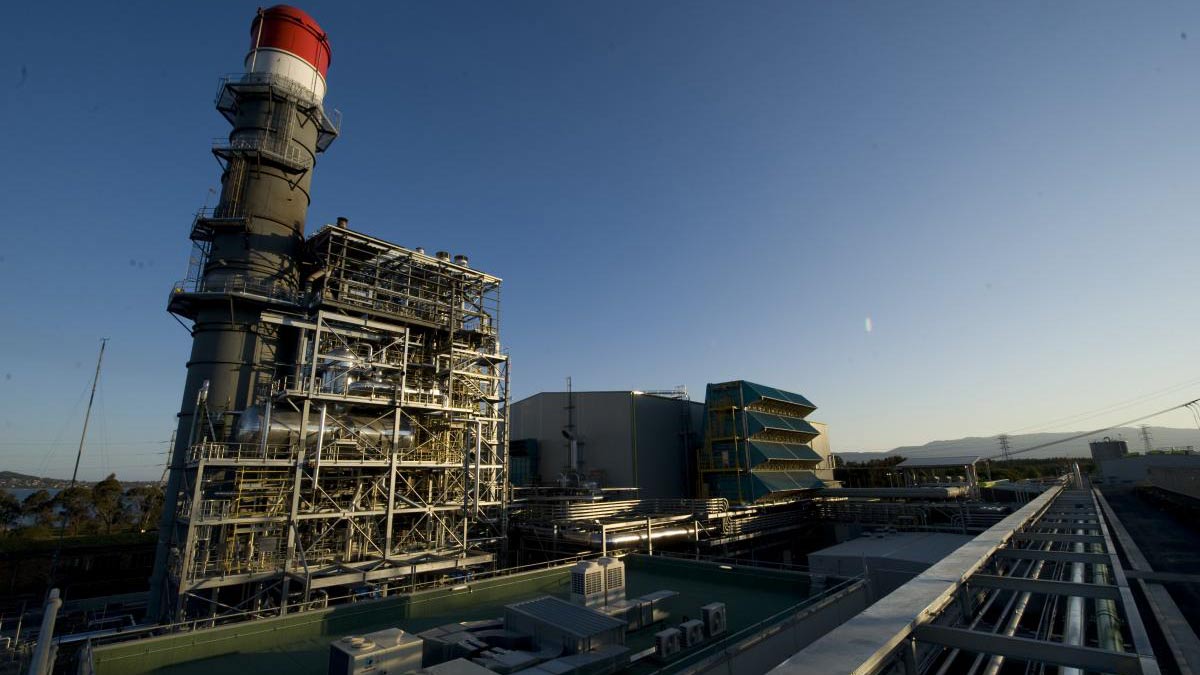
EnergyAustralia – which already owns and operates gas plants across three states, including Tallawarra A and B in NSW – has named forecast demand growth from data centres as part of the reason for the Marulan expansion.
“The data centre growth and the growth in the energy market, the movement towards more wind and battery projects and as coal-fired power stations retire, then there is a gap of gigawatts of energy that are required in New South Wales,” Poole told ABC News.
And in a statement emailed to Renew Economy on Friday, an EnergyAustralia spokesperson said the Marulan plant was “not a replacement for renewables; [but] what makes a high-renewables grid reliable.”
“Renewables like solar and wind are essential to Australia’s energy future, but they’re variable by nature. The electricity system needs fast-responding, dispatchable generation to fill the gaps when the sun isn’t shining and the wind isn’t blowing,” the statement says.
“The proposed Marulan power station would start within minutes and operate flexibly, firing up when the grid needs support and stepping back when renewables are generating.
“[It] would provide firming power, similar to the role of our Tallawarra B power station which entered the market in June 2024 and had over 150 starts in its first year of operations, dispatched only when renewables can’t meet demand, not as baseload.
“The strategic location of our proposed power station at Marulan means energy can be easily and efficiently directed to the major load centre in NSW given the close to the Moomba to Sydney gas pipeline and other existing infrastructure.”
The role of gas in the Australia’s future energy mix is a topic of hot debate, with the Australian Energy Market Operator forecasting the need for around 5 GW of additional flexible gas generation by 2050, while also stressing that this peaking capacity will be used rarely, to fill gaps and prevent shortfalls.
How Australia will power the coming boom in energy hungry data centres is also a topic of much conjecture – or what David Leitch describes here as “muddy thinking” – including over whether firmed renewables can do the job or will gas plants and diesel generators be the big winners.
Federal and state governments are trying to set some perameters on this subject too, with all states and territories bar Queensland at the most recent energy minister’s meeting agreeing that new data centres must “fully offset” their demand by investing in renewable energy and storage.
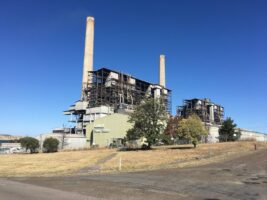
EnergyAustralia says project data centre growth is “definitely not” the primary driver of its Marulan expansion plans, but rather projected demand for additional dispatchable generation to replace coal – including its own Yallourn plant in Victoria, and Mt Piper coal-fired power station in NSW.
“The modified project is aligned with the current needs of the NEM which have evolved significantly since the project was first designed and approved… AEMO is forecasting that energy reliability standards in NSW will be at risk of being breached following the upcoming closure of baseload coal fired power stations, and AEMO has forecast a need for up to 15 GW of new gas generation capacity to be required,” the public Scoping Report says.
“This project helps to meet that need.
“The overall purpose of the modified project is to supplement EnergyAustralia’s generation portfolio with additional dispatchable capacity, servicing demand when our electricity customers most need it, and to provide dispatchable capacity and network stability services, which can be used by AEMO to maintain a secure NEM.”
EnergyAustralia says its updated plans for the Marulan Gas Fired Power Station are awaiting both federal and state approvals, and that it is hoping to have the new plant operational by 2032.
If you would like to join more than 29,000 others and get the latest clean energy news delivered straight to your inbox, for free, please click here to subscribe to our free daily newsletter.