Fortescue says AI is playing an increasingly important role as it rolls out out its fleet of electric trucks and mining equipment, EV charging, big batteries and green energy to power its own iron ore operations and third party data centres too.
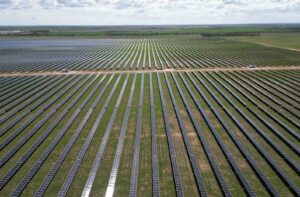
The mining and emerging green energy giant says it is now the biggest builder of solar farms in the country, with more than one gigawatt under construction at its Turner River and Solomon Airport projects, and it has rapidly increased the installation rate from 3,500 solar panels a day to more than 6,000.
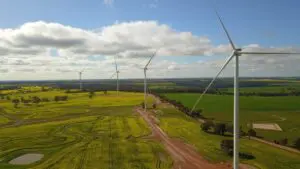
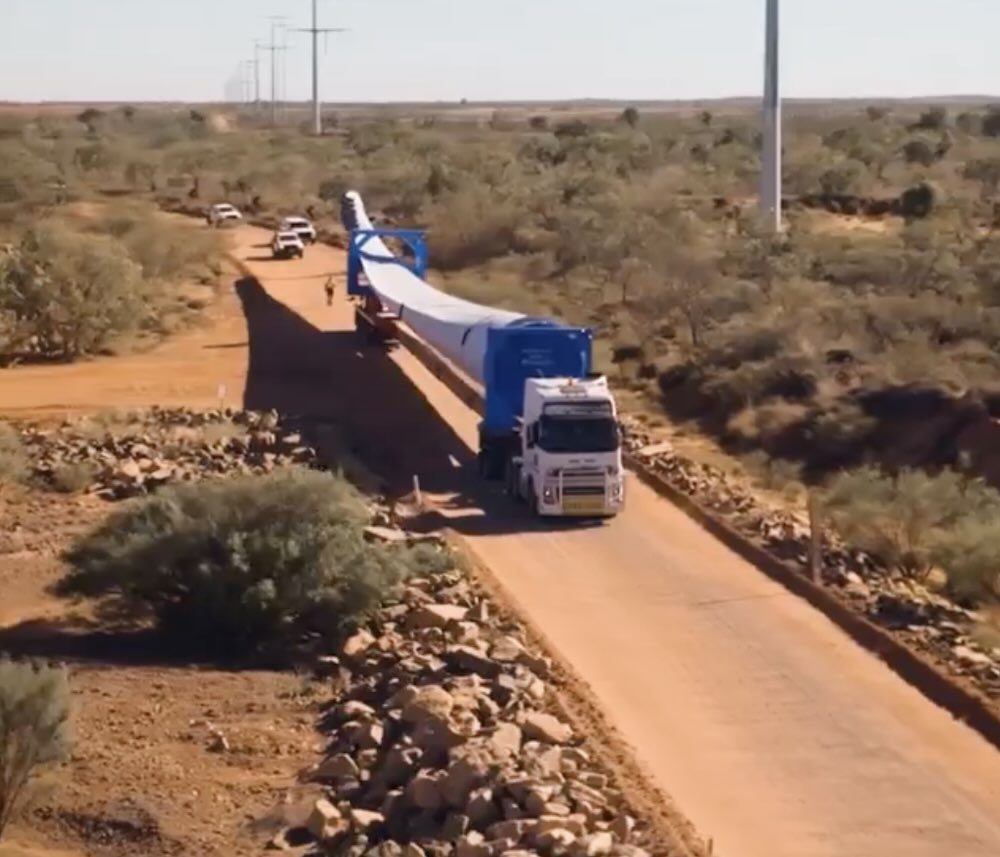
It is also about to erect the first of its wind turbines, which will be the most powerful in the country at eight megawatts each, and the tallest too – at 188 metres thanks to the unique self-lifting turbine technology that was developed by Spain’s Nabrawind, which Fortescue now owns.
CEO Dino Otranto said in a market briefing accompanying the company’s full year results that the turbine technology will mean quicker and cheaper installations.
It expects to complete commissioning of the 132 megawatt (MW) Nullagine wind project next year, and plans a total of around 900 MW of new wind capacity, 1.5 GW of solar, and up to 5 GWh of battery storage as part of its goal to reach real zero emissions by 2030 to support its mining and emerging green iron technology.
Fortescue is also spending another $US680 million to expand its green grid to deliver 200 MW of firm power to third-party customers, most likely data centres looking for low cost and zero emissions power supplies.
“This is not an experiment, or a PR exercise. We are serious about this,” Otranto said at a later analysts briefing.
He described some of the power supply decision in remote Western Australia, including areas were LNG is trucked more than 1,000 kms before being burned in a gas turbine, as “insane”, particularly when compared to the wind, solar and battery technology options than can be deployed now.
Otranto said AI is playing a key role across its operations, including for green iron where the company produced its first hot metal from an electric furnace this week, and showing that its green hydrogen plans still have life.
Fortescue had to abandon its electrolyser manufacturing facility in Queensland because of the lack of any buyers, and on Thursday announced jointly with the Queensland government that the issue around the $66 million of public funds provided to the project had been “settled”.
The details were not released but the statement said that the “value” from the state’s $66 million investment has been retained, including through the transfer of the project land, electrical substation and associated common-user infrastructure, together with other agreed arrangements.
Otranto, however, said that Fortescue still believes in the value of green hydrogen, although for the moment it will focus its use on its own green iron plans, and potentially entering the green ammonia market.
“To create the economic conditions for green hydrogen, you need a massive glut of electrons, as we talk about internally, and that’s why I point to how this connects with our industrial vision in the Pilbara of a massive network of electricity, which then feeds the iron ore business, feeds third-party sales of electrons.
“But also for us, more importantly, (it) creates the downstream industries like green metal and green ammonia, which we see have massive applications and huge value growth opportunities for us in the mid term.”
Fortescue is also using AI for weather forecasting to help it decide when to use and when to store its green energy.
“Decarbonising operations is much more than buying an electric truck off the market,” Otranto said.
“It’s about bringing the whole ecosystem together: trucks, chargers, batteries, and green energy, and making it all work as one system.
“Autonomy changed how we operated and helped drive down our costs. We see AI doing the same right across the business, making Fortescue’s operations simpler, faster, and even more productive.”
Otranto said Fortescue now 18 electric excavators up and running, each of them saving one million litres of diesel a year, and “they’re outperforming the diesel machines they’re replacing.”
He recently visited China to visit the XCMG factory that is delivering electric water carts, loaders, dozers, and graders.
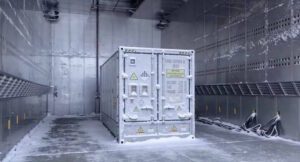
“Our first battery electric truck is in the final stage of the build, and will soon be integrated with the Fortescue Zero Power System. This isn’t a prototype; it will go straight into operations, with hundreds more to follow,” he said.
“We’ve also started commissioning our first in-house developed fast charger.” He added that another two electric drills arrive on site, and two battery electric locomotives, each with 14.5 MWh batteries, the largest of their type, had been deployed.
To join more than 29,000 others and get the latest clean energy news delivered straight to your inbox, for free, click here to subscribe to our free daily newsletter.