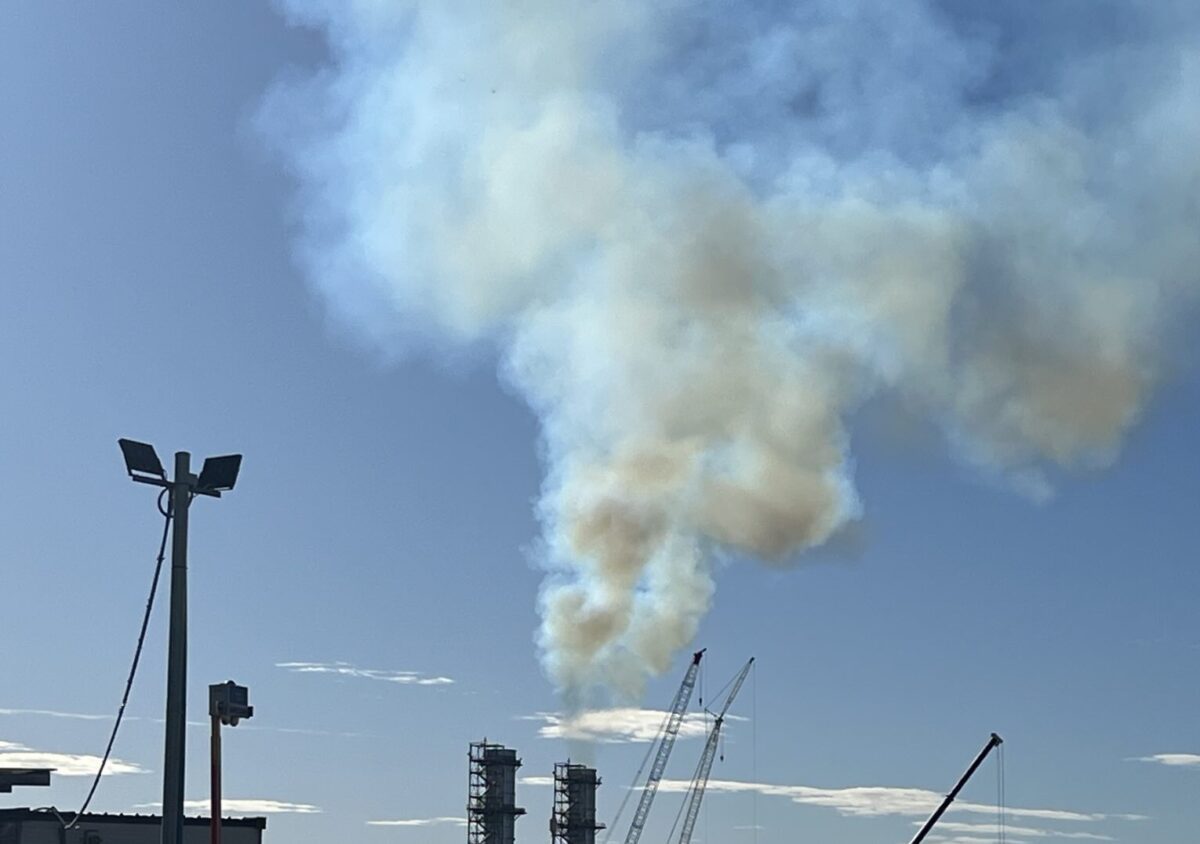
Snowy Hydro has warned local residents of “odour and plume” as it commissions the diesel component of its delayed, over-budget and controversial Kurri Kurri power station, but promises the impacts will be less severe than last time.
Snowy Hydro caused outrage in the local community because of the intensity of the plume and odour during initial testing of the diesel turbines last year, which it admits in a media statement on Monday was “greater than we anticipated.”
It says that testing for the commissioning process, due start on Friday, will take place at night, over the course of about four weeks.
“While there will still be some odour and plume, we do not expect this over an extended period,” the company said. “We have learned from last year’s events and community impacts, and have worked with the manufacturer to ensure we are doing everything possible to minimise impacts.”
The 660 megawatt (MW) Kurri Kurri power station is already running two years late, and its blown its original budget by a factor of more than two, with the original $610 million estimate leaping to $1.3 billion, sparking a dispute with its major contractor UGL.
The need for the project has always been questioned, and Snowy Hydro CEO Dennis Barnes even conceded last month that it was not needed by the market at the moment – which is not surprising given the rising dominance of battery storage to meet evening and other demand peaks.
“As always, when you get to the end of these projects, you’ve got to sort out the commercials, and at the moment, the market doesn’t need it,” Barnes told the AFR last month.
“There’s plenty of renewables, the climate has been benign, so it’s fully commissioned on gas, but to close it out commercially would not be in our interests right now.”
According to Open Electricity, the Kurri Kurri power station has been switched on only once in the past month, and has rarely been used since the gas component was commissioned, operating at a capacity factor of just 1.3 per cent – which is not unusual for a peaking power plant.
As Snowy Hydro explains in its latest media release, Kurri Kurri is expected to run “only on those occasions when electricity demand is high and renewable supply is limited.” It says it will operate using gas as its primary fuel, with diesel being used as a backup only when required.