Pumped hydro in combination with batteries eliminates fossil fuels from the electricity system. That is a prize worth working towards. Here is why pumped hydro is important.
Pumped hydro provides 95% of energy storage in Australia and around the world, and a large fraction of storage power. It provides lowest cost and lowest impact energy storage. The global pipeline is 18 GW of completions per year coupled with several hundred of GWh.
The current cost estimate for Snowy 2.0 is $12 billion for 350 gigawatt hours (GWh), which equates to $34/kWh.
This cost will increase – due to inflation and other factors – to around one-fifth of the AEMO-GenCost estimate for an equivalent battery. It means that Snowy 2.0 has gone from bargain of the century (when it was priced at $6 billion) to merely a very good technical and economic investment.
The cost of Snowy 2.0 amounts to 1 cent per Australian per day over its 150-year lifetime. Snowy 2.0 can balance many gigawatts of solar and wind and help avoid tens of megatonnes of CO2 each year.
Home batteries have lifetimes that are 10 times shorter than Snowy 2.0 and cost 25 timesmore, at $1,000/kWh. The home battery subsidy is $344/kWh which alone is 10 times the kilowatt hour cost of Snowy 2.0
Batteries are imported. Most of the cost of Snowy 2.0 is incurred in Australia. Workers generate spending power and tax revenue in Australia.
Snowy 2.0 has 6 times more storage than all other rechargeable storage combined. It provides black start, spinning reserve, voltage and frequency control. A grid with suboptimal amounts of wind and interstate transmission (like Australia) will need a lot of multi-day storage, which only pumped hydro provides.
Compared with equivalent batteries, water requirements for pumped hydro are far smaller (taking account of mining and refining).
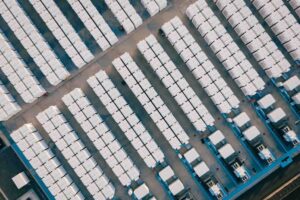
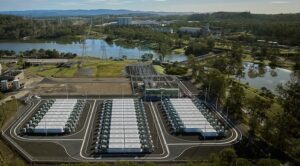
Large scale mining for battery metals is avoided. Land requirements for premium-quality pumped storage are very small, with storage intensity in the range 10-100 GWh per square km, compared with 15 GWh per square km for the Victorian Big Battery.
Snowy 2.0 only needs to play with 5-10% of its water to displace a substantial fraction of coal & gas backup generation during night-times. This water can be pumped back with low-cost solar energy next day.
Occasionally, there will be a wet & windless week when prices for electricity are continuously high. Snowy 2.0 will deprive coal & gas generators of much of this revenue. For example, complete discharge of Snowy 2.0 over a week at an average price of $300/MWh accrues $100 million.
Hybrid operation of batteries and Snowy 2.0, whereby storage sometimes charges storage, allows rapid recharge of Snowy 2.0 from daytime solar at negative cost. It also allows batteries to meet high-value peak loads day after day during a wet and windless week – depriving coal & gas of this revenue.
There is a myth that Snowy 2.0 can’t be effectively recharged. This overlooks that Tantangara, Talbingo, Eucumbene and Jounama reservoirs (and Blowering) have very large, combined water capacity and are interconnected through the Tumut River and various tunnels and pump-turbines.
Together, pumped hydro & batteries are gas-killers. Batteries eat the high-value revenue streams for ancillary services and morning & evening peaks. Snowy 2.0 can capture much of the high-price market for overnight storage and a wet windless week.
Southeast Australia has 300 Class AA sites. Building several more 50-150 GWh Class AA pumped hydro systems allows pumped hydro & batteries to eliminate gas from the NEM.
The low cost and low environmental impact of pumped hydro energy storage is here and now. Speculation about future super low prices batteries is just speculation.
Some supporters of the energy transition are harshly critical of Snowy 2.0. This overlooks the great advantage of hybrid pumped hydro and battery storage. It damages the prospects for future pumped hydro and helps lock-in long term gas backup. When discussing pumped hydro, please think on that!