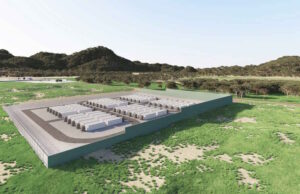
Australia’s decision to keep its Port Pirie and Hobart smelters running with an A$135 million infusion for Trafigura while steering them into antimony and germanium is a quiet but important move in the energy transition. It is industrial policy aimed at the part of clean technology that most people never see.
The fibre networks, sensors and flame retardants people often talk about rely on metals that are produced in small volumes, move through opaque flowsheets, and have pricing that can swing on a policy notice.
When a government puts public money into century-old smelters, it is not nostalgia. It is a bet that processing capacity in friendly jurisdictions matters as much as mines.
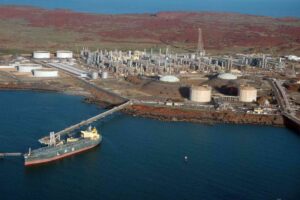
Port Pirie has been smelting since the nineteenth century and still runs as a complex multi-metal site anchored on lead. Hobart is a zinc refinery that generates residues rich enough in special elements to be worth a second look with modern circuits.
Australia also has an integrated copper smelter at Olympic Dam, while the Mount Isa chain is under strain after the underground mine closure. The Port Kembla copper smelter closed years ago and lives on as a remediation story.
Small but mighty
Antimony and germanium are not headline metals in tonnage terms, but their roles are specific and hard to substitute. Antimony hardens lead for batteries and bullets. It sits in flame-retardant systems for plastics and textiles. It appears in glass and ceramics.
Recycling of antimony is strongest where it is alloyed in lead-acid batteries because those loops are well established. Once antimony is dispersed into flame-retarded polymers or fired downrange, recovery is not economic.
Germanium dopes fiber-optic glass, rides in infrared optics for thermal imaging, and appears in electronics and solar cells for satellites. Much of that ecosystem already runs closed-loop. Scrap from optics machining, fiber draw waste and retired optics can be reclaimed.
Production routes follow the existing chemistry of the plants. Port Pirie’s path to antimony is tied to lead circuits. The logical first step is a pilot that proves stable antimony metal production from intermediates, then a set of de-bottlenecking steps if feedstock and economics line up.
Hobart’s opportunity is in zinc leach residues. These residues can carry germanium and indium in low concentrations that add up when the refinery runs at scale. The engineering and economic questions are obvious. What is the concentration range and variability? What recoveries are feasible without hurting the base zinc flow? What is the product specification and who will sign the first offtake?
Australia has put a public funding package on the table to bridge operations, keep skilled workforces intact, and pay for engineering on the new circuits. Officials have floated an ambition that Port Pirie could reach around 15,000 tons per year of antimony metal once a transformation is complete. If that outcome is achieved, it would be material in a market where global mine production in 2023 was about 83,000 tons.
Germanium targets have not been published, which is not surprising given that global refined germanium is only a few hundred tons per year and pricing and availability can be sensitive.
Why it matters
To see why this matters, look at trade patterns over the last fifteen years. China concentrated refining and processing of many specialty metals. It enforced environmental rules that tightened supply in some cases, notably antimony. It introduced export licensing on germanium and moved to controls on antimony products and technologies. A few notices from one ministry can shift available volumes to the rest of the world and move prices.
The Australian story sits inside a broader western policy map. Europe’s critical raw materials approach sets targets that are easy to understand. It wants a share of processing and recycling inside the bloc and it wants to limit dependence on any single external source. The United States is funding specific steps in refining chains it cares about.
Canada is keeping a processing base alive and looking at incremental expansions. The common thread is that governments are paying for processing because the private market underinvested in capacity that only pays when the world is calm. The cost of that underinvestment shows up when a notice in one country ripples through the price sheets of another.
None of this sits outside environmental expectations. Port Pirie and Hobart carry the history of emissions that were once acceptable and are not today. Any new circuit has to meet a higher standard on air, water and waste because the communities expect it and regulators require it.
That is not a barrier. It is part of the program and it should be in the capex and opex from the start. Where there is public money, there should be clear schedules for emissions control upgrades alongside production targets.
Power costs are a critical input that often get less space than they deserve. Smelting and refining do not happen without firm electricity at reasonable prices.
The spread between a plant with a stable power purchase agreement and one paying spot market rates shows up directly in unit costs. The carbon intensity of that power also matters to buyers. If a producer can offer antimony or germanium with documented low-carbon electricity, it can earn a small premium or secure a longer contract.

Combined historical (2015–2023) world and China antimony output with projected 2026–2035 world demand and Port Pirie production scenarios, showing potential non-China supply impact by author
Scenarios help make this concrete. In a low case, Port Pirie stabilizes operations but antimony output remains below 5,000 tons per year. Hobart proves germanium at modest scale. Global prices settle and buyers diversify only at the margin. The market impact is limited.
In a base case, Pirie ramps through debottlenecking to around 10,000 tons per year by the end of the decade. Hobart adds a reliable germanium stream and starts to capture indium as residue contracts allow. Europe and North America reach their early processing and recycling benchmarks. Price volatility drops but does not disappear.
In a high case, Pirie reaches something close to 15,000 tons per year in the early 2030s with steady feed and tight environmental control. Hobart locks in residue agreements that support a visible germanium and indium program. Canada and Europe expand their nodes. In that world, buyers have credible non-China options for two metals that matter to telecoms, imaging and defense.
The practical implications for manufacturers and defense buyers are clear. If a buyer wants stable access to antimony or germanium outside China, it should be ready to sign multi-year offtakes at transparent specifications. It should consider co-funding residue pre-processing where that improves yields, because a small improvement in head grade can make or break a run rate for these metals. It should reward verified low-carbon electricity and credible emissions controls.
My conversation with Gavin Mudd, director of the centre for critical minerals intelligence with the British Geological Survey and ex-pat Australian, frames one more point.
Supply is a policy outcome
Antimony production has fallen since 2010 and the drivers include the now strong internal environmental stance of China, the dominant refiner. That is a reminder that supply is a policy outcome as much as a geological one.
Treating processing assets as strategic infrastructure is consistent with that reality. It does not mean building everything everywhere. It means keeping enough nodes alive that a notice in one country does not control the world price for long.
If Chinese controls were relaxed and stayed loose while environmental standards rose, and if allied recycling delivered more volume than expected, the case for large new allied antimony capacity would weaken.
If the Mount Isa chain found a new footing that reduced the need for imported feeds, that would improve the economics for Australian plants but also change residue chemistry. If emissions performance at Port Pirie or Hobart fell short of community expectations, the social license would erode and the risk profile would change.
For now, the move is a practical response to a narrow but important bottleneck. The costs are visible. The benefits show up in lower risk for sectors that matter to decarbonization and national security.
Success will look like a steady pilot at Port Pirie that graduates to reliable antimony output, a germanium line at Hobart that meets spec at a few hundred kilograms per week and scales from there, air and water numbers that hold steady or improve, a power contract that keeps unit costs predictable, and buyers that commit to real volumes.
If Australia hits those marks, it will have taken a useful step in rebuilding resilient processing capacity at a scale that fits the problem.