A group representing former ministers of Pacific Island countries say the decision to extend the life of Woodside’s North West Shelf gas processing facility to 2070 is a “slap in the face” that contradicts Australia’s “platitudes” about “caring for the Pacific ‘family’”.
The statement published by the Pacific Elder’s Voice, an independent group of former leaders from Pacific countries, charged Australia with hypocrisy over the decision saying it “cannot, with a clear conscience, condone an action which knowingly endangers the future of our people and indeed that of humanity.”
“Australia’s actions in approving these mines which will increase emissions and enhance global warming leading to the demise of small islands is a slap in the face of fellow member nations of the Pacific Islands Forum,” it said.
“As a member of the Forum, Australia’s actions are in sharp contradiction to its platitudes around caring for the Pacific ‘family.’ The Woodside project is a demonstration of Australia’s glaring disconnect between rhetoric and action.”
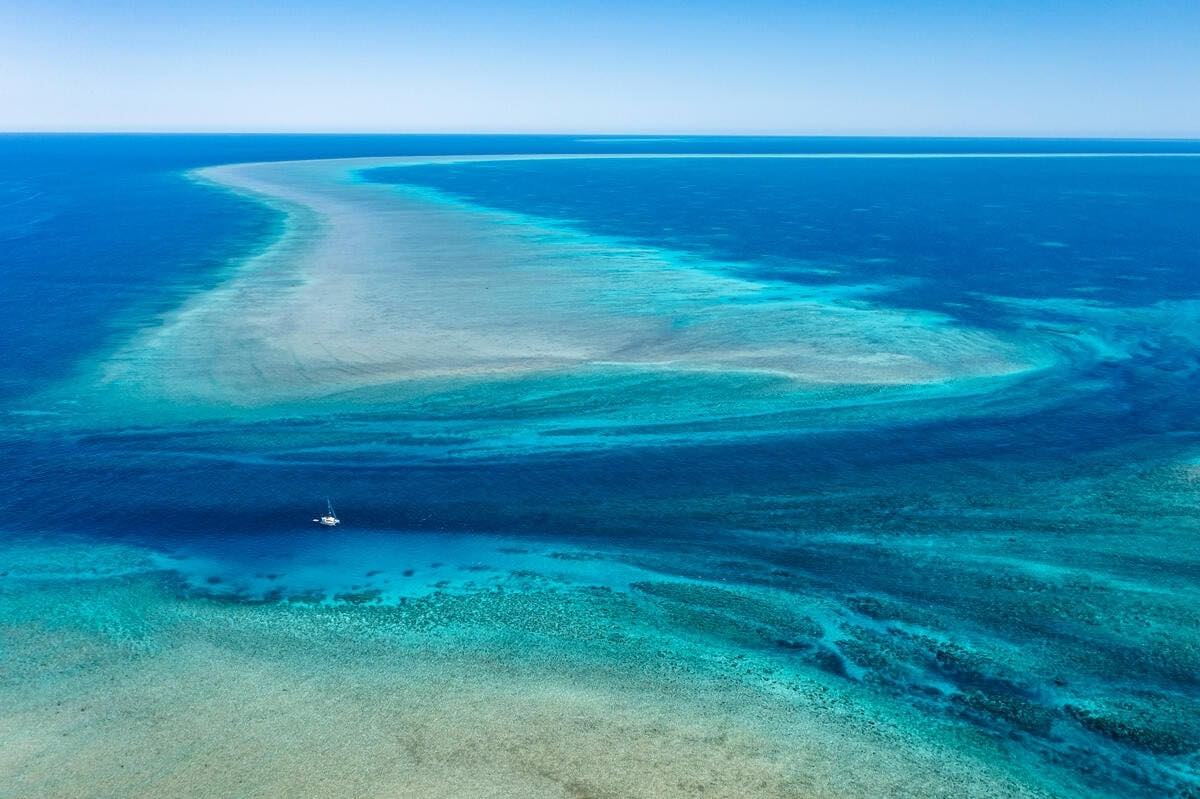
The intervention comes as the United Nations climate and weather agency, the World Meteorological Organization (WMO), found nearly 40m square kilometres of ocean in the western Pacific region experienced heatwaves in 2024.
Ocean temperatures in the region, including waters surrounding the Australian land mass, reached new highs last year according to the WMO’s State of the Climate in the South-West Pacific 2024 report, with the effect spreading to ten percent of the world’s marine waters.
WMO secretary-general, Celeste Saulo, said ocean heat and acidification were inflicting long-lasting damage on marine ecosystems and economies.
“It is increasingly evident that we are fast running out of time to turn the tide,” she said.
The WMO found the annual average sea surface temperature for the region was the highest since records began in the early 1980s.
Though its report was written before Cyclone Alfred and the recent flooding on the New South Wales south coast, the WMO found that record-breaking temperatures were recorded in Australian and other parts of South East Asia.
The result has been an uneven impact across Australia, with southern regions of the country experiencing drought and regions in the north of the country enduring extreme rainfall and flooding impacts.
Many of the drought-affected regions of South Australia, and south-western Victoria, all significant food-producing regions, are experiencing their worst consecutive year of rainfall since 1970, according to one analysis from geospatial company, Digital Agricultural Services (DAS).
The company’s analysis suggests at least ten regions, including the flagship Barossa wine region and the grain-producing Yorke Peninsula in South Australia, are experiencing drier conditions than those during the Millennium Drought and the 1982 dry spell.
The WMO also highlighted the threat posed to Pacific countries through sea level rise – it found the world’s oceans were rising by an average of 4.7mm a year between 2015 and 2024, the highest on record – ocean acidification, and freshwater stress.
“In this context, Pacific Islanders are facing difficult decisions about staying in high-risk areas or relocating to secure their futures,” it said.
The intervention of the Pacific Elders Forum adds to recent comments from Tuvalu’s Climate Minister, Dr Miana Tali and reported by Renew Economy that cast the decision as a direct threat to the future survival of his country.
“Pacific leaders have made it clear: there is no future for our nations if fossil fuel expansion continues. The North West Shelf Extension would lock in emissions until 2070, threatening our survival and violating the spirit of the Pacific-tuakoi (neighbour) climate partnership,” Dr Maina said.
The Pacific Elders’ Voice is composed of former ministers from Pacific Island countries, many of whom are in opposition.
As a group they generally have no direct power and as political opposition its membership can sometimes have a tense relationship to sitting governments, but it also functions as a diplomatic release valve for views that cannot be freely expressed.
After coming to power at the 2022 federal election, Labor embarked on a broad reset of diplomatic relations with Pacific countries partly due to concerns over Chinese diplomatic activity in the region that sought to exploit a power vacuum created as the former Coalition government retreated.