A near tripling of installed battery capacity and the increasingly diverse ownership of new renewable energy generation capacity is both pushing down prices in Australia’s wholesale electricity market and boosting competition, a new report has found.
The latest wholesale electricity market performance report from the Australian Energy Regulator (AER) shows that prices fell across all National Electricity Market (NEM) regions in 2025, as more wind, solar and battery storage met more demand, more often, and as coal moved further into the background.
The biggest price reductions were recorded in Queensland, where they fell by $32.73 a megawatt-hour (MWh) from $127.73/MWh in 2024 to $95.00/MWh in 2025. New South Wales, too, saw big improvements, with prices falling $31.66/MWh, from $150.43/MWh in 2024 to $118.77/MWh in 2025.
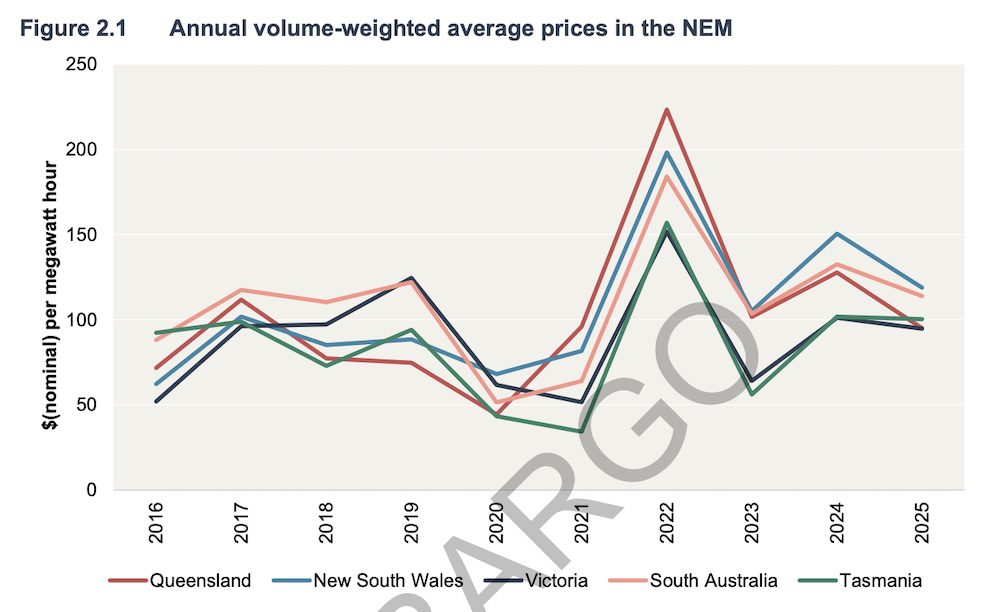
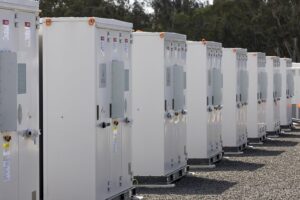
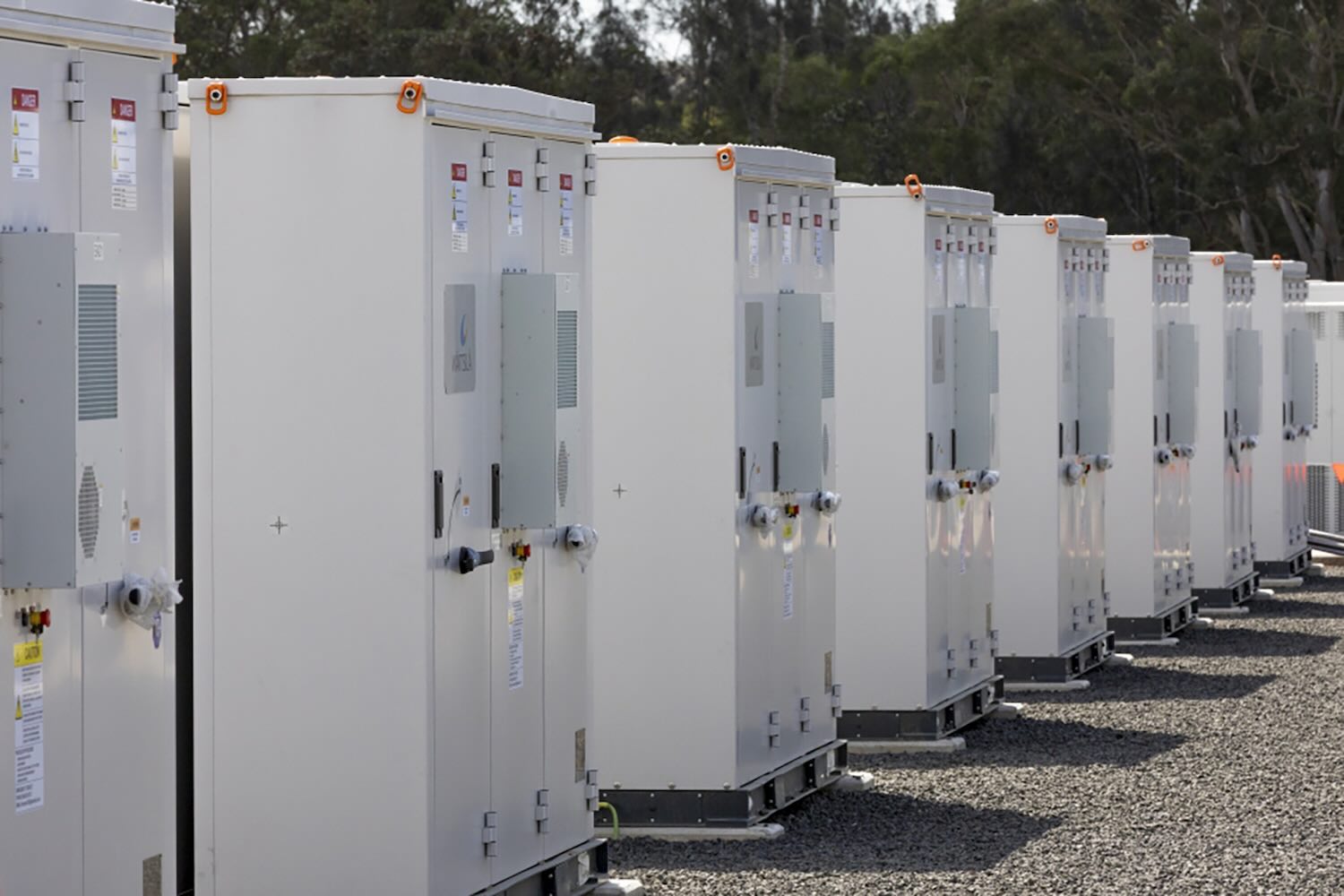
One of the key contributors to lower prices has been the jump in installed battery capacity from 2.2 GW in 2024 to 6.1 GW in 2025, which has added flexible supply during evening peak, when demand increases and solar starts to retreat from the mix.
The AER says the increase in battery capacity has made the market less vulnerable to shocks, either from the supply side due to network and generation outages and low wind or the demand side due to weather conditions.
“Batteries are still a small share of total generation but are increasingly influential during the evening peak, when they are beginning to displace gas and hydro as the generators that most often determine price,” the report says.
Coal, meanwhile, set the price less often in 2025, particularly during the day. And when coal did set prices – mostly overnight – it set them at higher levels due to rising fuel costs and commercial rebidding.
“An aging fleet of fuel-exposed dispatchable units is giving way to a new fleet of flexible and increasingly long-duration dispatchable units that are not fuel-exposed and respond differently to market dynamics,” the report says.
“These changes show that new flexible capacity is improving some outcomes, but not yet enough to remove price pressure when renewable output is lower and demand is higher,” the report says.
In particular, the AER says that overnight and evening prices remain a key pressure point in the NEM, where coal continues to play an important role in both generation and price setting. – which in the case of coal has meant higher overnight prices driven by higher fuel prices and fewer low-priced offers
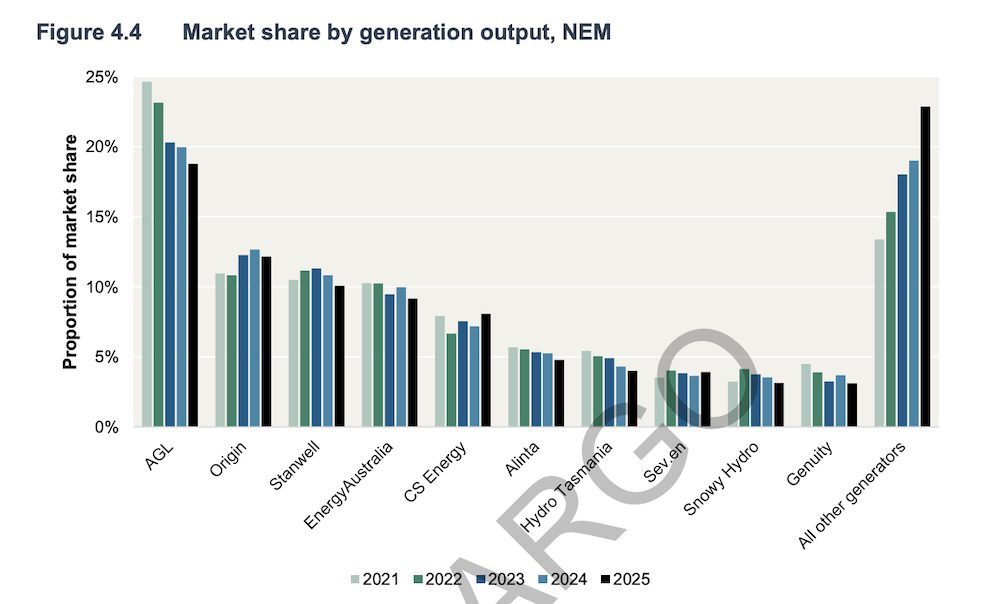
But just as coal’s role on the NEM is diminishing, so too is the advent of wind, solar and batteries helping to chip away at market concentration, which has seen a small number of big players be able to manipulate the market over short periods – when they push the wholesale price to the market cap.
“Competition in the NEM improved in 2025 as new generation and storage entered the market and ownership became more diverse,” the report says.
“The largest participants accounted for a smaller share of generation output across mainland regions, and concentration was lower on average, particularly during the middle of the day when solar output is high.
“New battery capacity also reduced concentration during peak times, with new entry more than doubling since mid-2024 and a more diverse set of owners entering the market.”
AER board member Jarrod Ball says batteries are becoming an increasingly important source of competition, shaping wholesale prices and strengthening competition during evening peaks, when demand remains high and solar output is lower.
““This is a significant shift, but batteries alone will not resolve every pressure in the market. Increasing flexible supply, storage, transmission and demand response to provide necessary capacity in the right places at the right times of day will become increasingly important as coal generators retire,” Ball says.
And Ball warns that, for consumers, falls in wholesale electricity prices will not necessarily translate directly into lower elecricity bills.
“Those wholesale market outcomes do matter for households and small businesses, but changes in wholesale prices do not flow through to retail bills immediately or dollar-for-dollar,” he said.
To join more than 28,000 others and get the latest clean energy news delivered straight to your inbox, for free, click here to subscribe to our free daily newsletter.