The second stage of the Wambo Wind Farm in Queensland’s Western Downs region has officially entered the Australian Energy Market Operator’s grid management system.
Located near the town of Jandowae, approximately 200 kilometres northwest of Brisbane, the 506 megawatt (MW) Wambo Wind Farm – one of the biggest in the state – has been developed in two stages. It is located close to the Cooper’s Gap wind farm developed by AGL.
The Wambo project is a joint venture between the government owned Stanwell Corp and Cubico Sustainable Investments, which has had the development of two other wind projects in the state – Marmadua and Middle Creek – halted by “call-ins” by the planning minister more than a year ago.
The first turbine of stage one of Wambo was erected back at the end of 2024, which began operations in late 2025 and full output capacity earlier this year in March. Meanwhile, the final turbine of the wind farm’s second stage was delivered earlier this month ahead of planned completion later this year.
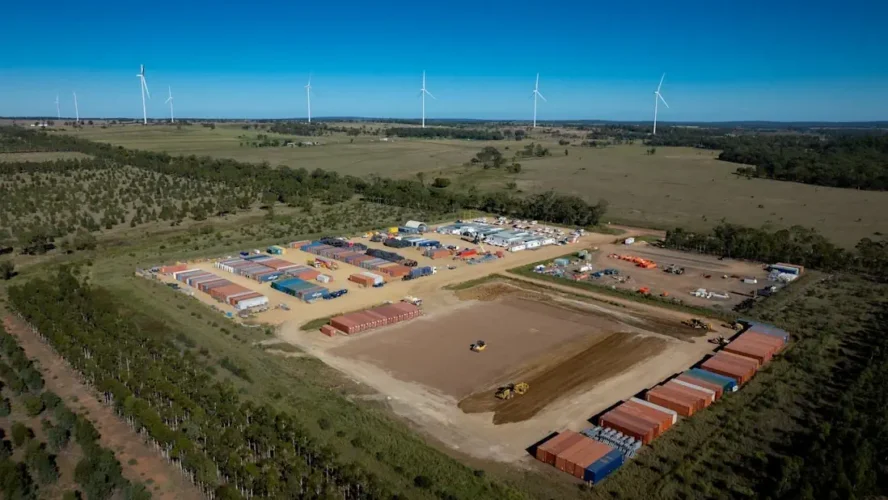
But as with all wind projects, connection to the grid does not require all turbines to be installed and operational, only some, allowing commissioning and energisation to get started even as the last turbines are being installed.
And progress is obviously being made, as the second stage’s entrance to Australian Energy Market Operator’s (AEMO) Market Management System (MMS) suggests.
Noted by GPE NEMLog analyst Geoff Eldridge on his LinkedIn account, its entry to the MMS indicates that the project is ready for commissioning and testing to begin.
When fully operational, the second stage of the Wambo Wind Farm will boast a maximum capacity of 247 MW and a registered capacity of 254 MW.
Together, the two stages make Wambo a sizeable 506 MW, consisting of 83 Vestas wind turbines, and connects to Powerlink Queensland’s network through the Diamondy Substation and a 275 kV transmission connection to the existing Halys Substation.
If you would like to join more than 29,000 others and get the latest clean energy news delivered straight to your inbox, for free, please click here to subscribe to our free daily newsletter.