The share of renewable energy hit a new record high share of 76.4 per cent of electricity demand on Australia’s main grid on Monday afternoon, beating a record that had stood since last November and setting the scene for cascading records this spring.
According to numerous data sources, the share of renewables hit the new record at 12.05 pm on Monday, beating the previous high of 75.9 per cent that had stood since November 6 last year.
At the time, renewables totalled 21,917 megawatts (MW), with rooftop solar providing more than half (12,532 MW or 43.7 per cent of demand), wind providing 8,074 MW (30.6 per cent), large scale solar 4,549 MW )15.9 per cent, and hydro 616 MW, or 2.1 per cent.
Coal provided just 7,033 MW, or 24.5 per cent of total demand, gas providing a modest 207 MW (0.7 per cent), according to data sourced via Geoff Eldridge from GPE NEMLog.

Graph: GPE NEMLog.
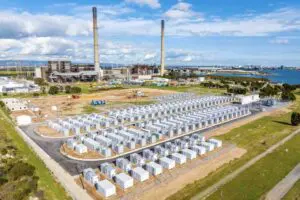
The share of renewables might have been higher – potentially 93.5 per cent – but 4,879 MW of capacity was curtailed, mostly for economic reasons. Australia’s growing fleet of big batteries were soaking up 1,340 MW of capacity at the time.
Spring is generally the season where renewable output and renewable share records are likely to fall, because the conditions are usually good for production of wind and solar, and because the mild weather means that electricity demand is modest.
Already in recent days, the share of wind has hit a new peak of 147 per cent of demand in the country’s most advance renewable grid in South Australia early on Saturday morning, but curtailment of wind and solar across the main grid also hit a new peak on Sunday afternoon.
There have been occasions when the share of “potential renewables” has reached 100 per cent of overall demand on Australia’s main grid.
But this is unlikely to translate into actual shares of 100 per cent without more storage, possibly more transmission, and more engineering work on ensuring enough “grid security”, such as system strength, can be delivered with the likes of synchronous condensers or battery grid forming inverters.