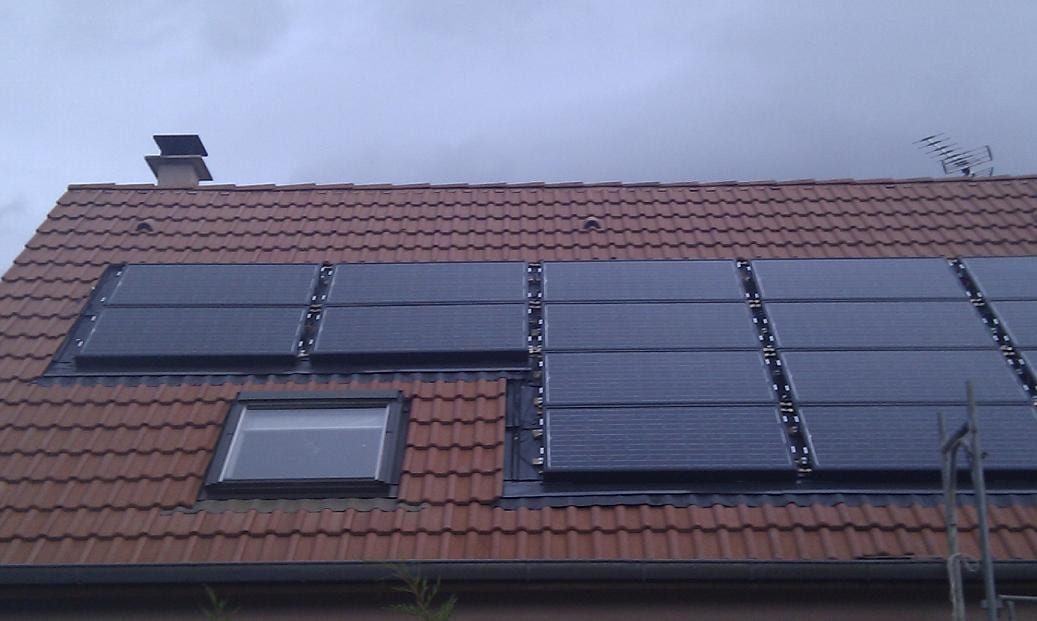
A cutting edge hybrid solar panel technology has become the first of its kind in Australia to be deemed eligible for use as both Solar PV and Solar Hot Water applications in one combined product.
The Sydney-based Solimpeks Australia this week received confirmation that it’s PV-T panels – which have adorned the roofs of a number of houses featured in the UK television series ’Grand Designs’ – are fully certified be used in any residential, commercial or industrial application as part of a whole system on the Solar Hot Water Register – meaning any experienced installer can work with the system.
With the appearance of a high-end solar panel, Solimpeks PV-T combines PV and solar thermal technology, delivering electricity and hot water from the same unit – a first in Australia.
The panels – which have been installed in Queensland, NSW and Victoria in their ’PV Pool Heating’ application – can now be installed in their ‘PV Solar Hot Water’ application for use in any house, says Solimpeks.
The PV-T hybrid systems come in 1kW, 1.6kW, and 2.4kW sizes – each being capable of providing the same PV electricity output as a corresponding-sized PV system, as well as hot water for the household.
The current ‘PowerVolt’ model sold in Australia produces a peak 200W of electrical output and 619W of thermal output. It is eligible for Solar PV STCs and will be eligible for Solar Thermal STCs once approved by the Clean Energy Regulator (expected late 2013).
The company says system also takes up less roof space, being the same size as a regular PV system. The company says additional roof space savings can also be gained by having a ‘Tri-Gen’ system, which provides solar PV, solar hot water and solar pool heating, with one PV-T solar array replacing three separate rooftop solar installations. Hydronic heating can also be added to the equation, making it a ’Quad-Gen’ system.
“If we get it right, we think that this will be ideal for most applications,” Solimpeks’ Daniel Barber told RenewEconomy in a recent interview. “If you want PV, why wouldn’t you get solar thermal. And vice versa. There are one million pools in Australia – we could attract 1 to 5 per cent of that market.” Pool owners are the most unrepresented in the solar PV market, he says, because their rooftops are often taken up with solar hot water collectors.
“If we can take a couple of per cent from solar PV market, and up to 10 per cent of new thermal market, that would be a great result for us.”