Australia’s electricity system has quietly crossed an important threshold.
For decades, as we all know, electricity flowed in one direction. Large power stations generated electricity, networks delivered it, and households consumed it.
Today, millions of Australians do all three, but our energy markets are too slow to reflect this transformation.
More than 4.4 million homes now generate electricity from rooftop solar. Over 450,000 households have installed home batteries through the Federal Government’s Cheaper Home Batteries Program in its first year.
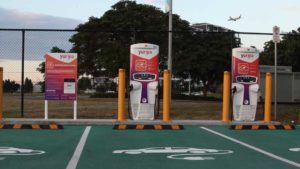
Electric vehicles are beginning to emerge as flexible energy resources capable of charging when solar is abundant and, if frustrating obstacles are removed, will increasingly supply electricity back to homes and the grid.
This isn’t simply another milestone in the clean energy transition. It represents a fundamental redesign of Australia’s electricity system.
The evidence is already tangible.
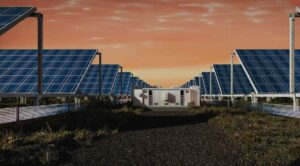
The Australian Energy Market Operator’s latest Quarterly Energy Dynamics report shows the rapid growth of household and utility batteries shifted about three times as much power from the daytime, when solar power is plentiful, into the evening, when demand is high. Gas-fired generation fell by more than a quarter compared with the same period last year, recording its lowest average quarterly output since 1999.
That shift matters because batteries are increasingly replacing expensive gas peaking generation during the highest-demand periods of the day.
Australian Energy Regulator chair Clare Savage recently noted that the growing contribution of batteries and rooftop solar has reduced wholesale electricity costs by making the market less volatile and reducing reliance on expensive evening generation.
For years, Australia’s energy transition has focused on building large-scale renewable generation. We are now entering the next phase: learning how to orchestrate millions of distributed energy resources so they work together as a single, flexible electricity system.
That requires a different way of thinking, planning and regulating.
Our market institutions were designed around large generators, predictable demand and passive consumers. Increasingly, those assumptions no longer hold.
Today’s households are producers, consumers and increasingly storage providers. Tomorrow, many will also operate electric vehicles capable of supporting the grid through Vehicle-to-Grid technology.
The Australian Energy Market Operator (AEMO) projects that rooftop solar will provide 28% of our energy needs by 2050, with home batteries providing an additional 12%.
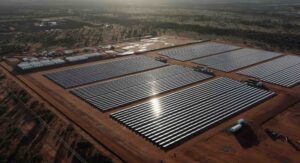
That is more than onshore and offshore wind combined (14% and 3% respectively), more than utility solar (21%), more than Hydro (2%), and more than gas (5%).
But our regulatory framework has not fully caught up.
The Australian Energy Market Commission’s recent Electricity Pricing Review illustrated this tension. Its draft report largely viewed rooftop solar through the lens of declining network revenue and proposed increasing the fixed component of electricity bills.
Consumers responded forcefully, with more than 2,700 submissions, more than half from Solar Citizens supporters who argued that households investing their own capital to strengthen the electricity system should not be penalised for doing so.
Consumer voices had an impact – the Commission’s final report acknowledges strong concerns raised by consumers and stakeholders about the impacts of higher fixed charges on households, particularly those investing in consumer energy resources.
But energy companies have already jumped the gun.
Energy retailers Origin and AGL have notified NSW customers that from 1 July the fixed charge component of their bill will increase, in one case we’ve seen the daily fixed charge will increase by 100%.
Energy and Climate Change Minister Chris Bowen has asked the energy and competition watchdogs to investigate whether electricity retailers have breached misconduct laws by trying to push through huge increases in daily supply charges.
If Australia wants to maximise the value of distributed energy resources, we need market rules that reward flexibility rather than simply recovering network or supply costs.
That means fair and transparent network tariffs that encourage battery participation.
It means stronger consumer protections and clearer value propositions for households joining Virtual Power Plants.
It means accelerating Vehicle-to-Grid capability so electric vehicles become genuine distributed storage assets rather than untapped batteries sitting in driveways.
It means removing barriers preventing renters and apartment residents from participating through stronger minimum energy efficiency standards, better tax incentives for landlords and pathways for shared rooftop solar and portable plug-in battery technologies already in high use overseas.
Most importantly, it means recognising households as part of our energy infrastructure.
Australians have collectively invested more than $25 billion dollars in rooftop solar and battery storage. Every new installation provides benefits that extend well beyond the individual household by reducing wholesale electricity prices, lowering emissions and improving system resilience.
Public policy should seek to unlock more of that value, not discourage it.
The success of the Cheaper Home Batteries Program demonstrates what is possible when governments partner with consumers. Rather than building every solution from the top down, policy helped unlock private investment that is delivering public benefits.
Community organisations, industry, consumer advocates and thousands of Australians spent years arguing for battery incentives because they understood storage would become the missing link in Australia’s rooftop solar success story.
The results have exceeded expectations.
The next challenge is ensuring the rest of our energy system evolves just as quickly.
Australia has become a global leader in rooftop solar. We are rapidly becoming a leader in household battery storage (with the world’s first home battery rebate).
Our regulators, market rules and network planning now need to catch up with the consumers who are already transforming the grid.
The future of Australia’s electricity system won’t simply be renewable.
It will be distributed, flexible and increasingly consumer-driven.
The sooner our institutions embrace that reality, the sooner every Australian will benefit.
Heidi Lee Douglas is CEO of Solar Citizens, an independent community organisation advocating for a democratic, people-powered energy system that cuts bills, reduces emissions, and makes Australia a global leader in the clean-energy transition.