The New South Wales government is putting one of the country’s largest electricity supply contracts out for tender for new “fast-response dispatchable capacity”, offering a 10-year contract for its $350 million a year electricity supply.
The decision to put the contract out for tender comes as the state government announces it will seek 3,000MW of new capacity in the country’s first dedicated renewable energy zone in the central west region based around Dubbo, and also unveils a plan to introduce its own “energy security target” to ensure continuity of supply as more coal generators exit the grid.
The tender is one of the biggest deals for the renewables industry. It will put to the test – and likely confirm – the claim made by state energy minister Matt Kean on Friday that “firmed renewables” are the cheapest option for new generation and lower than the current wholesale price.
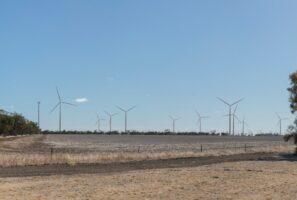
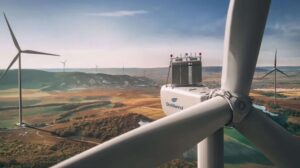
“Firmed renewables” mean wind and solar – clearly the cheapest form of bulk generation – backed up with either pumped hydro, battery storage or fast-start gas generators to make it “dispatchable” at critical times.
The test in this tender is the significant amount of dispatchability required for the tender for a total of 1.8 terawatt hours of electricity supply.
This includes government-owned hospitals, schools and government buildings, and is about one per cent of total demand in Australia’s main grid. The government currently pays around $350 million a year for this supply, the biggest single contract in the biggest grid in the country.
Potential bidders are still trying to get their minds, and their calculators, about what this means, and how it can be structured, and will be studying the details of the documents, and the 30-minute data provided by the government, to work out exactly what this means.
Nearly half of the total supply comes in off-peak periods, and only around 20 per cent in peak periods. The government is not asking for the supply to directly match the load, but it does want the capacity contracted to be able to respond to overall demand peaks in the grid ,and have the ability to respond to Australian Energy Market Operator signals of “lack of reserve”.
At the very least, it says, it wants one hour of storage for any capacity supplier, and says it prefers at least two hours.
Quite how this translates into offerings will be fascinating to see.
The deadline of mid 2022, or late 2023 at the latest, probably rules out any pumped hydro capacity, leaving any wind and solar offerings to be backed by either fast-start gas generators, which might operate less than 10 per cent of the time, or battery storage.
Or it could be both. What will be fascinating to see is if the combination of wind and solar and battery storage can beat fast-start gas generators, as they have in the US on repeated occasions, or whether the terms of this contract still requires their involvement.
The EOI documents declare a preference of “dispatchable” assets of between 30MW and 200MW, although it says smaller assets that are “aggregated” into at least 30MW are also eligible. This suggests they are open to virtual power plant proposals.
The initial expressions of interest (EOI) stage close in early January, so bidders have less than two months to put together a proposal, and also need to have the ability to act as full retailers. A decision to go to more formal RFP (request for proposal) process a few months later, with decisions made by September next year.
The contract – and presumably the supply – must be in place by July 1, 2022, although some slippage is allowed to November 2023.