In a week where national attention is rightly focussed on the potential approval of the North West Shelf project, Tuesday’s quiet approval of the Tahmoor Colliery could prove to be one of the NSW government’s biggest setbacks to achieving its 2030 emissions targets.
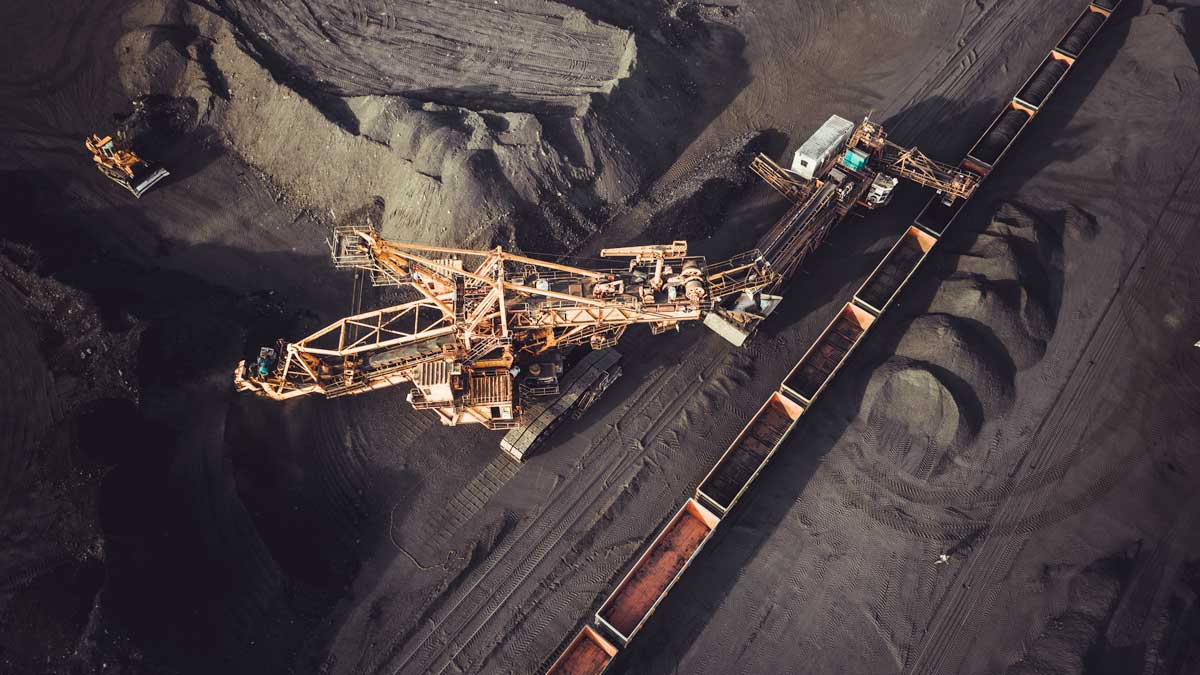
Tahmoor colliery is a super-emitting underground coal mine. In 2024, it released the equivalent of more than a million tonnes of carbon dioxide into the atmosphere, before any of its coal was burned. Thanks to this new approval, the mine is estimated to release up to 11.5 million tonnes more of CO₂e over the next 8 years.
As coal mines go, it is the second most emissions-intensive coal mine in NSW, and thanks to this week’s approval, it could be on track to become the most intense emitting coal mine in the state by the end of the decade.
Most of this pollution is in the form of methane, that is simply released directly into the atmosphere through its ventilation shaft. Not only will this methane have a significant short term warming impact on the atmosphere, but its cumulative emissions increase risks undermining not only NSW’s 2050 net zero targets, but critically threatens the more immediate and similarly legislated 2030 emissions goals.
In the next year alone, methane emissions could surge by 57% if the expansion proceeds unchecked.
Yet, in their review process, the NSW government focused narrowly on the additional 1.14 Mt CO2-e associated with just the final 14 months of mining. This approach not only fails to account for the rapid year-on-year escalation in emissions as mining shifts into a much gassier coal seam, it also quite simply misses the forest through the trees.
Almost any new facility would be deemed insignificant compared to the state’s cumulative emissions over the next 25 years. Using this as a benchmark for approvals simply obscures the responsibilities for emissions reductions and weakens the integrity of the state’s climate planning.
However, technology to mitigate the biggest source of methane at underground coal mines has been deemed feasible at the Tahmoor colliery since at least 2021. Tahmoor’s own consultants estimate that on site mitigation could reduce fugitive methane emissions by at least 79%, and yet, actions to mitigate the mine’s biggest emissions sources have barely gone beyond a scoping study.
Instead, the mine is now only required to submit a greenhouse gas mitigation plan in early 2026, outlining the results of an internal study of the mine’s methane mitigation potential. It doesn’t compel action nor serve as a condition for the mine’s current approval. This passive regulatory approach stands in stark contrast to the urgency of the climate crisis.
Using the mine’s own Safeguard Mechanism compliance projections, I estimate that greenhouse gas compliance costs of offsetting the mine’s emissions could range between $130 million and $270 million through to 2033.
In contrast, the social cost of these emissions, calculated using the Australian Energy Regulator’s recent valuation guidelines, amount to approximately $1.1 billion. This is before accounting for the short-term impacts of methane emissions itself, or the global impacts of burning the 35 million tonnes of coal that SIMEC now is approved to dig up.
Moreover, delaying mitigation dramatically increases its potential mitigation costs. Early installation of commercially available methane abatement technology by 2026 could cost as little as $20 per tonne of CO₂-e. But postponing implementation drives the costs quickly above $40 per tonne, as they’ll simply be far less time to achieve a return on investment if the mine closes by 2033. Any delay now dramatically decreases the likelihood of any real adoption.
And just to be clear, Tahmoor colliery adds nothing to the state’s energy security. Not only does the mine produce metallurgical coal, but 75% of the coal is exported. The mine’s owners are also looking to sell the mine, with an asking price of $800 million.
Despite years of financial instability and missed payments to local workers, the government’s extension approval has effectively inflated the asset’s sale value while shifting the climate and social costs onto the public.
This comes only months after the NSW Net Zero Commission explicitly flagged coal mine expansions as a major risk to meeting NSW’s legislated climate targets. Following a parliamentary inquiry, the Commission is even preparing a dedicated report on these expansion risks and many stakeholders have sensibly urged the government to pause new approvals until that advice is delivered.
Approving Tahmoor’s expansion now, before the Commission’s report and without binding mitigation conditions, is a glaring contradiction of that expert warning.
If the Net Zero Commission was looking for the biggest pre-2030 emissions threat in NSW, it may just have been approved.
In the wake of this approval, there is now a critical opportunity for the Net Zero Commission, and the NSW Government to respond. Urgently, the NSW government should:
- 1. Pause any further coal or gas expansion approvals until the Net Zero Commission completes its sectoral risk report, due mid-2025.
- 2. Review the potential for a coal sector emissions cap aligned with NSW’s net zero trajectory, ensuring the sector does not consume a disproportionate share of the state’s remaining emissions budget.
- 3. Require binding emission reduction targets for high-emitting coal mines such as Tahmoor before 2030, that align with the NSW Net Zero pathway.
- 4. Ensure transparency in commercial mitigation estimates, requiring that all cost assessments for emissions reduction technologies be transparent, inclusive of multiple vendors, benchmarked against the mine’s profit margins and the social value of avoided emissions.
- 5. Limit the use of offsets by coal mines to high-integrity offsets generated within NSW, with a preference for methane mitigation offsets to match methane emissions. This would prevent outsourcing climate responsibility and encourage local, relevant abatement aligned with the nature of emissions.
Tahmoor colliery’s expansion is a stark reminder of just how far we still have to go when it comes to coal mine methane mitigation. As the NSW government ramps up its support for an 8,000 MWh battery and 250 new EV fast chargers, it’s high time the coal sector lifts its weight when it comes to the state’s emissions risks.
Without it, the rest of the state’s economy will have to do even more of the heavy lifting to reach our Net Zero goals.