Just before the sand dunes, where farmland meets sea in the southern-most town of mainland Australia, site preparation works are well underway on the first stage of Marinus Link, a nearly 350 km transmission line that will connect the power grids of Tasmania and Victoria, via the Bass Strait.
The unassuming site in Sandy Point currently looks a bit like a small, makeshift air strip, but it is shaping up to host the heavy duty drilling kit that will be used to tunnel under the dunes for the cable to make its Victorian shore crossing.
About 1 km off the shore of the Sandy Point beach, a cable-laying vessel called the Leonardo da Vinci will deliver the project’s high voltage direct current (HVDC) cable system, unwinding it from enormous, 170 km-long spools.
Marinus Link has come a long way since it was first announced by the Coalition Turnbull government in 2017, with all state and federal approvals secured and financial terms agreed by the project’s three owners, the Tasmania, Victoria and federal governments.
But over that time the huge project has also blown out in cost – from two, 750 megawatt (MW) cables priced at $1.3 billion to a single 750 MW cable priced at more than $3.5 billion – and attracted its fair share of controversy and criticism.
Much of the most vocal opposition to the project has played out on the Tasmanian side of the project, where environmental groups like the Bob Brown Foundation have described it as an “ecological and economic disaster” for the Island State.
Critics argue that the project will raise electricity costs for Tasmanian consumers while also paving the way for major new renewable energy and grid infrastructure projects that threaten the local environment and ecosystems while benefitting – they say – mostly the mainland.
But the vast bulk of the works for the onshore part of the project will take place on the Victorian side – and this, too, is where some of the biggest feats of engineering, logistics and community engagement are underway.
In Victoria, after the cable makes landfall at Sandy Point, it cuts a 90 km path through the undulating Gippsland countryside, traversing a major dairy, various potato farms, and a huge commercial pine plantation on the way to Hazelwood in the Latrobe Valley.
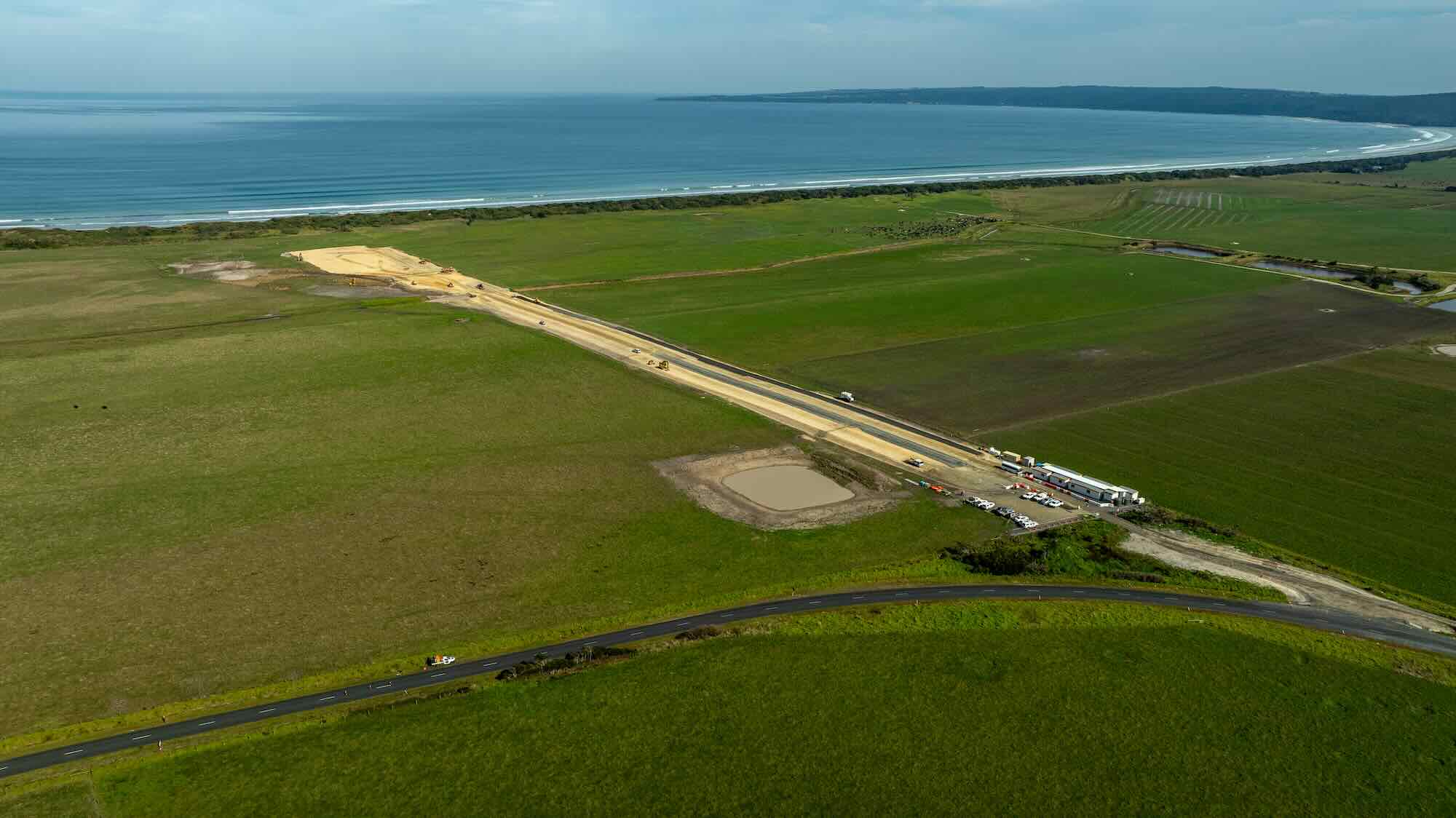
Marinus Link, Sandy Point. Image supplied
Last week, Marinus Link Pty Ltd (MLPL) took a handful of journalists – including two from community-owned and volunteer-run local papers, the Prom Coast News and Mirboo North Times – on a day-long minibus tour of the cable’s planned route.
As Marinus Link engagement manager and Gippsland local Mark Lindsay puts it, “it’s a big piece of work,” and MLPL is keen to “demystify” what the company and its contractors are doing – and why they’re doing it.
On the technical side, the main activity that MLPL and its contractors and sub-contractors will be undertaking in the region is digging: tens of kilometres of trenches to lay the electrical conduit, or pipe, that will contain the bundles of HVDC and data cables.
And while these are stage-one works, MLPL is digging two trenches and laying two sets of conduits in preparation for the second 750 MW cable that it is proposing to install in a second stage of the project that is yet to be fully approved or costed.
“So that’s two trenches inside a 20 meter easement, 1.5 metres under ground,” explains Lindsay.
“Most of it will be done using open trenching, where you strip and store the topsoil, dig your trench with your excavators, running loaders … install the conduits, and then return the topsoil.”
Where trenching cannot be done – in areas with sensitive vegetation or waterways, for example – horizontal direction drilling (HDD) will be used instead.
Lindsay says the company expects to start trenching and drilling at various points along the line by November this year – works for which MLPL’s main engineering, procurement and construction contractor TasVic Greenlink (TVGL) is currently holding a competitive procurement process.
On the community engagement side, there remains a substantial amount of work yet to be done. There are more than 90 landholders whose properties are in the direct path of the cable and the three local Indigenous mobs whose traditional lands are being affected by the works.
To this end, Marinus Link is engaging with Gunaikurnai Land and Waters Aboriginal Corporation (GLaWAC), Bunurong Land Council Aboriginal Corporation, and Boonwurrung Land and Sea Council, to identify and protect cultural heritage.
On the landholder side, MLPL says it has completed negotiations with just under half of the 90-odd cohort, and is “actively engaging with all remaining landholders” to get all of the necessary agreements in place in time to get to work.
“Through these open and flexible negotiations, we’ve been able to work with individual landholders and refine our designs to limit impacts, address their concerns, and reach an optimal outcome,” a company spokesperson told Renew Economy.
On the bus, Lindsay is open about some of the pushback the project has had, pointing out a handful of signs declaring “non-support” for the project, “most – but not all” of which he says are on the fences of properties not directly impacted by the project.
He also notes that two sets of landholder negotiations have been referred to the Australian Energy Infrastructure Commissioner, so far – one of them over a dispute around biosecurity concerns. Both of them were resolved “very quickly,” he says.
“It’s not all beer and skittles,” Lindsay tells the media pack during a stop at a 400 acre property in the diary farming hub of Mardan that MLPL has bought to use as an “anchor point” for the project.
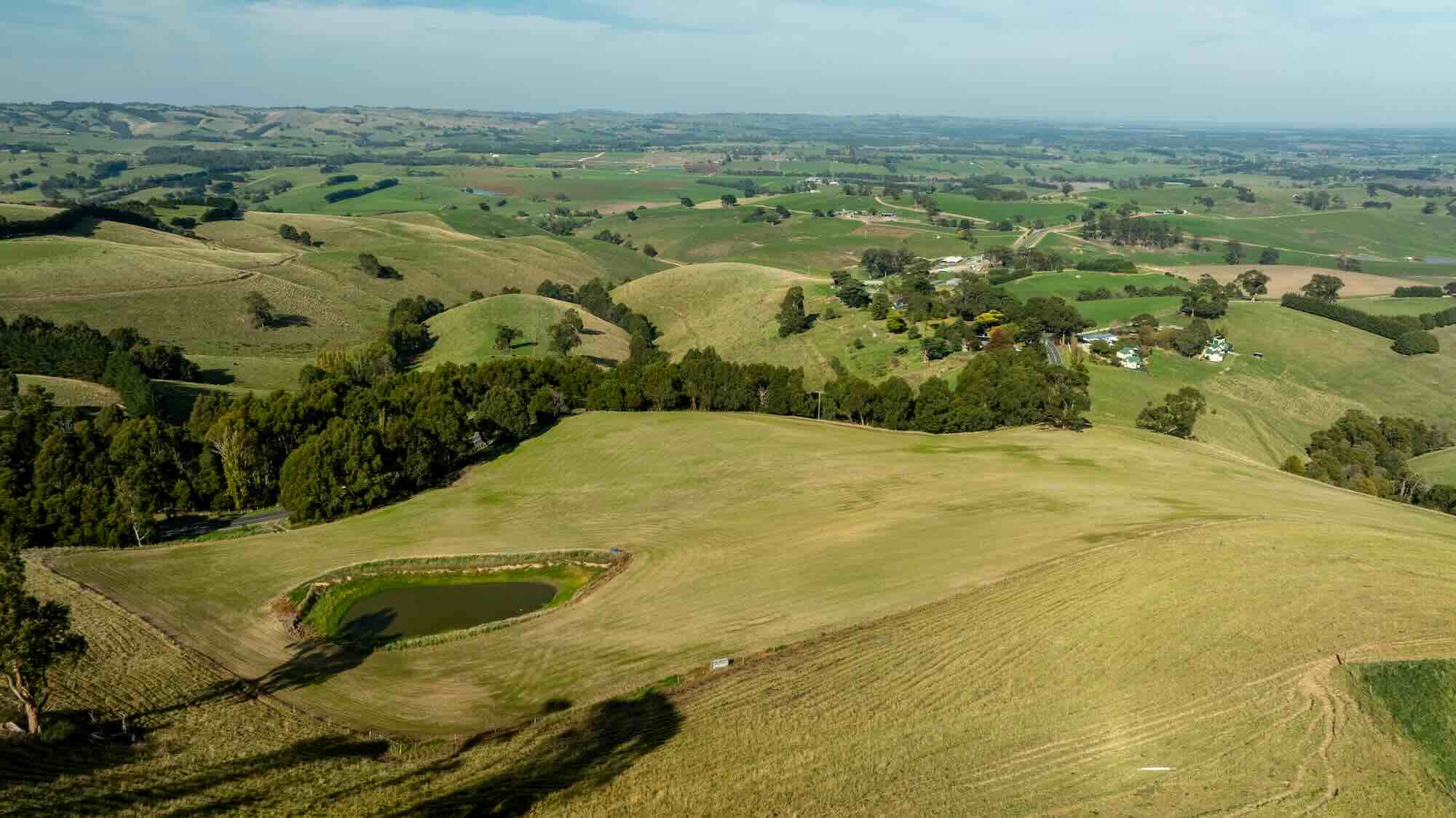
The view from Marinus Link’s Marden Farm. Image supplied
“It’s pretty tough work and there are impacts. We’re going in and we’re shutting off an area,” he says, referring to the 36 metre-wide works zone while the trenching is being done, that is then pared back to a fenced-off 20-metre easement once the conduit is laid and the soil returned and rehabilitated.
“We’re also building access tracks to get to that. So there is impact to our farmers, but we’re trying to minimise that as much as we can, and also to use this as an opportunity to get a good outcome for the farmer too.”
For the broader community, MLPL is preparing its draft benefit sharing framework for public exhibition – “within weeks, not months,” says Lindsay – based on extensive engagement with a range of community stakeholders.
In the meantime, there is a community grants and sponsorship program that is running, already, and will continue to run through until 2030.
But Lindsay, who before his role at Marinus worked as a councillor for the nearby Bass Coast Shire Council, knows that there is much more to engaging communities and winning their trust than benefit schemes and grants.
Being local, embedded and active in the community is crucial, too. If nothing else, it ensures that feedback on issues that crop up over the course of the project’s life will be swift and frank.
In Sandy Point, for example – a town with “a population of just over 300, but with 11 active community groups” – concerns about driver behaviour among the 80-odd b-double trucks currently on loop from the work site to two local quarries were delivered directly to Lindsay at a community event.
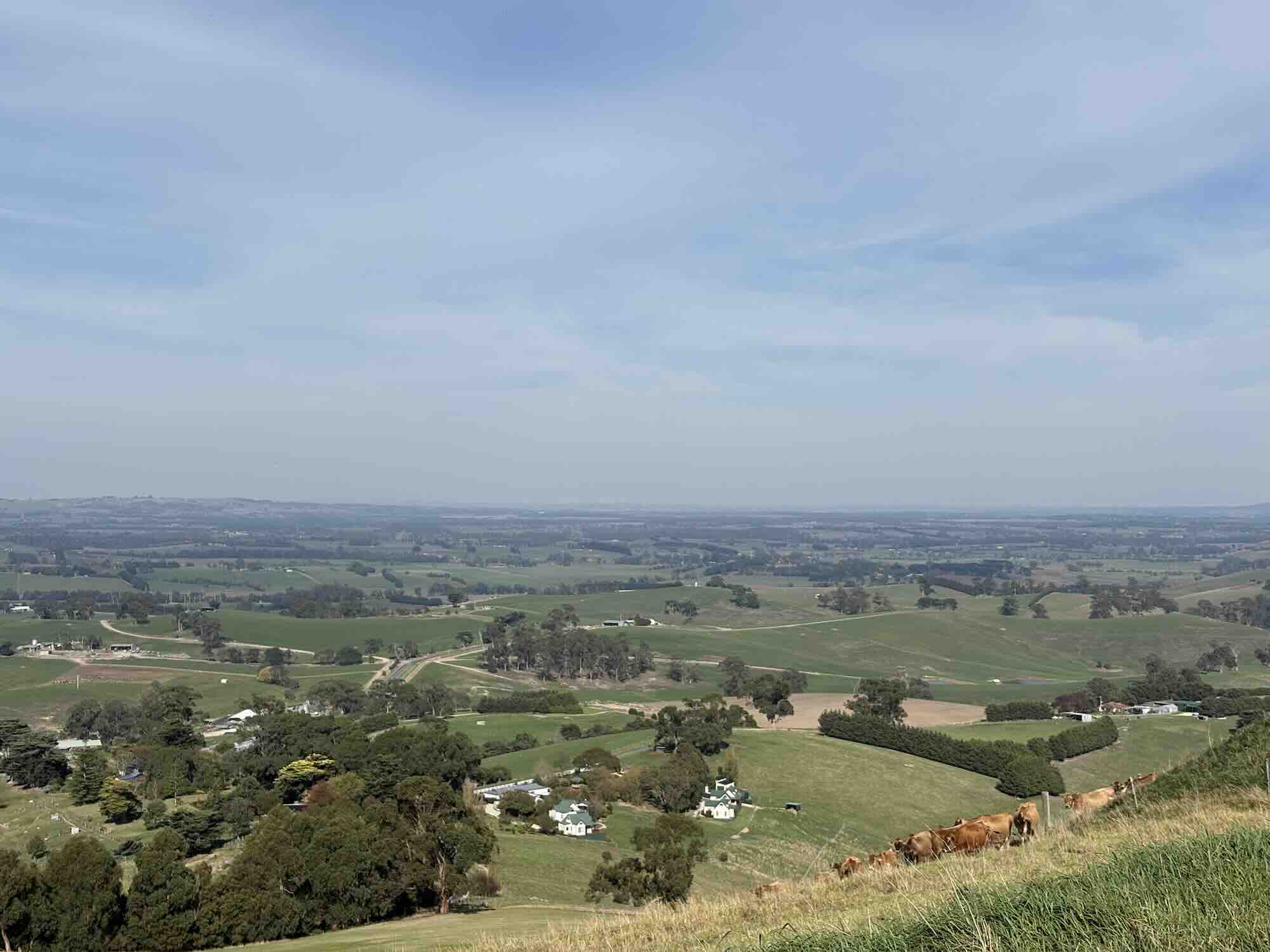
Cows in the front, wind turbines (barely visible) at the back, at Mardan. Image: S Vorrath
“The [early] landholder concerns were around impacts and … ‘why here?,’ you know. And then there’s philosophical questions around the merit of something like this.
“I think that, given the political landscape as well, it means that, you know, there’s more narrative now around fossil fuel and renewables, and people have different opinions of that and we hear that in community with landholders as well.
“[In the] early days we probably had some more environmental concerns: What does this mean to our ecology? …Another concern has been around the assumption that there’ll be a big workforce coming in, non-local, and what does that mean to our already quite tight capacity of available accommodation.”
But Lindsay says of the 300-400 workers in total that are expected to be driectly employed by MLPL at various times up and down the 90 km line, only around 70 will be non-local across all three contracts.
“We’ve got a workforce and accommodation strategy we’re about to go live on – we’re waiting on the contractors to provide their workforce numbers, where they would be and what their solutions will be to accommodate them, particularly for the non locals. And we’re really pleased that the number is not extraordinary.
“Really, the strategy is local first,” Lindsay says. “It’s a dirt moving and pipe installing project. For the vast majority of it … the workforce that we need is local.”
At the other end of the line, in the Latrobe Valley – where one of the project’s two converter stations is being built on a Hazelwood property also owned by MLPL – the flavour of community engagement is a little different.
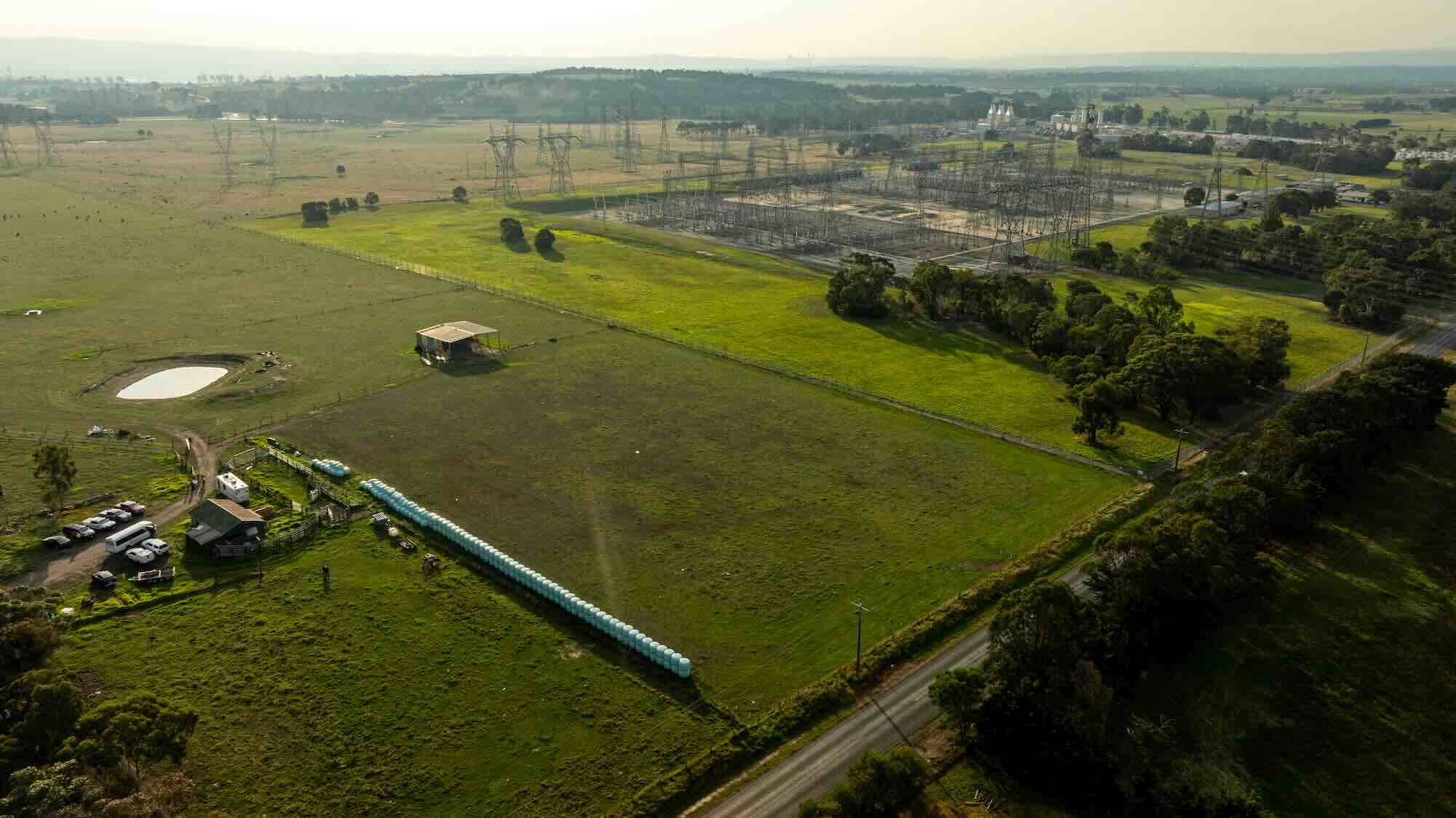
Marinus Link’s Hazelwood site. Image supplied
“When we come into the Valley, they are used to poles and wires, they are used to energy,” says Lindsay.
“The questions we commonly get asked, they’re not necessarily the same as what you’ll get down near Sandy Point. It’s mostly around, ‘When are you doing it? What’s the traffic going to look like … and where does my son or daughter get a job? … So people here are really ready for it.”
On the jobs front, sub-contracting for that is also “a big piece of work,” Lindsay says.
“Over the last two, three years, we’ve been creating a database of capability within the local region to be able to feed into those major subcontractors.
“We get local, small to medium enterprises, mum and dad businesses, farmers even, that might do rural fencing. …We get people come to us and offering their second homes, their holiday homes in the region, to potentially use for accommodation with service chains.
“It’s about trying to find what we have here and how we can actually get them connected into the major subcontractors to get the best local outcomes.
“We had a meeting with our contractor and Yallourn [coal] mine only two weeks ago in our Traralgon office, talking about their transitional workforce, the timelines for that and how that might work with Marinus Link.
“And there’s real openness to that, because we know that … outside of traineeships and things like that, we can already bring transitional and existing workforce over.
“The pipeline of projects that are coming into Gippsland – there’s decades of work in energy that’s about to hit us here.”
Matt Malone, who is the general superintendent of DT Infrastructure, which alongside Samsung C&T Corporation make up MLPL contractor TasVic Greenlink JV, completed his apprenticeship down the road from the Hazelwood site.
And Bernard Norton, the country managing director for Australia at Hitachi Energy – which is supplying the project’s cutting edge converter station components – says the Marinus Link project is “kind of a homecoming” for him, too.
“I literally cut my teeth in the energy industry in that switch yard just over there,” he told a small media gathering at the Hazelwood site, pointing in the direction of AusNet’s terminal station and a whole bunch of huge 500 kilo-volt (kV) transmission towers and line. “So it’s pretty exciting.”
At Hazelwood, Hitachi is supplying the the more than 100 valves and two, 100-odd tonne transformers that will make up the “beating heart and brains” of Marinus Link in one of its two converter stations – the other being on the Tasmania side, at the Heybridge site in Burnie the state’s north west.
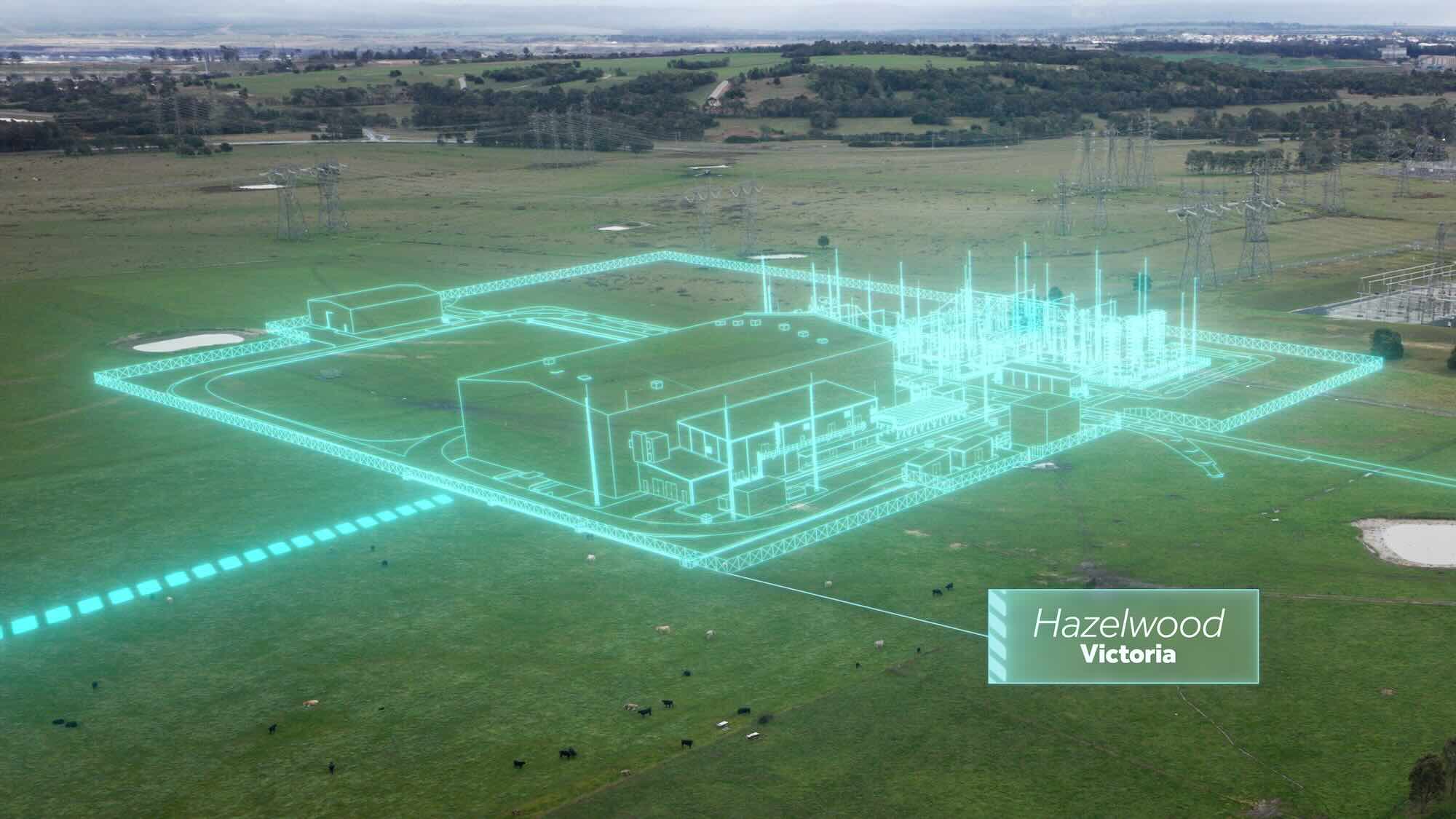
Image supplied
The cutting edge tech, which will be housed in a Bunnings shed-sized building at the Hazelwood site and is being deployed for the first time in Australia, will – at the most basic level – convert the power from AC to DC and back. But Norton says it will also provide “significant support to the grid.”
“What that means is that Marinus Link not only will enable the transfer of renewable energy between Tasmania and the mainland, but Marinus will also provide … grid stability, grid resilience and reliability, along with that transfer of energy,” Norton says.

Image supplied
One of the very last things to be installed for the Marinus Link project will be the link, itself – hundreds of kilometres of high voltage direct current (HVDC) transmission lines bundled with a fibre optic data cable produced and supplied by Italian company Prysmian.
For the subsea part of the project, 255 km of cable will be laid across the ocean floor, unspooled from above by the Leonardo da Vinci (pictured above), while an unmanned underwater vessel on the sea floor below uses seawater to jet-trench the cable about a meter under the sand.
Where there are rocks, the cable will be sandwiched between two concrete blankets, sort of nets of concrete squares joined together with chains, that will be layered over the rocks.
“So the The Leonardo da Vinci …sits on the top, and it’s got a vessel, an uncrewed vessel, that crab-walks along the seabed and cradles the cable behind it, trenches in front of it, so it’s opening up the sand itself, and it lays the cable as it moves across the seabed,” explains Lindsay.
“As funny as it sounds, it’s not the most challenging part of the project by any stretch, but it does have a particular window.
“Bass Strait is 80-90 meters deep at its deepest, and you’ve got two big bath tubs on each side – that’s why it’s so volatile. … And so there’s only a short window around November to sort of March, April that you can actually do the work.
“So it’ll be done very quickly, but it’ll be a pretty amazing thing to see.”
If you would like to join more than 29,000 others and get the latest clean energy news delivered straight to your inbox, for free, please click here to subscribe to our free daily newsletter.