Australia is a global leader in rooftop solar adoption, with around one in three households now embracing the technology.
In a climate of rising energy costs and ongoing concern around fuel prices, it’s no surprise more homeowners are seriously considering solar to reduce their bills and gain greater energy independence.
At the same time, federal and sometimes state government support is also helping to accelerate uptake, with incentives such as the Cheaper Home Batteries Program helping to lower upfront costs and drive a surge in installations across the country.
Choosing the suitable home battery storage system, however, is not like replacing a washing machine or buying a car. For most Australians, it can be a minefield. When most households start researching batteries, they’re likely to consider two things: size and price. Those are great places to start, but they’re not the only ones that matter.
Choosing the suitable battery for your home
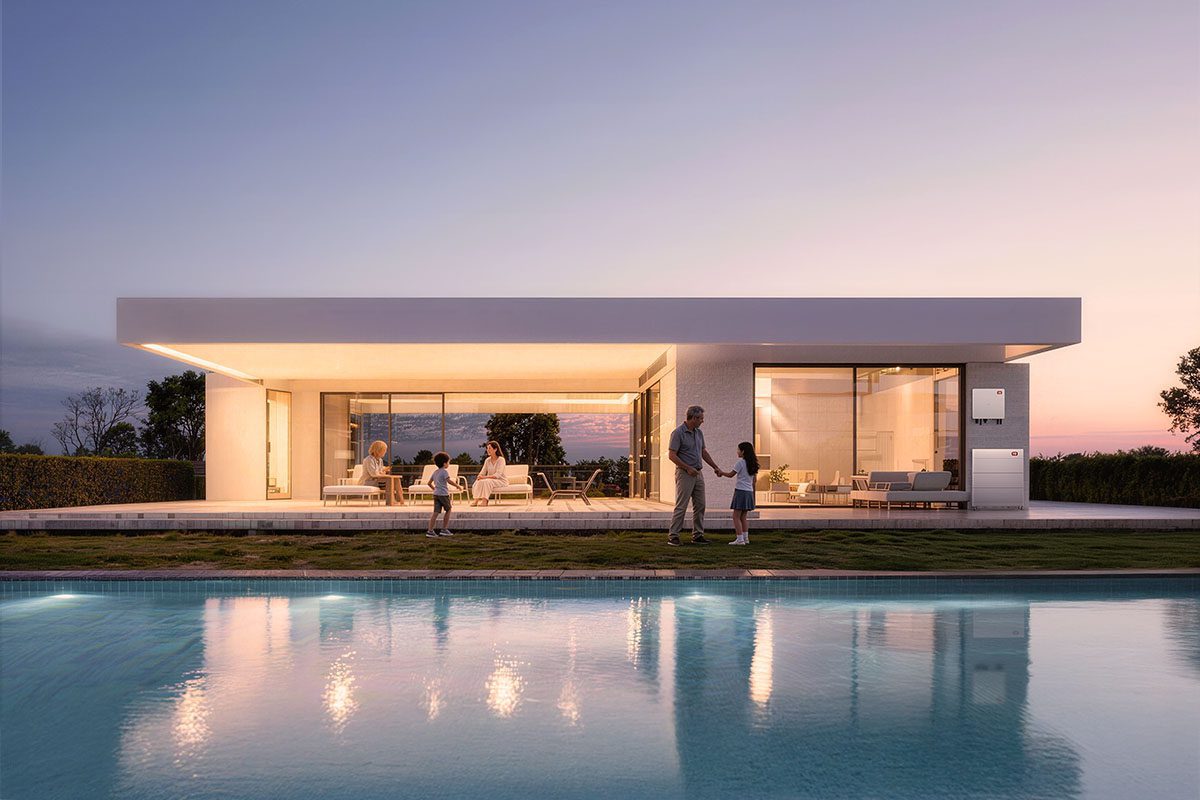
Many battery systems available today have their origins in commercial or industrial applications which means things like space, noise, and aesthetics are rarely considered. They are, however, likely to be a priority in homes, and many Australians considering a battery will be thinking first about where it will fit and how it will look.
Australian standards are quite specific about where a home battery can and can’t be installed. A residential battery most often sits in a garage, along an exterior wall where families pass by every day, or in an area visible from a living space.
Ensuring the battery looks and feels like it belongs there is important. So perhaps a better question to ask when considering your first home battery system is, was this designed for a home?
The shift from industrial to residential context also changes the nature of safety.
Systems designed with residential use in mind tend to prioritise layered safety from the outset. That includes continuous monitoring at the cell level, and the ability to isolate faults extremely quickly, in some cases within milliseconds to prevent issues from escalating.
EnergyLIB is one example of this shift.
It is the first brand built from the ground up specifically for the home. Its system, LIB HomeStack, combines a modular, stackable architecture with design elements intended for everyday living.
With softened edges, a gentle presence, and subtle indicator lighting that is easy on the eyes after dark, its family-friendly design fits seamlessly into any household. Furthermore, it features continuous monitoring and fault isolation within 1 millisecond, providing genuine peace of mind for every home.
The government rebate: does size matter?
That said, size is where most households land eventually and from 1 May 2026, changes to the government’s Cheaper Home Batteries Program means that gets even more complicated.
The problem is that energy usage varies significantly between households, from smaller homes with modest daily demand to larger families running multiple appliances, and heating or cooling systems. Committing to the wrong size upfront is an easy mistake to make and not always an easy one to fix.
This is one of the reasons EnergyLIB designed the LIB HomeStack around a modular, stackable architecture. It gives households the freedom to choose between 16 kWh, 32 kWh, or 48 kWh, ensuring a tailored fit for every home.
Making your choice
Battery marketing typically focuses on features such as how quickly a system performs during outages. However, for most households, the real value is in the daily cycle. Put simply this is the measure of solar stored during the day, drawn down in the evening, and then used every day for the next fifteen to twenty years.
A battery that cycles daily to store solar energy, offset grid usage, and manage energy costs for example is likely to last longer and provide more usable capacity.
Some newer systems are being engineered specifically for this kind of daily cycling.
For example, the LIB HomeStack is engineered for daily use with up to 8,000 cycles, ensuring high performance for decades. Full depth-of-discharge capability allows for the use of every bit of stored energy, every single day.
At typical residential usage patterns, that translates to up to 22 years of daily operation. Together with the LIB Inverter, it’s a seamless energy solution designed to give your home true peace of mind for years to come.
Note: This is a sponsored post from EnergyLIB.
You can Learn more about EnergyLIB and the LIB HomeStack system at: https://www.energy-lib.com/au/
As EnergyLIB continues to expand its footprint across Australia, the brand is currently inviting experienced installers and retailers to join its network as Official Partners.
This program provides professionals with direct brand support, regional territory protection, and strong commercial opportunities.
To explore partnership opportunities: [email protected] or to speak with an official Australian partner of EnergyLIB, Autra Batteries Australia: https://autrabatteries.com/