The Minns and Albanese Labor governments will spend an additional $1.285 billion on regional roads in NSW, targeting three key routes used to transport renewable energy equipment to project sites inland.
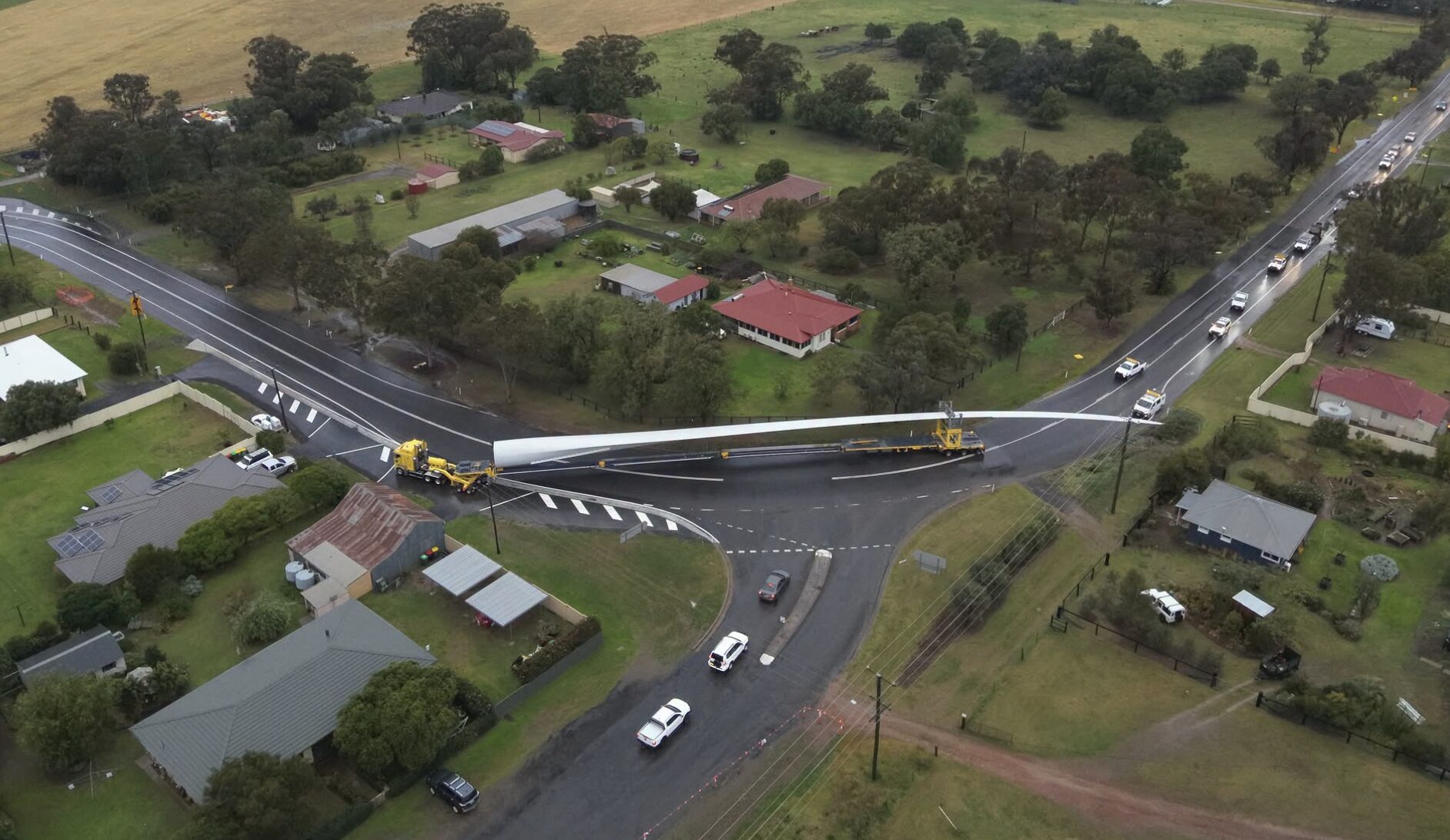
The joint statement noted the funding top-up would bring the investment to more than $1.74 billion, including prior announcements. The outlay would benefit all road users, from freight trucks lugging giant wind turbines, to those driving motorhomes or motorbikes.
The upgrade to Newcastle to Dubbo corridor would cost $520.8 million, and benefit the connection across the Great Dividing Range to the Central West, home of the Central West-Orana Renewable Energy Zone. Roads to be improved include the Golden Highway, John Renshaw Drive and the Hunter Expressway.
The Muswellbrook to Armidale corridor, linking the Hunter Valley to the New England Renewable Energy Zone, would get an $849.8m upgrade. Sections of the New England Highway would be the main target for the spending.
The Euston to Tocumwal corridor, which transects part of the South-West Renewable Energy Zone, would receive a $375m investment. The upgrades would target parts of the Sturt and Newell Highways, and Kidman Way.

“Regional NSW deserves a road network that keeps pace with the communities and industries that depend on it, and that’s exactly what this monumental investment is all about,” said Jenny Aitchison, NSW’s Minister for Roads.
Of the $1.2b in new funding, about $611m will be contributed by the NSW government, with $674m in additional money coming from the Commonwealth, a NSW government spokesperson told Renew Economy.
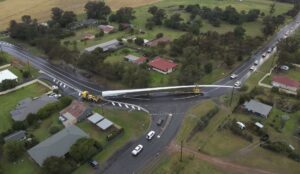
Some renewable energy companies have been frustrated by the pace of road upgrades needed to minimise temporary delays and disruptions caused by transporting over-sized equipment from ports to wind or solar farms.
One wind farm supplier has complained the NSW government sought changes to a transport agreement five years after its initial submission in a bid to make it pay for road upgrades larger than the size of the turbine blades that it was intending to deploy.
While the renewable energy industry would be among the beneficiary from the upgrades, regional communities would continue to enjoy the benefits of the investment for years after the REZs are up and running, advocates say.
Similar benefits would come from any upgrades needed for housing, water and other infrastructure resulting from the surge in construction activity.
The joint statement said the investment will deliver a range of improvements including road, shoulder and intersection widening, turning lanes and new overtaking lanes.
It would also instal “intelligent transport systems such as digital signage to update motorists on traffic conditions along the corridor and traffic monitoring cameras”, the statement said.
Of the combined $1.74b investment, about $1.049b would come from NSW and $697m from the Commonwealth under its Regional Corridors Upgrade Program.
“Our export industries and freight operators are the backbone of the Australian economy, and they rely on safe and reliable roads, which is why we are investing $697m in partnership with the Minns Government to deliver these major corridor upgrades,” said Catherine King, the federal Minister for Infrastructure, Transport, Regional Development and Local Government.