The developers of a proposed massive 70 gigawatt wind, solar and hydrogen hub in the south-east corner of Western Australia have brought in key Asia partners to help advance the first six gigawatt stage of its ambitious but contested project.
The Western Green Energy Hub, led by Intercontinental Energy, says it has brought in China renewable energy supplier Sany and several unnamed South Korea companies to help work on a feasibility study for the first phase of the project.
The announcement comes just days after Intercontinental landed $21 million in funding from the Australian Renewable Energy Agency to help advance another major project, the 26 GW wind and solar hub in the Pilbara called the Australian Renewable Energy Hub.
The WGEH project is at a scale not seen anywhere in the world to date, and would involve up to 35 “nodes” of around 2-3 GW of wind and solar, with an approximately 1.5 GW electrolyser and/or data centre at the centre of each node.
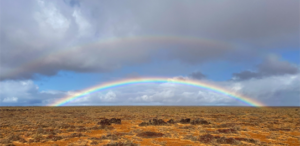
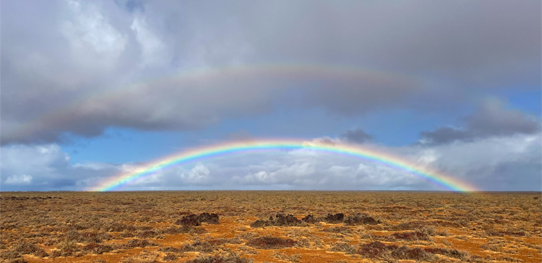
It would cover around 2.3 million hectares of pastoral leases and crown lands, stretching hundreds of kilometres in and around the Nullarbor from north-west of Eucla, near the border with South Australia, towards Cocklebiddy and north of the Eyre Highway to south of the Trans Australian Railway.
It would be built in stages over 30 years and aims to produce 3.5 million tonnes of green hydrogen a year.
The proposal is yet to obtain planning approvals, and can expect opposition from environmental groups, including the Bob Brown Foundation, concerned particularly about the region’s unique and fragile subterranean limestone Karst systems that they say will be at risk from a project of that scale.
In a statement issued on Monday, WGEH says it hopes to reach a financial investment decision on the first stage of the project in 2029 – once costings have been completed, and assuming planning and environmental approvals are obtained.
It says the first stage of around 6 GW of wind and solar would produce around 330,000 tonnes of green hydrogen a year. The first stage is likely to be up and running in the mid 2030s, subject to approvals, and growth in demand for green hydrogen.
WGEH chief executive Ray Macdonald said in a statement that the new partners are globally recognised leaders in renewable and industrial technology.
Sany has expertise in wind, solar and hydrogen facilities, and the South Korea entities have strength in construction. These companies do not include South Korea’s industrial giant Kepco, which is already working on the project in another capacity.
“This collaboration provides the detail we need on costs, schedule and design to build a strong business case ahead of FID in 2029,” McDonald said in the statement.
Sany will not necessarily be the equipment supplier to the project, although its work on the feasibility study means it is likely well placed.
“WGEH Stage 1, at around 330,000tpa of hydrogen, is truly global in scale,” said Frank Edwin, General Manager of SANY International Renewables.
WGEH is led by InterContinental Energy, and international renewables outfit CWP Global, and a commercial subsidiary of WA Mirning People Aboriginal Corporation (WAMPAC) called Mirning Green Energy Ltd (MGEL) are also shareholders.
“WGEH is a cornerstone of ICE’s Australian portfolio, alongside AREH,” said Isaac Hinton, the head of Australia at InterContinental Energy and chair of WGEH.
“This Feasibility Phase Agreement moves WGEH closer to delivery and reflects strong international confidence in Australia’s growing green hydrogen economy. Stage 1’s scale and partnerships position Australia as a major green fuel producer, well placed to serve emerging demand in Asia.”