Australian “AI factory” developer Firmus Technologies has inked a landmark long-term power purchase deal that will supply firmed electricity for its South Australia data centre plans while also underpinning the development of a much needed four-hour big battery on Australia’s most renewable grid.
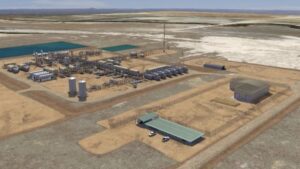
Firmus said on Tuesday it has signed a 12-year agreement with Swiss commodity trading giant Gunvor Group for 600 megawatts (MW) of firm power to underpin the first-phase of delivery of 2.7 gigawatts (GW) of combined capacity across its Tailem Bend and Stirling North projects, in South Australia.
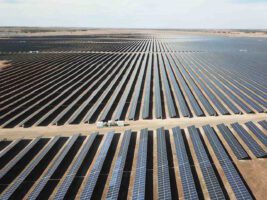
Under the agreement, Gunvor – which late last week won regulatory approval to buy the retail business of Australian renewables outfit Zen Energy – has committed to deliver 1.2 GW of new renewable energy generation and 1.5 gigawatt-hours of new battery storage by 2032 to power the SA expansion plans.
First cab off the rank is the Koolunga Battery Energy Storage System (BESS) being developed in South Australia’s mid-north region by GreenPoint Energy, which is the new name for the Australian renewables subsidiary of Singapore company Equis.
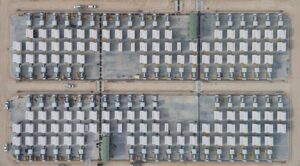
Off the back of the Firmus deal, and as part of a bespoke long-term offtake deal with Gunvor, GreenPoint Energy (GPE) has announced financial close of the Koolunga BESS, a 200 MW and 800 megawatt-hour (MWh) project that stands to be one of the biggest yet in South Australia when it powers up in 2028.
The companies say the deal is intended to provide a “scalable model for future data centre customers” as demand grows for AI power solutions – and as federal and (most) state governments agree to make data centre developers offset their energy demand with new renewables and storage projects.
South Australia premier Peter Malinauskas last week released a state-specific data centre strategy and plans to introduce new laws into state parliament to regulate the industry – particularly around its energy use.
“South Australia is leading the clean energy transition, and this project demonstrates how that leadership is attracting the industries of the future,” Malinauskas said on Tuesday.
“This is an indication of what we can achieve with our nation leading strategy to ensure AI infrastructure and data centres are constructed in a way which accords with our state’s interests: new power infrastructure being delivered.
“Importantly, this major new 200 megawatt / 800 megawatt hour battery is being delivered ahead of Firmus’s major investments in AI factories in our state,” the premier said.
For GreenPoint Energy, reaching financial close on Koolunga is both a significant milestone and the successful demonstration of a potentially fruitful new business model for meeting the needs of large-scale commercial and industrial customers.
“We designed this structure for customers with firm load requirements, specifically data centres,” CPE co-CEO Roby Camagong said in a statement on Tuesday.
“As demand for reliable power continues to accelerate, particularly from AI and digital infrastructure, we believe this model provides a scalable framework.”
Koolunga BESS has been awarded a Capacity Investment Scheme (CIS) contract by the federal Labor, which GPE says reinforced its strategic importance in supporting grid stability and accelerating the energy transition.
Gunvor’s head of APAC Power Trading & Origination, David Maher, says the partnership with GPE and Firmus is a key pillar of the company’s regional strategy, which is focused on delivering hedging solutions in the Australian market.
This gels with Gunvor’s bid to buy Zen Energy, which does not include Zen’s asset development business, but does include three PPAs with two solar farms and a solar hybrid and a tolling agreement with a big battery project that forms part of Zens’s hedging portfolio.
“By incorporating the ESEM [Electricity Services Entry Mechanism] services highlighted in the Nelson Review, we provide the vital firming and shaping risk management tools that retailers and large electricity users, such as data centres, require to navigate an increasingly volatile power market,” Maher said on Tuesday.
“This transaction demonstrates how long-term customer demand can help unlock renewable supply, firming and risk management through a single commercial solution,” Maher added.
“As AI and digital infrastructure continue to develop in Australia, we believe models like this can support investment in new generation and storage while delivering reliable and flexible supply outcomes.”
For Firmus, which claims to be building some of the most energy and water efficient data centres in the world, the Koolunga BESS deal will represent more than half of Firmus’ initial firming capacity commitment.
The broader deal with Gunvor also includes a demand response commitment under which Firmus will reduce its electricity consumption for up to 220 hours each year when wholesale electricity prices exceed agreed thresholds.
The deal is the first major commercial agreement supporting the commitments set out in Firmus’ Australian Energy and Water Policies, which was also released on Tuesday.
“We’re building our AI Factories in regional South Australia because they’re the right locations for large-scale AI infrastructure and the energy investment that goes with it,” Firmus Technologies co-CEO Oliver Curtis said on Tuesday.
“Our South Australia energy agreement puts our commitments into practice, backing new renewable generation, major battery storage and flexible energy use that supports the grid.
“Koolunga is the first example of that commitment already underway – a major new battery that strengthens the electricity system while we build.
“This is about investing in regional South Australia – creating new infrastructure, supporting local jobs and strengthening the electricity system while building the capacity Australia needs for the next generation of AI.
“We’re committed to paying our own way and ensuring these projects deliver lasting benefits for the communities that host them,” Curtis said.
South Australia is in urgent need of more, longer duration storage – a fact that was born out last week when the state swung from three days of more than 100 per cent renewables to its worst wind drought in seven years.
Despite being home to the first big battery in the world, the Tesla big battery at Hornsdale, but of South Australia’s current fleet of nine operating big batteries delivers more than two hours of storage.
As Giles Parkinson wrote here last week, that is largely the function of the nature of the market – and the immediate need to provide frequency control and system security, and a little bit of arbitrage.
But the new fleet of new batteries that is now being built average more than four hours of storage, with another six winning contracts last month to deliver eight hours of storage in exactly the circumstances experienced in the last week.
If you would like to join more than 29,000 others and get the latest clean energy news delivered straight to your inbox, for free, please click here to subscribe to our free daily newsletter.