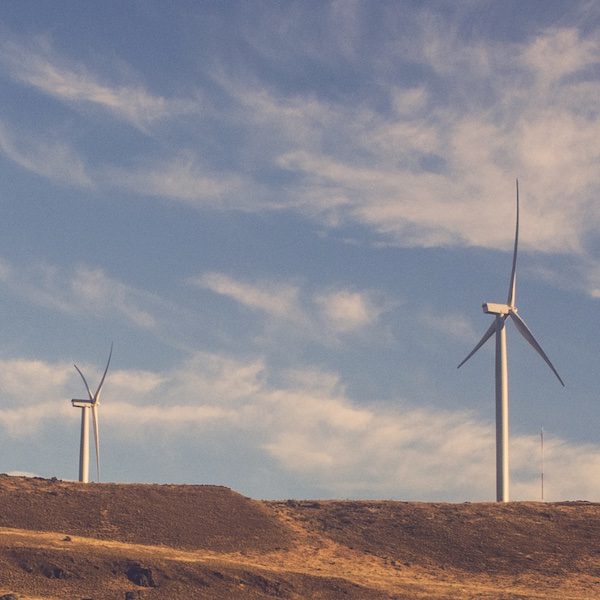
Plans to develop an up to 1.5 gigawatt (GW) wind farm and battery in south-western New South Wales have had the turbine numbers trimmed, storage capacity scaled up and boundaries shifted, to cut its environmental impact, skirt government land, and factor in more worker accommodation.
WestWind Energy has submitted a notification of a variation of proposal for its Lake Victoria wind farm, which is seeking federal environmental approval for construction on agricultural grazing and cropping land around 24 km northwest of Wentworth, NSW.
The notice revises down turbine numbers from the original number of up to 203, to up to 200, and the generating capacity is adjusted from 1.5 gigawatts (GW) to 1-1.5 GW.
The battery energy storage component shifts from 600 megawatts (MW) with 2,400 megawatt-hours (MWh) to provision for 750 MW with 1500-3000 MWh. The number of collector stations, or substations, proposed for the wind farm is revised down from four to three.
Another key change is to the proposed housing for workers, with another “potential workforce accommodation facility at Fort Courage” added to the original plan for a facility at Nulla Road.
And changes to the project’s boundary mean that the updated design takes on only one of the six areas of Commonwealth land identified in the original referral, a parcel of land owned by the Australian Telecommunications Commission.
“No Commonwealth lands are expected to be impacted as they are all located at outside the Development footprint,” the proposal update says. “No additional Commonwealth lands were identified in the Updated [protected matters search tool] for the Project area.”
Last year, in February, NSW Labor struck a deal with WestWind to use Crown land, including through an initial 25-year lease with two 7-year options to extend the lease a further 14 years.
The government said at the time that the rental income would be reinvested into the Crown Reserves Improvement Fund to provide grants to maintain and improve Crown reserves across the state, such as regional showgrounds, war memorials and community sporting grounds.

WestWind says the changes to the project area – which is now bigger, up from 41,700 hectares (ha) to 42,173 ha to factor in the extra accommodation – and the development footprint, which is smaller (from 1,882 ha to 1,330 ha) have helped reduce the impact, including on protected species.
“Since the original referral there have been changes to the Project area and Development footprint in order to avoid and minimise environmental impacts, to include additional Project area to facilitate access and for the provision of a worker accommodation camp,” the documents say.
“The Development footprint has undergone minor changes to avoid impacts to matters of national environmental significance (MNES) as identified in the Referral Protected Matters Search Tool (PMST).”
According to the documents, a total of 38 listed threatened species were identified in the updated plans, with one additional species identified since the original referral and 11 species now no longer identified.
In March, the Lake Victoria wind farm was one of 16 projects selected for fast-tracking through the NSW government’s new Investment Delivery Authority (IDA) – 13 of which are proposing to deliver new renewable energy and storage capacity for the still heavily coal-dependent state.
The IDA’s four-person panel will have the power to override councils and accelerate planning approvals for proposed projects amid complaints that making major investments in NSW has become too complex and time-consuming.
If you would like to join more than 29,000 others and get the latest clean energy news delivered straight to your inbox, for free, please click here to subscribe to our free daily newsletter.