David Pilla’s HMC Capital appears ready to make its first big battery investment after finally landing a major cash injection – from global investment giant KKR – albeit less than the $1 billion it was aiming for.
The listed HMC announced on Friday that KKR will sink up to $603 million into the its new energy transition platform, to help it unlock the big 5.7 gigawatts pipeline of projects it has inherited from its purchase of Neoen Australia’s Victorian assets, and from its acquisition of battery developer Stor-Energy.
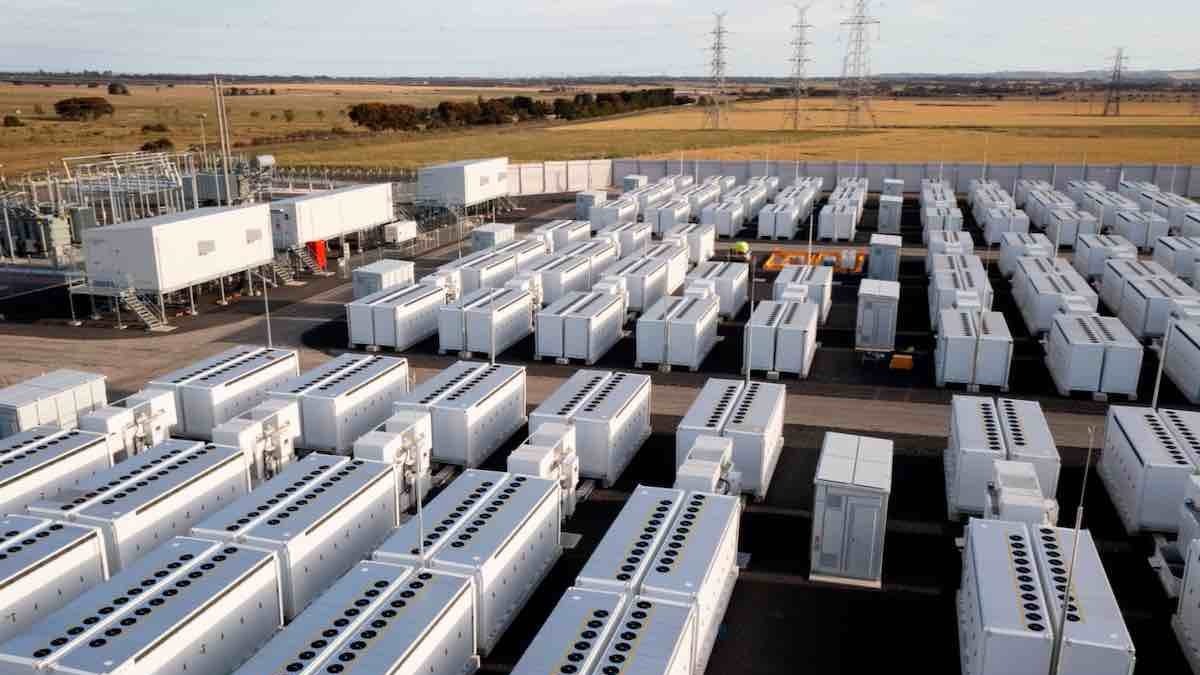
It says the KKR cash injection will fund 90 per cent of the equity component of its first big battery project, likely to be the potential 300 MW, 1,200 MWh Moorabool battery near Geelong, next to its existing Victoria Big Battery (pictured above).
HMC has a number of other big battery projects it is developing via Stor Energy, and has been offered a federal underwriting agreement for the major Kentbruck wind project, located in a pine plantation in Victoria, if it can gain environmental approvals.
KKR may emerge with a 20 to 35 per cent stake in the HMC Energy portfolio, and has been guaranteed an annual return of 14 per cent for seven years. HMC Capital will get $355 million in cash up front, followed by a second tranche of $248 million.
“KKR’s capital will enable the [energy] platform to materially grow operating capacity, cash flow and progress the strategically valuable development pipeline,” said HMC Capital managing director and CEO David di Pilla in a statement.
“The investment enables HMC to optimise its balance sheet exposure and fully participate in the value created whilst retaining flexibility to introduce new capital partners in the future.”
KKR’s view is that it’s getting into renewables in Australia “at a pivotal moment” and it’s keen on the battery side of the portfolio, judging by comments from the firm’s head of climate transition strategy for Asia Pacific.
It follows the move by rivals BlackRock into Akaysha Energy, and the purchase by Brookfield of the rest of Neoen’s Australian and global portfolio. Akaysha and Neoen have been the leading battery storage developers in the country.
“Delivering Australia’s ambition will require investment in flexible infrastructure such as battery storage to keep the grid secure and reliable,” KKR’s Neil Arora said in a statement.
“By leveraging KKR’s global network, operational expertise, and deep experience across our climate, energy and infrastructure teams, we are well positioned to scale this platform and contribute meaningfully to Australia’s decarbonisation objectives.”
HMC says the new cash means it can start developing some 5.7 gigawatts of projects, but mainly also to pay down an existing mezzanine loan and another corporate loan.
The ASX-listed asset manager came into renewables when it picked up Neoen’s Victorian portfolio in late 2024 for $950 million, which the latter needed to sell in order to be bought by Blackrock.
HMC has since been trying to lock in funding arrangements to take these projects forward, with the deal closing in August.
In August last year, HMC executive Gerard Dover said they wanted to raise $1 billion in equity and debt financing for the energy platform.
They promised to have the finance sorted by the time it revealed half year results later this month. Dover said at the time they planned to put the energy assets into a fund with a 15-20 per cent internal rate of return (IRR).
HMC has now committed to a 20 per cent IRR, following the KKR deal.
That appears to be a high rate of return even for the company’s focus areas of wind and batteries.
Commercial property company CBRE released figures in May last year saying the industry could expect an IRR of 5-15 per cent for large-scale solar farms, 8-12 per cent for wind farms, and 12-18 per cent for four-hour battery storage systems.
This year, the view is that vatteries with more exposure to the merchant market – that is buying and selling in wholesale markets in real time – can expect a slightly higher return of 16-22 per cent.
HMC said it earned $64 million on an Ebitda basis from the Neoen assets in fiscal 2025, and expects to charge $5 million from the management of the platform.
“The construction of the initial BESS project will further increase the Platform’s operating capacity and profitability once operating, with further projects expected to be FID-ready shortly after the initial project reaches FID,” it said in a statement.
If you would like to join more than 29,000 others and get the latest clean energy news delivered straight to your inbox, for free, please click here to subscribe to our free daily newsletter.