Snowy Hydro has blamed constraints caused by network upgrades needed to accommodate the country’s most powerful battery for hindering its own bidding strategy and contributing to a fall in profits in the latest financial year.
Snowy last week quietly published its annual report for the 2024/25 financial year, just days after flagging yet another major blowout in costs for the controversial Snowy 2.0 pumped hydro project – although it will apparently take nine months to tally up the extent of the added costs.
The annual report reveals that Snowy’s underlying net profit – which the federal government owned company says better reflects its operational performance – fell to $399.7 million in FY 2025, from $522.8 million a year earlier.
Net profit before changes to the value of financial instruments – mostly electricity hedges – nearly doubled to $822.6 million from $418.5 million.
Snowy Hydro says its underlying performance was affected by a lower return from its generation activities, partly due to the absence of “one-off” market events (such as huge price spikes), and the impact of the new Waratah Super Battery being built on the Central Coast.
“Our generation performance was lower in FY25 after the previous year benefited from one-off market events which were broadly absent this year,” it writes.
“FY25 was also characterised by a number of transmission constraints in New South Wales, caused by line upgrades to support the Waratah Super Battery.
“These constraints continued through much of the year and hindered our bidding strategy, particularly for the Tumut power station, making it harder to defend our portfolio effectively.”
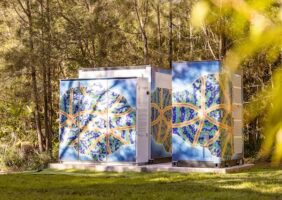
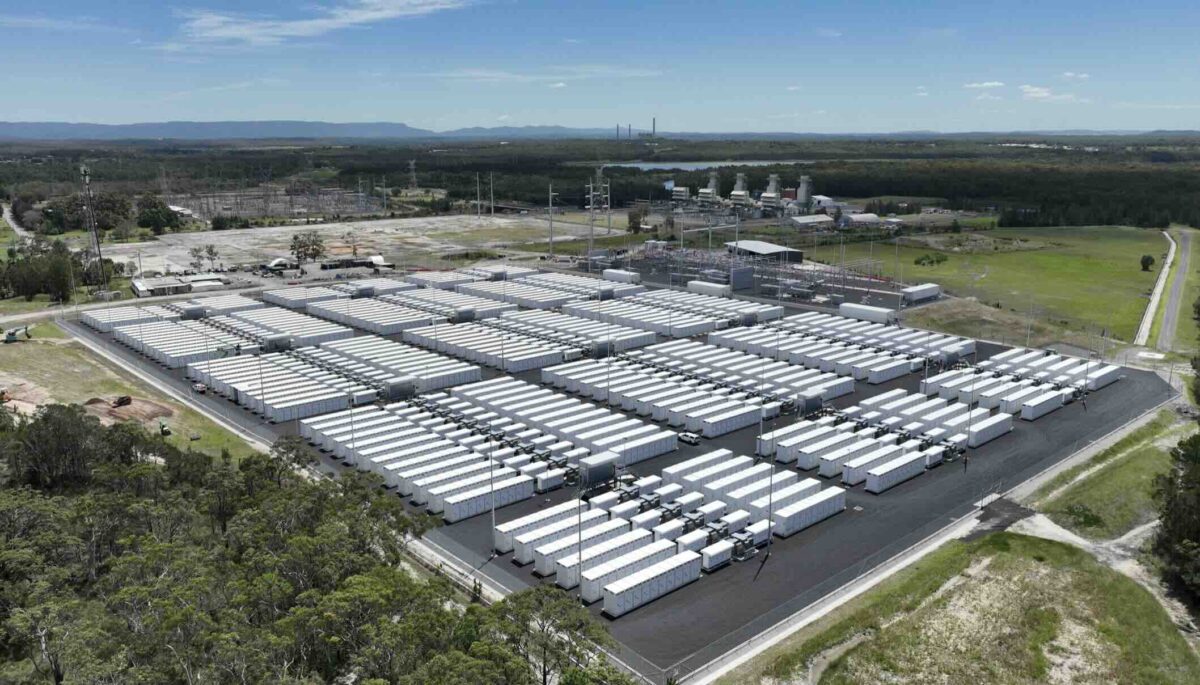
The Waratah battery is the most powerful to be built in Australia, and possible the world, and is sized at 850 MW and 1680 MWh, with its primary purpose to act as a giant “shock absorber” to the grid. Last week it injected its full capacity into the grid for the first time, and is expected to finish its commissioning shortly.
Renew Economy understands that Transgrid needed to upgrade four southern transmission lines to enable higher line ratings to be used for the System Integrity Protection Scheme (SIPS), the official name for the “shock absorber” contract. The completion of these augmentation works required outages on the transmission network.
Ironically, the Tumut pumped hydro facility is one of three – along with the Metz solar farm and the Sapphire wind farm – that are contracted to respond should the Waratah super battery be called into action under the SIPS scheme as a shock absorber.
In the report, Snowy Hydro said it had made “good progress” on the Snowy 2.0 project, including planning approval for a fourth tunnel boring machine.
“Despite challenges associated with delivering a complex mega project in a remote area, Snowy 2.0 has made good progress, however is facing persistent and material cost pressures,” it said. “We are reassessing the project’s cost to complete and will provide an update when the review is complete.”
Snowy Hydro is also commissioning another controversial project, the Kurri Kurri gas-fired power station in the Hunter Valley, which it expects to be fully operating later this year.
“This year the project experienced extended periods of extreme weather and other factors that have impacted productivity and stopped work on the project, impacting its cost and timeline,” the company said.
“The project currently remains on track to be delivered within its target cost. We are actively managing risks as we finalise commissioning.”
If you would like to join more than 26,000 others and get the latest clean energy news delivered straight to your inbox, for free, please click here to subscribe to our free daily newsletter.