Last week, we saw a perfect illustration of the disconnect between consumers and the electricity sector management: In response to the announcement of the next round of electricity bill increases, consumers were told to “shop around”! The Federal government, meanwhile, has been forced to offer further energy bill rebates.
The National Electricity Market (NEM) has now operated for 3 decades, with promises of lower electricity prices and a more efficient system.
However, it has struggled to adapt to the significant changes which have occurred in all stages of the electricity value chain, from technology changes, to the advent of customer energy resources (CER) and increases in extreme weather events.
State and Federal Governments have now intervened at transmission, generation, distribution and retail levels and yet prices keep rising – and no, this can’t be blamed on renewables, it points to a market structure and regulatory framework that is not fit for purpose.
The top-down, disaggregated, supply focussed, centralised system is not appropriate for a grid increasingly dominated by distributed energy, which must be managed locally, while the profit driven, market model is arguably not suitable for delivery of an essential community service.
After years of tweaking, endless rule changes, enquiries, road maps or consumer engagement strategies one has to ask whether the entire system needs to be re-designed from the ground up.
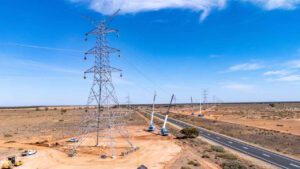
In an attempt to manage the rapid transition from fossil fuels whilst maintaining the top-down, centralised model, governments have established Renewable Energy Zones and extensive new transmission lines, to emulate a renewable energy version of our previous coal-based electricity system.
As in the 1970’s with coal generators and transmission lines, the new plans have been met by strong community opposition, this time further fuelled by political and climate-change denier groups keen to prevent the transition to renewables.
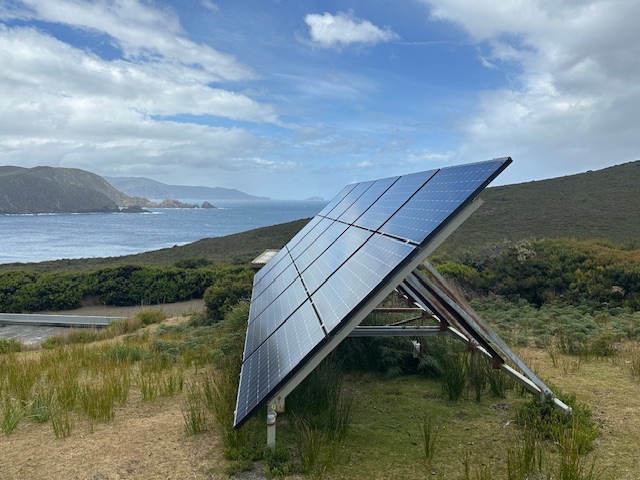
And yet, Australia has the highest uptake of residential rooftop PV and is rapidly following with batteries. Surveys regularly show more than 80% support for renewables; over 100 local community energy groups have been established; and we have some of the best renewable energy resources in the world.
The potential for CER (consumer energy resources) is far from saturation, with the residential market still growing strongly and a surge in commercial rooftop systems now beginning. In addition, over the coming decade, the transition to a fleet of 20 million electric vehicles in Australia could provide up to 3 days of current NEM demand.
This provides Australia with a clear opportunity to make the transition to renewables with power systems sized to meet local loads, using the most suitable local resources and built with the enthusiasm and support of customers and communities, whilst also increasing grid resilience in the face of increasing extreme weather events.
A Possible Solution
The uptake of consumer energy resources is driven by consumers and may therefore better be managed from a customer perspective. If grid management is looked at from the bottom up instead of the top down, we could develop a system that is designed around customers and increasing levels of local rather than central generation.
An option which should be explored is the creation of vertically integrated Local Energy Zones (LEZ), with control of supply, demand, and storage first by the customer, then at the feeder or substation level, and finally at a local energy zone level.
Each LEZ would in turn connect to a regional zone, and the overall system operator would only need to manage the net supply and demand from the regional nodes. Where appropriate, adjacent local energy zones or regional nodes could be configured and operated to support each other, thereby smoothing out the load seen by upstream levels.
Such a bottom-up, localised energy system approach could:
- – Provide opportunities for each vertically integrated LEZ to optimise supply, demand (including energy efficiency and demand shifting), storage, and network assets, and hence provide the lowest cost options.
– Facilitate fixed-price electricity contracts, as is done with telecommunications, which in turn will incentivise the LEZ to optimise assets and reduce costs.
- – Result in more predictable and flatter customer, local zone, and regional node load profiles being presented to the next level, which in turn will improve the utilisation of existing network assets and eliminate the need for top-down interventions on CER.
- – Empower rather than alienate customers as renewable energy increases, with both customer-owned energy systems and local energy zones enhancing community support and involvement.
- – Increase resilience, with many levels of redundancy and local controls to isolate or manage sections of the grid as needed, and hence reduce the need for long or widespread grid outages before or after extreme events.
- – Allow communities to determine the appropriate placement of energy zones and their generation and storage assets.
- – Provide clearer signals on the need for and appropriate placement of any large-scale renewable energy generation and transmission infrastructure. With large portions of the load supplied locally, the demand for central supplies and the associated transmission infrastructure would be reduced. Clear demonstration of the need for new infrastructure in particular regions will facilitate community acceptance and negotiations around final routes.
aMuriel Watt is an Analyst at ITP Renewables