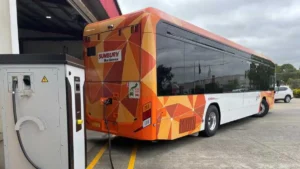
The nation’s logistics and energy industry has gathered at Parliament House in Canberra on Monday to get to grips with how we rapidly electrify our freight system in an era of supply uncertainty and diminishing diesel stocks.
John Blackburn AO, chairman of the Institute of Integrated Economic Research and former Deputy Head of the RAAF, set the scene, laying out that we haven’t seen the real liquid fuel supply shock that is potentially coming in two weeks as fuel that is already on the water is delivered and the world starts looking to fill the tankers again.
Electrification is now a strategic national imperative, something we have to move quickly on. One impediment to moving quickly is access to power.
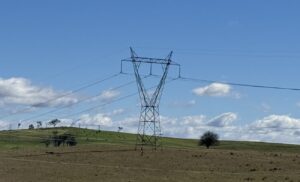
If you are a charge point operator, renewable developer, or housebuilder, applying for grid connections is a fishing expedition. You lower your hook into the murk and hope you come up with something edible and not an old boot.
What is clear is that accelerating grid connections is now of national strategic importance. We can’t afford to wait the year or more it takes to determine whether a power connection is even possible.
One of the simplest actions we can take coming out of this event today is to throw open the doors to the energy networks. We need to know where the power is right now.

Other jurisdictions do it better. In the UK, Distribution Network Operators have a statutory duty to publish power availability maps. These are aggregated under the National Grid’s Network Opportunity Map.
This, combined with the UK Power Networks Open Data Portal, allows someone looking to connect a high-power development like a truck charging site to pin down the substations and distribution feeders where this is possible.
As discussed in Renew Economy’s EV-focused sister site The Driven last week, the vehicles, the chargers, the energy are all available to rapidly electrify Australia’s trucks. Assets are either onshore already or close by in factories across the Asia Pacific.
John Blackburn AO was keen to stress that now is not the time to panic buy food and essentials. Doing so will only make the crisis worse, but if Australia is to ride out this shock, we need to start taking steps to reduce our dependence on a dwindling supply of foreign fuel.
We need Australia’s DNSPs to step up and start identifying the locations where freight charging can be connected quickly. Either they step up or governments need to wield the big stick of regulation. A change in mindset at our energy networks from gatekeepers to facilitators will benefit us all and keep Australia’s trucks rolling.
See also: EVs did not wreck the great Australian weekend, and electric trucks may just save the farm
If you would like to join more than 29,000 others and get the latest clean energy news delivered straight to your inbox, for free, please click here to subscribe to our free daily newsletter.