The growing portfolio of grid-scale batteries in California, the world’s fourth biggest economy, hit a stunning new peak earlier this week, reaching a share of 44 pct of evening demand at once stage in the early evening.
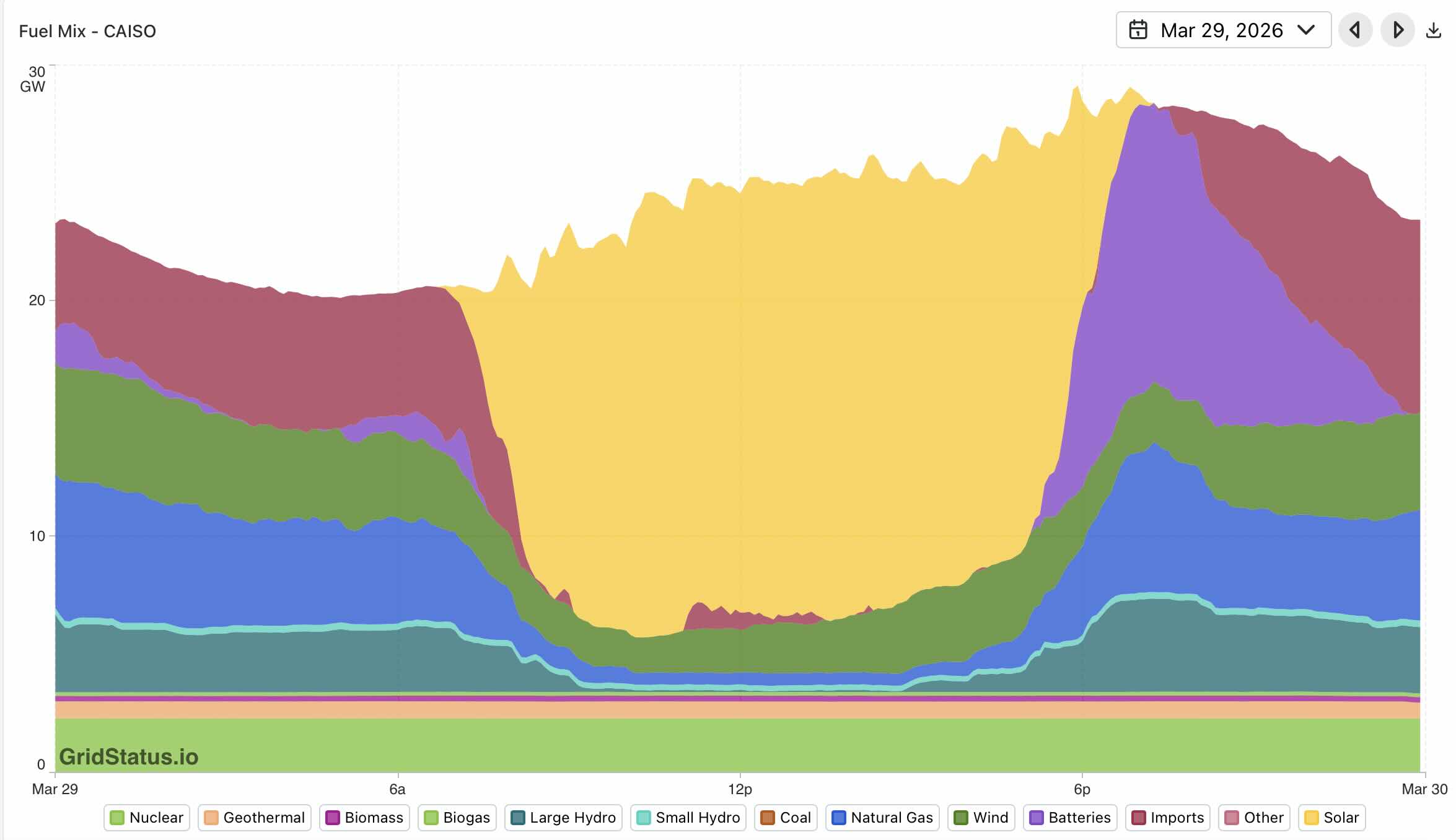
According to data from Grid Status, the peak output of battery storage in California hit a new peak of 12,293 megawatts at 7pm local time on Sunday, March 29. That equated to 44 per cent of demand, its record tracker stated (that’s the big purple blog in the graph above).
As in most other grids with high levels of battery storage, the rollout has been rapid over the last five years. More than 90 per cent of California’s battery fleet has been built in the last five years, lifting total capacity to more than 17 GW from just 1.3 GW in 2020, according to Ember analyst Nicolas Fulghum.
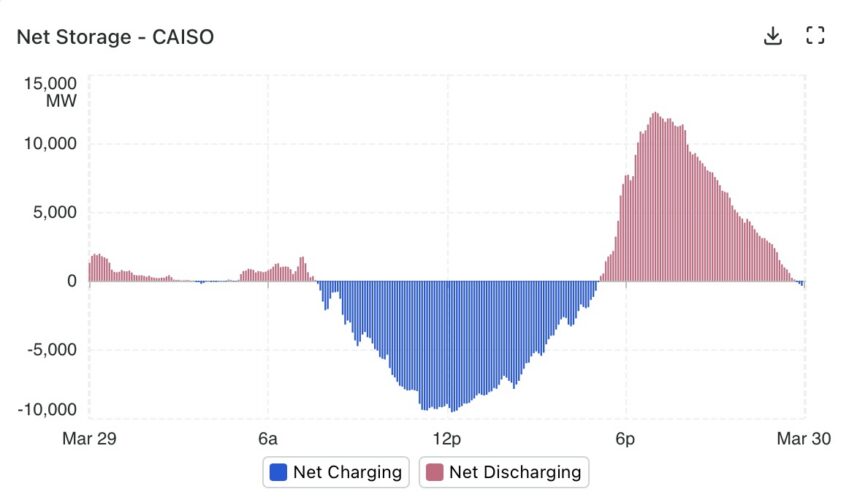
This is another view on what happened on Sunday in California. Batteries charged heavily throughout the day, soaking up the excess solar, approaching charging rates of 10 GW at times. In the evening, most of the output was centred on the early evening peak, but batteries supplied a significant share throughout the evening.
The biggest loser in this transition has been gas, with the share of battery storage staying at high levels throughout the evening peak. On Sunday, it stayed above 20 per cent of grid demand for almost four hours.
As Fulghum noted: “To put that kind of output during peak demand hours into perspective, it’s equivalent to the output from:
– 15-20 combined-cycle gas plants
– 6 Hoover dams
– More than the all-time peak demand of Portugal or Greece.”
Battery storage is also making big inroads in Australia, with the share of evening demand peaking at 30 per cent at 6.40 pm on Monday in South Australia.
If you would like to join more than 29,000 others and get the latest clean energy news delivered straight to your inbox, for free, please click here to subscribe to our free daily newsletter.