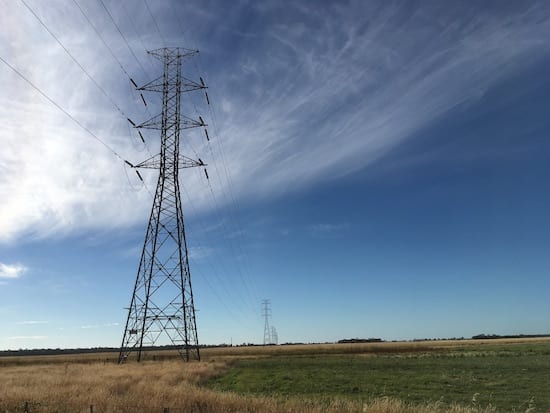
Building climate resilience and strengthening the electricity distribution network are now inseparable priorities, as the recent severe storms that swept through communities on the Mid North Coast of New South Wales brought sharply into focus.
This extreme weather event also coincided with a new rule change from the Australian Energy Market Commission (AEMC) that requires the Distribution Network Service Providers (DNSPs) to formally consider resilience capital expenditure, to better prepare networks for the growing threat of exactly this kind of thing.
Reliability and resilience are increasingly a focus of the network businesses, and while some may have been accused of “gold plating” in the past, it’s certainly not the case anymore. In fact, even greater investment is required to prepare our grid for the future.
As we electrify everything, it is in everyone’s interest to make our electricity networks as useful and efficient as possible, and that process has already begun with moves to make the grid smarter.
Access to several tangible and cost-efficient ‘non-network solutions’ have provided innovative, and flexible solutions to manage rapidly changing network conditions, caused by the influx of low carbon technologies such as Distributed Energy Resources (DER) or Consumer Energy Resources (CER). Transport and industrial process loads are also increasingly electrified, and when you factor in the greater frequency of extreme weather events, reliability and resilience is utterly critical. While the timing may be coincidental, the recent storm damage demonstrates this perfectly.
Challenges of a geographically dispersed network
Extreme weather events continue to underscore the challenges faced by DNSPs in managing a network that spans more than one million kilometres across Australia. With 73% of the network above ground and servicing over 13 million energy customers, the cost and complexity of modernising and maintaining such a vast and distributed grid is substantial.
For example, the Victorian Government initiated significant modernisation of the state’s electricity grid to mitigate bushfire risks following the devastating Black Saturday bushfires. The A$750 million Powerline Bushfire Safety Program is one of the biggest powerline safety projects to date in Australia. With the installation of Rapid Earth Fault Current Limiters (REFCLs) that act like giant circuit breakers, powerline related bushfires outages were minimised. This upgrade has prevented 33 potentially catastrophic fire starts.
It could be argued that placing networks underground will reduce the exposure to extreme weather conditions but no countries with similarly vast networks, including the United States, India and China, have taken this approach due to its astronomical costs, which would ultimately be borne by energy consumers.
The challenge lies in how we improve visibility and build a more resilient network whether it’s an underground or aboveground network.
With better insights into network health, DNSPs can proactively manage loads, isolate faults, and reroute electricity. For example, if a section of a network is hit by a storm, DNSPs can isolate the section of a network when it’s impacted and within a few minutes, bypass or supply that section with electricity from another part of the network. The data can help analyse the network and allocate resources to parts that have the highest impact now, and also in the future.
Supporting the growth of distributed energy resources
DNSPs face significant limitations in understanding how much loads each section of the network can safely accommodate without grid edge visibility, especially when utilising the grid to the last drop is required to avoid inefficient upgrade costs This challenge becomes even more critical as the grid evolves to accommodate the growth of DER.
Grid edge visibility is fundamental for energy security as it enables networks to operate more efficiently and dynamically. This capability is especially critical in a period of accelerating change, where DER such as rooftop solar, home batteries, and electric vehicles (EVs) are driving an increase in the bi-directional flow of energy. This has created significant pressures on the monitoring and management of these grid edge devices that need to be managed in real time, while also estimating the load profiles for planning purposes.
According to the Australian Energy Regulator, in 2024, 27% of customers with rooftop solar exported energy back to the grid, 72,500 residential batteries were installed, and one in ten vehicles sold were EVs. With improved visibility at the grid edge, DNSPs can better manage these dynamic loads, reduce operational risks, and maintain grid stability in an increasingly decentralised energy system.
One solution doesn’t meet all needs
As the need to monitor grid edge devices continues to grow across the network, DNSPs will need to create a strategic investment plan that balances the unique needs of metropolitan, regional and rural areas as each of these locations present different challenges and opportunities.
Metropolitan areas with dense populations and complex energy loads require greater visibility and real-time monitoring. The challenge lies in integrating new housing developments in areas where networks must be extended or upgraded, including multi-dwelling sites being developed on a single block of housing. This is where monitoring becomes more critical on an existing network as more DER are being connected, drawing electricity from a network that has not been designed or built for energy intensive activities such as home EV chargers.
Regional areas have fewer customers, lower load densities and less DER. They may be less impacted from an outage with a smaller population. In rural areas, customers are more likely to rely on stand-alone power systems, where grid reliability can be enhanced through energy storage.
Investing in network automation and monitoring to deliver a more resilient network will ensure Australia is ready to cope with the rise in extreme weather conditions and the growth of DER. It will also ensure DNSPs can enhance the service factor and not be penalised when the disruption of supply occurs.
The AEMC’s rule change provides a regulatory signal that investments to modernise the network can be a win for the DNSPs, and energy customers who want an affordable, reliable sustainable, and resilient modern energy system.
Yogendra Vashishtha, is the head of future networks at VisNet Australia and New Zealand