The owners of one of the world’s largest zinc mines, located in remote north-west Queensland, plan to run the project with at least 80 per cent renewables following the addition of a large wind farm and a big battery.
The Dugald River mine, owned by Chinese company MMG and located around 65 kms north east of Cloncurry, already sources one third of its power needs from an 88 megawatt solar farm that begun operation in 2024.
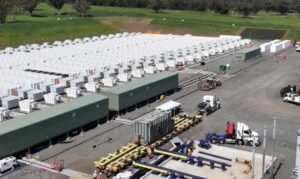
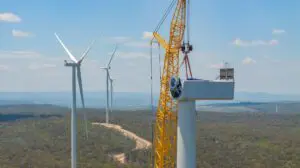
It has now received funds from the Queensland state government’s North West Energy Fund to advance the development of a 144 MW wind farm, plus a big battery, that will become one of the biggest remote hybrid facilities in the country.
“This endorsement will help support a final investment decision on the first stage of the wind farm, which has the potential to benefit not only Dugald River Mine, but the highly prospective North West Minerals Province as a whole,” Dr Akroyd said.
“We are targeting 80-plus per cent of our power to be sourced from renewables as we position Dugald River as a mine of the future – one that embraces technology, electrification and long-term investment in the region.”
A number of off-grid mines – extracting gold, lithium and rare earths – are operating at renewable levels of more than 90 per cent in remote areas of Western Australia, including two that are backed by Australia’s richest person, Gina Rinehart, an outspoken critic of renewable technologies.
The scale of the Dugald River mine is much larger, and the switch to renewables has been made necessary by the soaring cost of fossil fuels, particularly gas. It was cited as the main reason that MMG trebled the size of its original wind farms so it can source nearly all its power needs from wind and solar, backed by the battery.
Its ability to send power back to the grid will largely depend on the development of the Copperstring 2.0 transmission line, which is now being backed by the state LNP government despite its decision to rip up the state’s renewable and emissions targets.
The state government owned $200 million North West Energy Fund Queensland Investment Corporation (QIC), through the $200 million North West Energy Fund, has negotiated an MoU for development works for the new battery storage and wind farm at Dugald River, which is located along the CopperString corridor.
Some of this funding will be used to build infrastructure critical for the CopperStrig project, including
“The long-term operation of the Dugald River Mine is critical to the North West and this is a welcome step forward toward delivering on a plan for more affordable, reliable and sustainable power,” Treasurer David Janetzki said a statement.
“The Fund is designed to pay forward the benefits of CopperString by investing in localised energy solutions which enable development of economic opportunities now.
Under the programme of works, $20 million will be spent within the corridor to support critical upgrades to roads and electrical infrastructure supporting construction activity and movement of large-scale equipment.
The state Government has also announced it has awarded the first tender to regional Queensland based company McCosker Contracting to undertake bulk earthworks at the Flinders Substation near Hughenden, supporting early works on the Eastern Link of the CopperString project.
“The tender award for bulk earthworks at Flinders Substation is the next step in a project that will unlock the region’s mineral wealth, strengthen industry, create jobs and drive economic growth – as well as connecting the region to the National Electricity Market,” Janetzki said.
The North West Minerals Province is regarded as one of the richest mineral producing regions in the world, with an estimated $700 billion in critical minerals. It also features excellent wind and solar resources.
If you would like to join more than 29,000 others and get the latest clean energy news delivered straight to your inbox, for free, please click here to subscribe to our free daily newsletter.