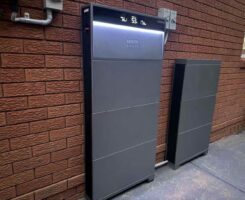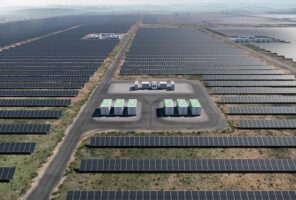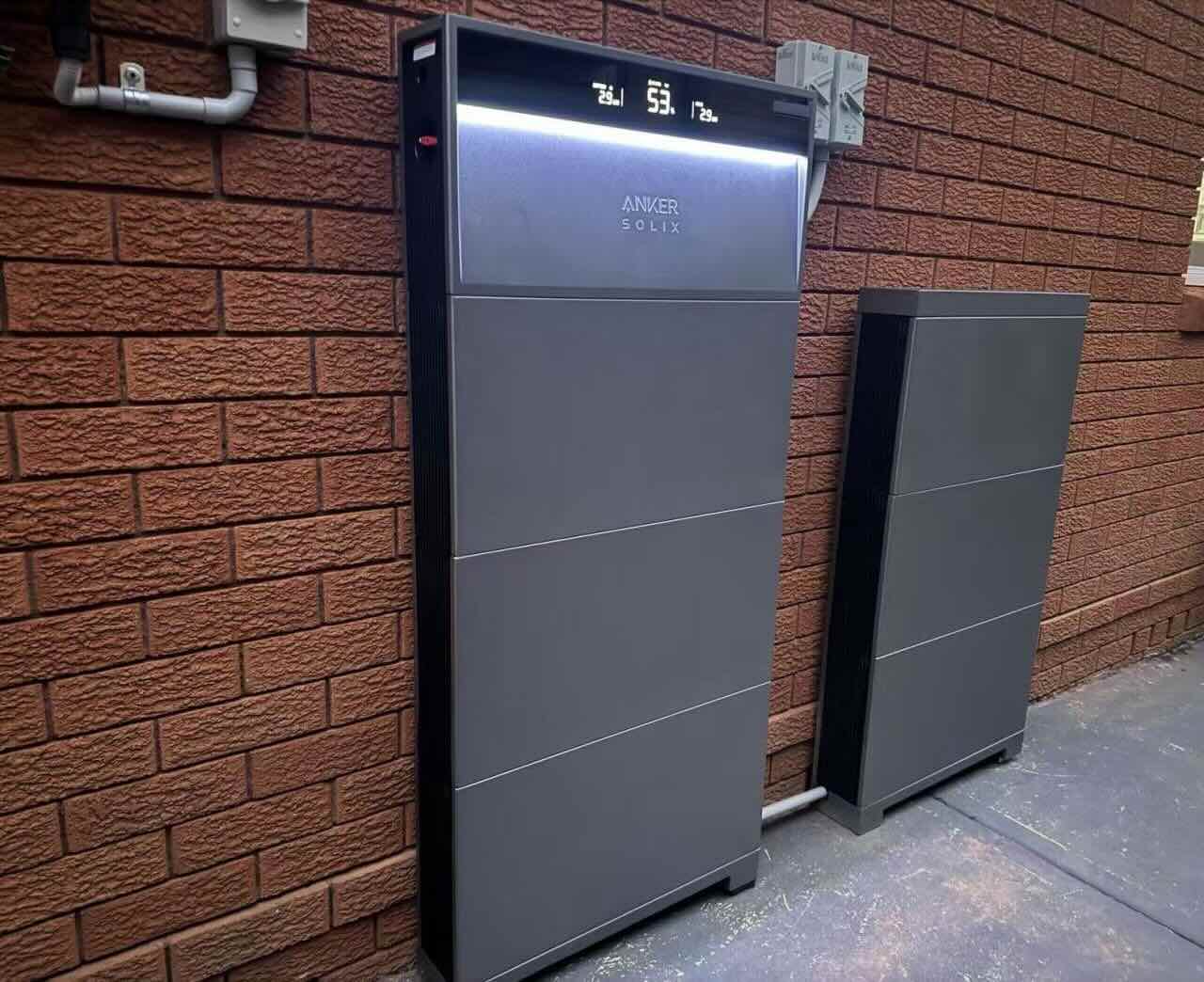
The number of home batteries installed under federal Labor’s rebate scheme has passed the half-million mark, a huge new milestone for the hugely successful policy that is further slashing household electricity bills while also delivering “enormous benefits” to the grid.
Federal energy minister Chris Bowen will announce the crossing of the 500,000 threshold on Friday morning, from a residential solar and storage installer in Castle Hill – a suburb in the New South Wales postcode that has the highest number of Cheaper Home Batteries installed anywhere in the country.
The shiny new number comes with some interesting new data put together by the Smart Energy Council, which shows that the flagship Labor policy has fared the best in Australia’s outer suburbs and regions, and in Coalition-held electorates.
The message from the data is that the appetite for home battery storage is not partisan. In fact, of the top seven Cheaper Home Battery electorates in Australia, four are Coalition-held – including Hume, the NSW electorate of the leader of the Opposition, Angus Taylor, which is 7th in national rankings.
“Cheaper Home Batteries is doing exactly what we said it would do: helping households cut bills, store cheap solar and take control of their energy use,” says Bowen.
“Every battery installed means another household getting more value from their rooftop solar, and another job for the local installers and small businesses delivering this rollout across the country.”
The 500,000 milestone comes just over one year after Cheaper Home Batteries was launched, with much fanfare but little true understanding of just how big the consumer appetite for solar storage would turn out to be.
Big and big – not only was the rebate being taken up by the thousands every week, it was being taken up by huge energy storage systems, taking full advantage of generous settings that were intended to extend the rebate to small business but instead led to ramptant residential super-sizing.
By the end of 2025, the rebate had clocked more than 175,000 applications, and the huge proportion of battery systems up near 50 kWh and above was chewing through the four-year scheme’s initial budget of $2.3 billion at an unsustainable rate.
To remedy this, Bowen announced in December that the settings would be changed in May, limiting the full rebate to systems sized up to 14 kWh, and then ratchet down from there – 60% of the subsidy for systems sized between 14 kWh and 28 kWh, and 15% for systems between 28 kWh and 50 kWh.
This has had the desired effect – the latest data from industry analysts SunWiz showed that the rebate is still being taken up at a rate of around 2,000 per week, while system sizes have “right-sized,” with the 20-30 kWh band now overtaking 40-50 kWh as the largest segment by absolute volume.
But in the months before the changes kicked in, uptake of super-sized and subsidised batteries went into hyperdrive. In March, the average size of systems being installed through the scheme averaged out at 40 kilowatt-hours (kWh). By the end of the April, 350,000 systems had been installed.
Installers were stretched to the limit, previously unheard of brands were suddenly dominating sales, and the Clean Energy Regulator issued regular warnings to the industry to ensure systems were being installed safely and up to standard, and not in a frantic and potentially rush to the April 30 finish line.
So how are things looking now, thirteen and a half months after the rebate’s launch and two-and-a-half months after the settings were changed?
“It’s a bit of a funny place to be at the moment,” says Sachin Sardana, the country head ANZ for Anker Solix, a Chinese home battery manufacturer and itself a relative newcomer to the more premium end of Australian market.
The X1 range of batteries from Anker Solix – which founded by ex-Google software engineer Steven Yang – was this month ranked by Solar Quotes at number 2 on the top 10 list of home battery brands according to Australian consumer reviews.
By sales however, two other Chinese brands have dominated. The first, the Wenzhou-based Fox ESS, which first launched in Australia in 2019, claimed highest installed storage capacity (kilowatt-hours) in Australia in March this year, after installing more than 12,000 systems in February.
The other, SigEnergy, held 25 per cent market share across 2025 after becoming the top brand in March of that year.
Sardana says Anker Solix still managed to chalk up 6,500-plus installations “in such a competitive market” since the launch of the rebate, and despite its batteries being on the smaller side.
“To be honest, we didn’t know these rebates would come in. We have a 5 kilowatt-hour (kWh) battery module, and each stack can only go up to 20-25 kWh. And you know, with the rebate, how it was designed at that time, it was like a 50 kilowatt-hour that everyone was asking for.
“The market was crazy,” Sardana says. “Whatever the agenda was … to make sure the Cheaper Home Battery rebate program is a success …It [worked] because it made some noise, and we managed to install so many batteries.
“But was it the right rebate?” Sardarna is not convinced. And he says that since the subsidy was wound back, consumers are in denial that batteries are no longer as cheap – or as big – as they were, and more confused than ever about what they should be choosing.
“I think the rebates dropped, but then afterwards, obviously manufacturers have to come in to chip in, so the customers actually don’t feel like they’re losing out.
“They’re still saying, ‘Oh, one month ago you gave me a quote for this much, and now you’re giving me a quote for that much. How can the price can go up so much?’
“It’s just the acceptance part. The the quicker they accept it, I think the market can actually shift. But then battery manufacturers start dropping their pricing as well, so it’s confusing for the end consumer.”
But Sardana is right – whatever it could have done better, the rebate has well and truly put home batteries on the map in Australia and has quickly demonstrated what adding storage to the nation’s huge rooftop solar resource can achieve, even when they’re not part of a virtual power plant.
In June, AEMO chief Daniel Westerman said the positive, system-wide impact that hundreds of thousands of “passive” home batteries have had on the grid has come as a pleasant surprise to the market operator, changing the shape of demand even without high levels of third-party orchestration.
“With half a million battery systems now active across Australian homes and businesses, the cumulative storage capacity is delivering enhanced grid stability, lowering household energy costs, and accelerating the transition away from fossil fuels,” SEC chief David McElrea said on Friday.
“A few years ago, home batteries were a niche technology. Today, they are a mainstream, essential component of how Australians power their lives, save money on electricity bills, and build a cleaner energy grid.
“Every single one of these 500,000 batteries represents a household taking control of their energy future.”
If you would like to join more than 29,000 others and get the latest clean energy news delivered straight to your inbox, for free, please click here to subscribe to our free daily newsletter.