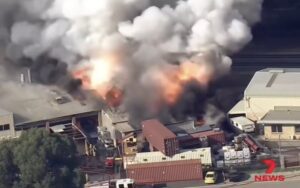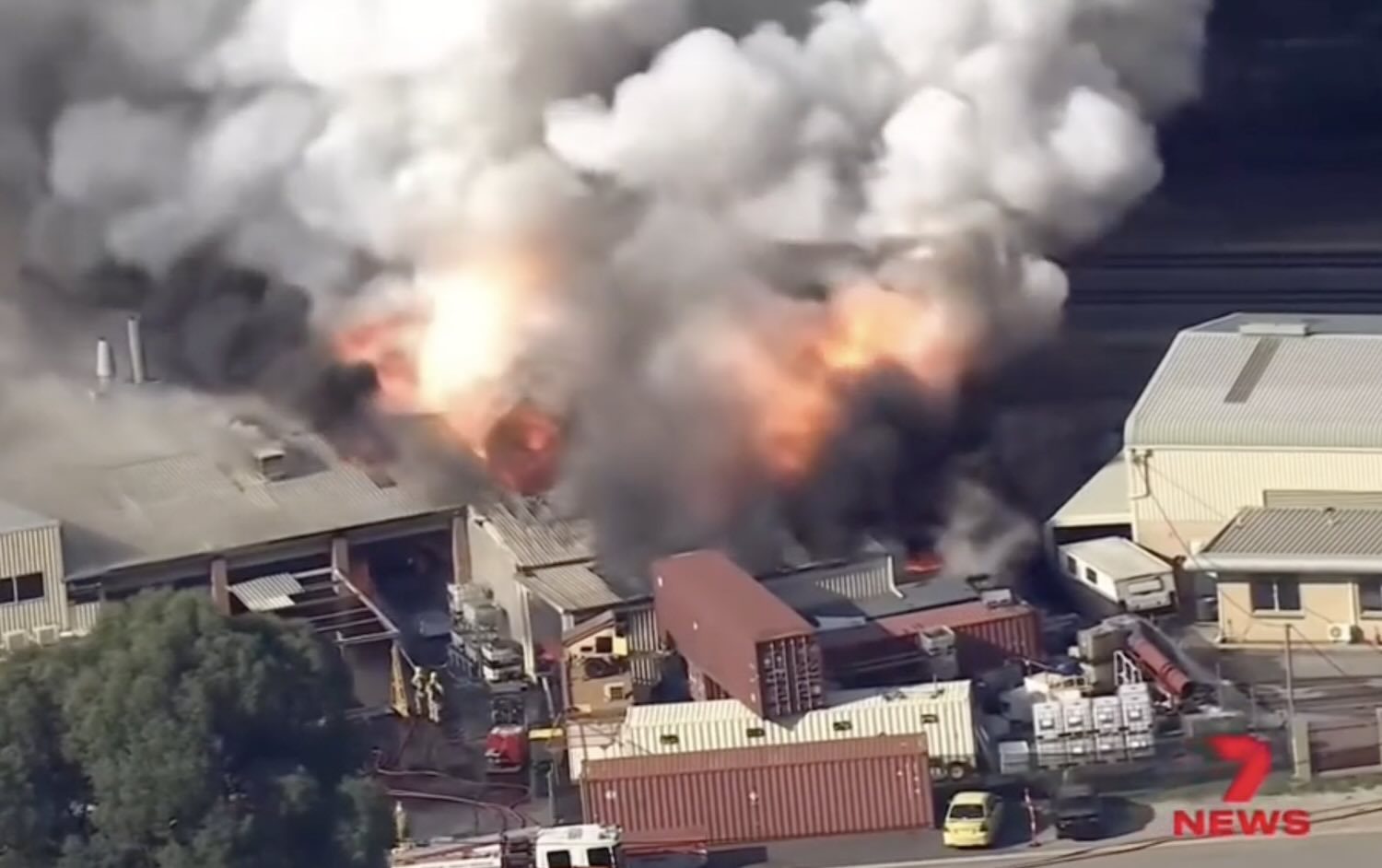
A Perth battery recycling warehouse containing more than 80 tonnes of mainly small batteries caught fire on Sunday, with firefighters taking just 2.5 hours to get the blaze under control.
The warehouse is owned by Li-ion Energy, a two year old company that handles bulk battery recycling and refurbishing.
The fire destroyed 80 tonnes of solid state batteries, tiny devices currently used in pacemakers, phones and other small devices, according to the Western Australia Department of Fire and Emergency Services (DFES).
There were also two pallets of lithium-ion phosphate batteries in the warehouse, but the DFES did not say if these were also damaged.
A HAZMAT warning over toxic air for the Maddington area was downgraded at 9am on Monday, and the warehouse has been handed back to the company, DFES said in a statement.
The DFES says it couldn’t immediately find the cause of the fire, given the extent of the damage, but the ABC is reporting that company founder Justin Manton thought he saw the fire start in a pallet of batteries,
Manton and the company are putting on a brave front after the disaster.
“First and foremost, we are incredibly grateful that no one was seriously injured. The safety of our team, partners, and community has always been our highest priority,” the company said in a statement posted to LinkedIn today.
“While this is a major setback, it is not the end of Li-ion Energy. We have built this company from the ground up, and we will rebuild — stronger, safer, and more resilient than before.”
A devastated Manton told reporters on Sunday afternoon he thought he’d lost $7 million in goods alone.
He said most of the batteries were de-energised and stacked up ready to be shipped.
Electrician Manton founded the company in 2024 alongside Sarai Bell, and moved into the Maddington factory 12 months ago.
Today, however, Manton and his colleagues are focused on working with authorities and insurers to assess the damage and begin the clean-up.
Industry is growing
The Perth fire is a tragic milestone for an industry that is growing fast, both in operational capacity, innovation, and regulatory structure.
Alongside Li-ion Energy there is Ecobat, Envirostream in Victoria, SK tes, Renewable Metals in Perth, and PanPacific is starting up as well.
The Association for the Battery Recycling Industry of Australia (ABRI) expects the industry to grow three fold by 2050, but by last year it was already a $2.1 billion sector.
“A heap of work is going on behind the scenes,” says ABRI chief Katharine Hole.
She says lithium ion batteries are not a new industry, but recycling at scale is and there are a range of national and state level organisations and regulators working to ensure standards are fit for purpose.
“People have been working really hard, seeing the volumes coming. The one thing we’d like to see out of this is to establish a national database on incidents like this so we can share learnings.”
ABRI is working with Standards Australia on packing and transport guidelines, as is the Heads of EPA Australia and New Zealand (HEPA), while the Victorian EPA are set to release their version in the coming weeks.
If you would like to join more than 29,000 others and get the latest clean energy news delivered straight to your inbox, for free, please click here to subscribe to our free daily newsletter.