The government has caved to pressure to slash taxes on petrol and diesel to help motorists facing skyrocketing fuel prices due to the war in the Middle East.
The fuel excise will be halved for three months as a temporary cost-of-living measure, taking 26.3 cents a litre off the price at the pump, Prime Minister Anthony Albanese announced after a meeting of national cabinet on Monday.
“The longer this war goes on, the worse the impacts will be,” he said. “I and the government understand that people are really worried but we have a plan to get through this.”
Commonwealth, state and territory leaders adopted a new framework for responding to fuel shortages, which has four levels of action.
They are: plan and prepare, keeping Australia moving, taking targeted action and protecting critical services for all Australians.
The second level – keeping Australia moving – was currently in force, Mr Albanese said.
Along with cutting the fuel excise, the government will also cut the road-user charge, which affects heavy vehicles.
The two measures would work in tandem to provide cost-of-living relief, Treasurer Jim Chalmers said.
Together, the reduced tax and levy incomes would cost the budget $2.55 billion over the three-month period.
A scheduled increase to the heavy vehicle road user charge will also be delayed by six months, costing an additional $53 million in foregone revenue.
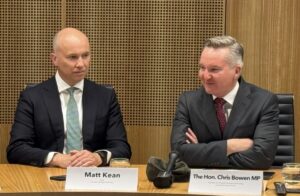
Earlier, Energy Minister Chris Bowen introduced emergency legislation to parliament to boost fuel stocks, stating the crisis served as a reminder that Australia was not immune from the impacts of war.
“The risk premium for purchasing discretionary cargoes is rising,” he told parliament.
“Work to scope deals and secure additional fuel is already under way.”
“That’s why today’s bill is so urgent. This bill creates a strategic reserve to secure the supply of strategic materials that are vital for Australia’s economy.”
The laws are expected to pass the lower house with bipartisan support on Monday and be debated in the Senate on Tuesday.
Australia’s fuel stocks remain at normal levels, but fears of future shortages and price spikes caused by the ongoing blockage of the Strait of Hormuz have spurred users to bulk-buy petrol and diesel, leading to localised shortfalls.
Source: AAP
To see more coverage of the fossil fuel crisis, and the growing interest in EVs and electric trucks, please go to our EV-focused sister site, The Driven, which you can fine here: www.thedriven.io
Faster and a lot cheaper: First all-electric long haul delivery flags new era in Australia trucking
“I don’t think she’ll be right this time:” Many in trucking industry say it’s electric or bust
As petrol and diesel prices soar, EV fast-charging costs are falling
“I bought two, and another for the parents-in-law:” Why everyone wants an EV