EnergyAustralia, one of the big three energy utilities in Australia, says its near term focus is on storage – big batteries, home batteries and pumped hydro – after tight retail margins offsets gains from higher wholesale prices in the first half of the year.
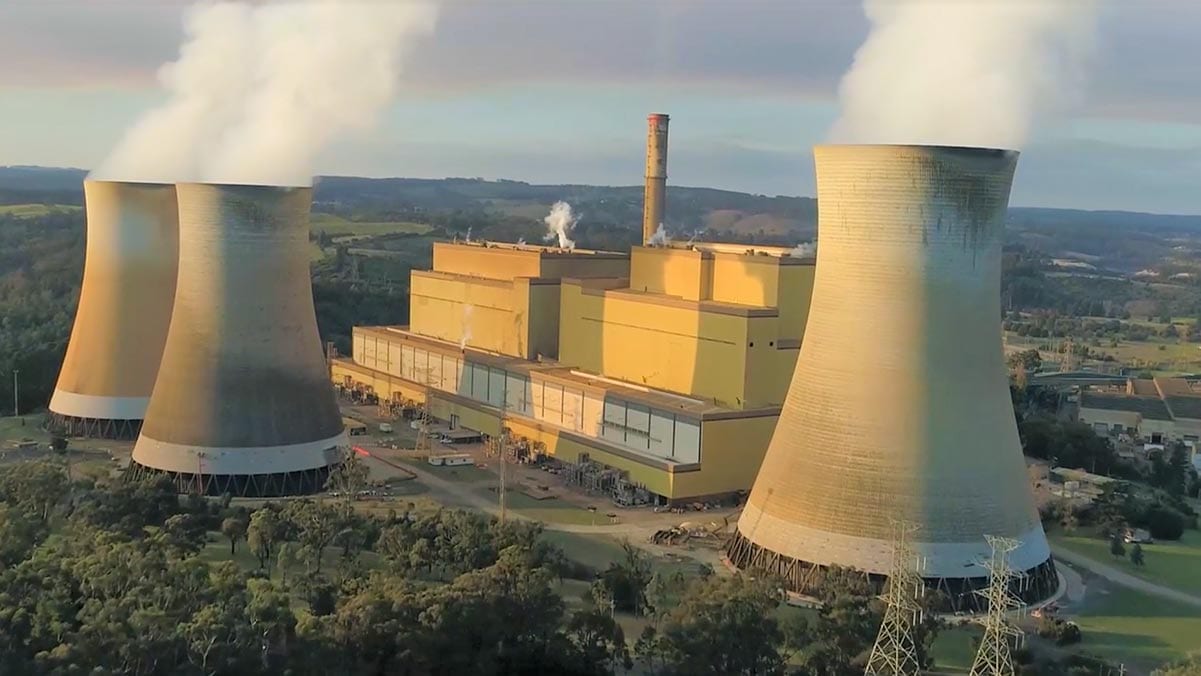
The company, which owns and runs the Yallourn brown coal generator in Victoria, and the Mt Piper coal-fired power station that could be the last to close in NSW, reported a slight fall in net profit for the first half to $61 million, from $65 million previously. The numbers are before the usually volatile swings in fair value movements.
In separate releases issued in Australia, and in Hong Kong from its parent company CLP, EnergyAustralia made much of its proposed new storage projects, including the 350 MW, 1,500 MWh Wooreen battery in Victoria’s Latrobe Valley, and the proposed big battery and pumped hydro projects near Mt Piper.
“The business will continue to focus on reliable operations from its power station,” CLP said. “It will also progress plans to grow its flexible capacity portfolio with a near-term focus on storage projects.”
And it said it is also looking to improve its distributed energy solutions including rooftop solar systems and community batteries to “encourage customers to embrace cost-effective, low-carbon energy options.”
In the first six months of the year, EnergyAustralia says it lost a net 88,000 customers, or 4 per cent of its customer base, due to the ongoing “market churn” as customers switch suppliers in an attempt to find the lowest cost tariffs.
What was missing from both the EnergyAustralia and CLP statements was any mention of new wind and solar investment, or contracts – both of which are needed if enough bulk energy is to be built to allow the country’s ageing coal fired generators to retire as planned.
This has been the ongoing story from the major utilities in Australia, who have all prioritised investments in storage, and gas generation, but have done relatively little to buy or contract new wind and solar.
CLP CEO Chiang Tung Keung confirmed the strategy in an earnings call with analysts on Monday.
“Our strategy is short energy and balanced capacity,” he said. “Pairing contracted renewable energy PPAs with owned and contracted flexible capacity – on a self funded basis.
“For renewables, we’re adopting a capital-light model, targeting 3 gigawatt of renewable energy PPAs by 2030. For flexible capacity assets like batteries and pumped hydro, we will develop those opportunities on our existing sites where there’s access to grid connections and skilled workforce.
“For opportunities outside our footprint, we would secure capacity through contracting. Smaller flexible capacity assets will be funded on EnergyAustralia’s balance sheet, while larger projects will be project financed and leverage strategic partnerships.”
EnergyAustralia has partnered with Banpu Energy for the Wooreen battery, and with France’s EDF, who have taken a 75 per cent stake in the 385 MW, eight hour Lake Lyell pumped hydro project near Mt Piper.
It says it “continues to explore” other flexible capacity project opportunities including utility-scale battery storage systems near its thermal power plants in New South Wales and South Australia.
“We are investing in distributed energy solutions, such as household battery products and community batteries. These solutions can significantly help households and communities control their energy use and access more affordable, low-emissions energy sources,” EnergyAustralia CEO Mark Collette said in a statement.
“Our ongoing investment in storage and other flexible capacity projects including Lake Lyell pumped hydro, Mt Piper Battery Energy Storage System and other projects will help ensure the system remains stable as more renewable energy enters the grid.”
CLP said EnergyAustralia benefited from high wholesale prices, which more than offset an 8 per cent fall in output which was caused by planned outages at Yallourn, Mt Piper and at its Tallawarra A gas fired power station in NSW.